



- Sku: 286
- Vendor: Seachem
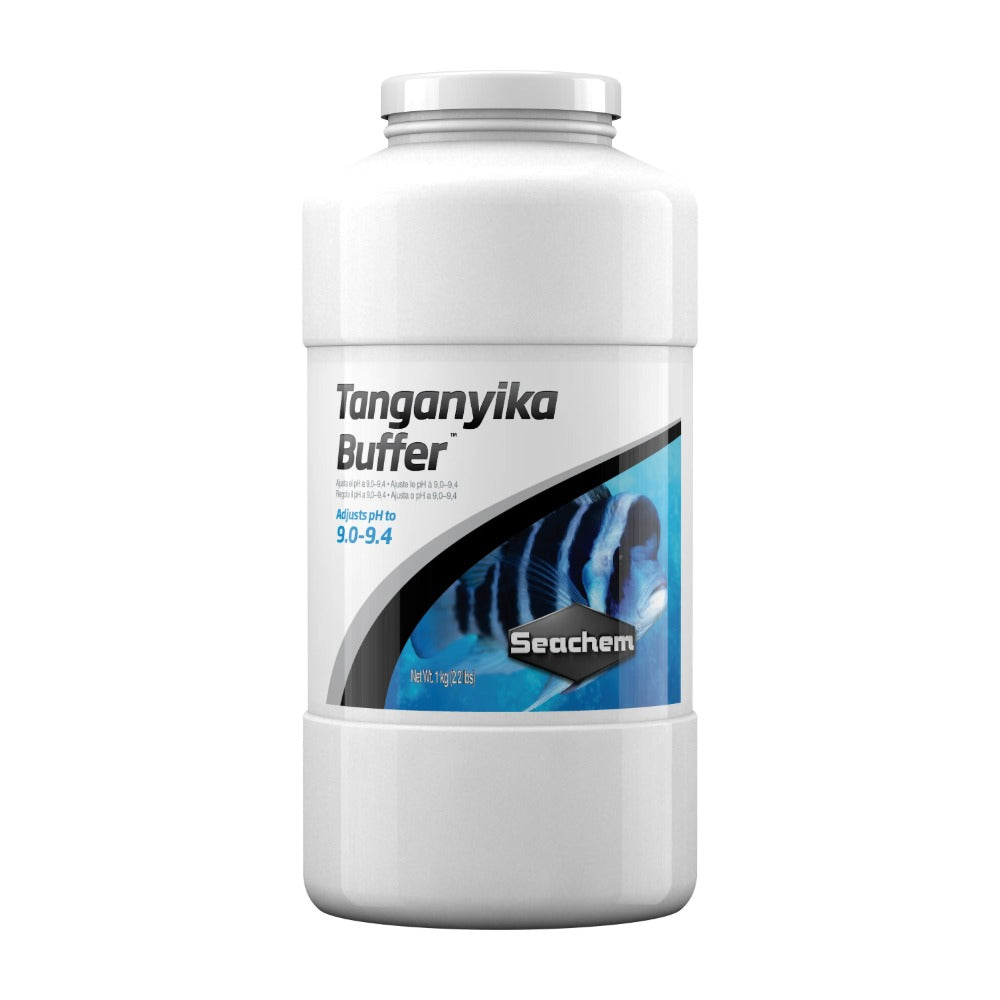
Seachem Tanganyika Buffer
Seachem Tanganyika Buffer is a blend of carbonate salts for the hardest, highest pH water in the cichlid hobby. Lake Tanganyika sits well above the other Rift Lakes on the pH scale, and this buffer is formulated to hold a tank at pH 9.0 to 9.4 while raising alkalinity, carbonate hardness and buffer capacity along with it. Browse our other water care.
Why KH Matters More Than pH
Holding a pH above 9 is not something water does on its own. Without carbonate hardness behind it the number drifts down between water changes, and chasing it with a pH-only product produces a swing rather than a setting. Tanganyika Buffer raises KH and alkalinity at the same time it raises pH, which is what makes the result stable. It is also why dosing tapers off quickly once you are dialled in, usually to once every two or three weeks.
Features
Dosing
Use 5 g, one level teaspoon, for each 40 to 80 L (10 to 20 US gallons) of water each day until the pH you want is reached and holding. After that, use as required to maintain it, which is usually no more than once every two to three weeks.
Tips from Seachem. Dissolve the buffer in fresh water before adding it. Use it when setting up the aquarium and when making water changes, preferably after adding a cichlid lake salt, and between water changes as needed. Where it settles inside the 9.0 to 9.4 band depends on how much you use. For a lower pH, use Malawi/Victoria Buffer, either on its own or in combination with this one.
Note the dose differs from Malawi/Victoria Buffer, which uses 6 g per teaspoon. Do not carry one product's figure across to the other.
Choose Your Size
| Size | Net weight | Approx. level teaspoons | SKU |
|---|---|---|---|
| 250 g | 250 g (8.8 oz) | About 50 | 286 |
| 500 g | 500 g (1.1 lbs) | About 100 | 283 |
| 1 kg | 1 kg (2.2 lbs) | About 200 | 287 |
Teaspoon counts are the net weight divided by the 5 g dose. Each teaspoon treats 10 to 20 US gallons.
Specifications
| Specification | Value |
|---|---|
| Type | Dry carbonate salt blend |
| Target pH | 9.0 to 9.4 |
| Raises | pH, alkalinity, carbonate hardness (KH) and buffer capacity |
| Effect on GH | None |
| Dose | 5 g (one level teaspoon) per 40 to 80 L (10 to 20 US gal) |
| Maintenance frequency | Typically once every 2 to 3 weeks once established |
| Water type | Freshwater |
| Made in | USA |
Pairs With
- Seachem Malawi/Victoria Buffer for Malawi and Victoria tanks, or combined with this one to land between the ranges
- Fritz Rift Lake Cichlid Salt for the GH side this buffer leaves alone
- Seachem Cichlid Lake Salt, the matched Seachem salt for GH, dosed separately for each lake
- Seachem Cichlid Trace to restore the trace elements the tank uses up between water changes
- CaribSea African Cichlid Mix sand, an aragonite substrate that supports hard water
- Cichlid foods
- KH and GH test kits, because buffering without testing is guesswork
FAQ
Is pH 9 really right for my fish?
For Lake Tanganyika species, yes, that is the water they come from. For Malawi or Victoria cichlids it is too high, and for anything outside the Rift Lakes it is far too high. Check which lake your fish are from before dosing.
What is the difference from Malawi/Victoria Buffer?
The target range and the dose. This one holds 9.0 to 9.4 at 5 g per teaspoon; Malawi/Victoria holds 7.8 to 8.4 at 6 g. Everything else about how they work is the same.
Can I land somewhere between the two ranges?
Yes. Seachem says the two buffers can be combined, so a blend lets you target a pH between the Malawi and Tanganyika bands.
Will this raise my GH too?
No. It leaves general hardness untouched by design, so you still need a cichlid salt for the mineral side.
Do I add it straight to the tank?
Dissolve it in fresh water first, then add. Dumping dry powder onto the substrate gives you a local spike where the fish are, which matters more at this pH.
How often will I be dosing it?
Daily at first, until the pH reaches target and holds. After that it is usually no more than once every two to three weeks, plus what you add back at water changes.
Have a question?


Seachem Tanganyika Buffer
