

- Sku: 29149
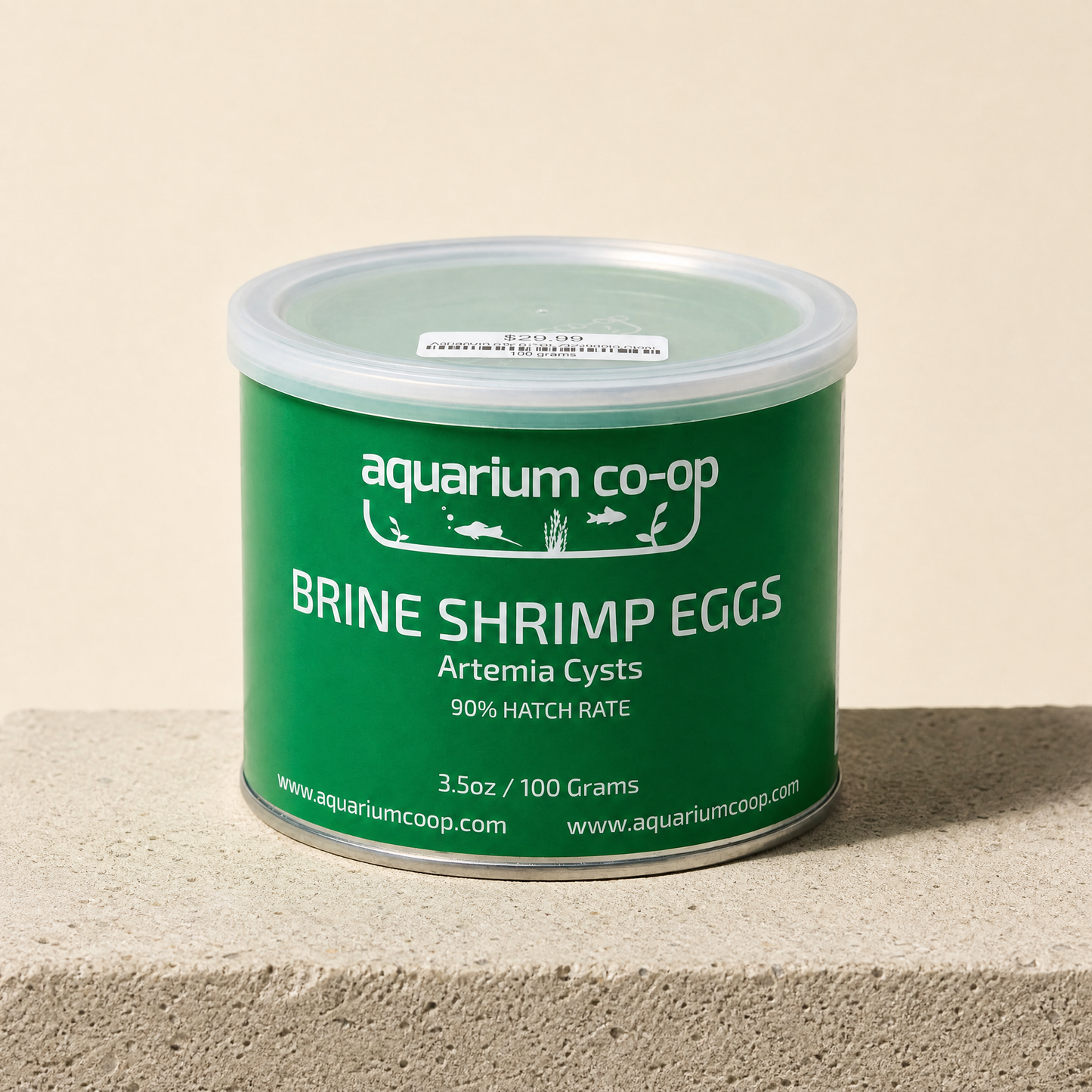
Aquarium Co-Op Brine Shrimp Eggs
Sold in-store only. Visit us at 1885 Braselton Hwy, Suite D, Lawrenceville, GA.
Hatch your own live food at home with Aquarium Co-Op Brine Shrimp Eggs: premium-grade Artemia cysts selected for high hatch rates and fast, consistent results. Live baby brine shrimp (BBS) are the gold-standard first food for fish fry, picky eaters, and reef inverts, packed with natural fats, protein, and movement that triggers a feeding response in even the most stubborn fish. A single can goes a long way: a tiny pinch produces thousands of nauplii. Browse our full fish food & nutrition collection for pellets, flakes, frozen, and live options to round out your feeding routine.
Why Hobbyists Choose Aquarium Co-Op Eggs
- High hatch rate: premium-grade cysts deliver dense, healthy nauplii.
- Universal first food: perfect for fry of bettas, killifish, cichlids, livebearers, tetras, angelfish, discus, gouramis, and saltwater clownfish.
- Brine-rich nutrition: newly hatched nauplii are loaded with yolk-sac lipids and amino acids.
- Triggers picky eaters: the swimming motion entices wild-caught and finicky fish that snub dry food.
- Sealed for freshness: resealable container keeps eggs viable in the fridge for months.
Hatching Guide
- Mix saltwater: dissolve 1–2 tablespoons of non-iodized aquarium salt per quart of dechlorinated water in a clean 2-liter bottle or hatchery jar.
- Add eggs: sprinkle ¼–½ teaspoon of eggs into the water.
- Aerate: drop an airstone or open airline to the bottom and run a constant, vigorous stream of bubbles for 24–36 hours.
- Maintain temp: hold the water between 78–82°F for fastest, most reliable hatching.
- Harvest: shut off the air, let the hatch settle 5–10 minutes, empty shells float, unhatched eggs sink, and the bright orange nauplii gather near the bottom or toward a light source.
- Rinse & feed: siphon the nauplii through a fine brine shrimp net, rinse briefly with fresh water, and feed to fry 1–2 times daily.
Tip: always rinse harvested nauplii before adding to freshwater tanks to avoid raising salinity, especially in fry-raising tanks.
Choose Your Size
| Size | Best For | Approx. Hatches |
|---|---|---|
| 10 grams | Trying live BBS for the first time, single small fry batch, occasional treat feeder | ~40–60 small daily hatches |
| 100 grams | Active breeders, multi-fry rooms, clownfish & reef pod culturers, anyone hatching daily | ~400–600 small daily hatches |
Specifications
| Brand | Aquarium Co-Op |
| Species | Artemia sp. (brine shrimp) cysts |
| Form | Dry cysts (eggs), requires hatching |
| Available Sizes | 10 g & 100 g resealable canisters |
| Use With | Freshwater & saltwater fry, juveniles, bettas, killifish, clownfish, reef inverts |
| Hatch Water | 1–2 tbsp aquarium salt per quart, 78–82°F, vigorous aeration, 24–36 hrs |
| Storage | Sealed, refrigerated |
| Availability | In-store only |
Recommended Pairings
- Brine Shrimp Hatchery Kit, the easy way to hatch a steady supply at home.
- BRS Brine Shrimp Hatchery & Eggs Bundle, start-to-finish kit if you don't already own a hatchery.
- Bulldawg Live Brine Shrimp Nauplii, already-hatched live brine when you don't want to wait.
- Nutramar Tigrio Live Copepods, great companion live food for reef fry & mandarins.
- Browse all fish food & nutrition
FAQ
Do I need a special hatchery?
No, a clean 2-liter bottle, an airline with no airstone (or a coarse one), and aquarium salt will do the job. A purpose-built hatchery just makes the process cleaner and easier to harvest.
How long do unhatched eggs last?
Stored sealed in the fridge, hatch rate stays strong for 6–12 months. Keep them dry and away from humidity for best results.
Can I feed baby brine to adult fish?
Absolutely. Adult killifish, small tetras, bettas, gouramis, and clownfish love live nauplii as a conditioning food before breeding. Larger fish do better with adult brine shrimp.
Freshwater or saltwater?
The eggs hatch in salt water, but rinsed nauplii can be fed to any freshwater or saltwater fish. Always rinse before adding to a freshwater tank.
Have a question?