



- Sku: RCB250
- Vendor: Brightwell Aquatics
Brightwell Aquatics Reef Code B
Brightwell Reef Code B is the alkalinity half of Brightwell's balanced two-part calcium and alkalinity system for reef aquariums. Dosed in equal measure with Reef Code A, it supplies the carbonates that make up your tank's alkalinity, or buffering capacity, in the same ratio found in natural seawater. Round out the big three with Magnesion magnesium, and browse more Brightwell Aquatics reef care.
How the Two-Part System Works
Growing corals and other reef life constantly pull calcium and carbonate (alkalinity) out of your water. Reef Code A and Reef Code B replace them together, in balance:
- Reef Code B supplies the carbonates that raise and hold alkalinity, which stabilizes your pH.
- Reef Code A supplies calcium plus strontium and minor and trace elements.
Used in equal amounts, the two keep calcium and alkalinity rising or holding steady together, just as they occur in natural seawater. Bring magnesium into range first (1,290 to 1,320 ppm) with Magnesion so calcium and alkalinity stay in solution instead of precipitating out.
Features
- Carbonate-bearing half of a balanced two-part calcium and alkalinity system
- Raises and maintains alkalinity to stabilize pH
- Ionically balanced to natural seawater when dosed equally with Reef Code A
- Contains no phosphate, silicate, or organic material
- Reef safe
Directions for Use
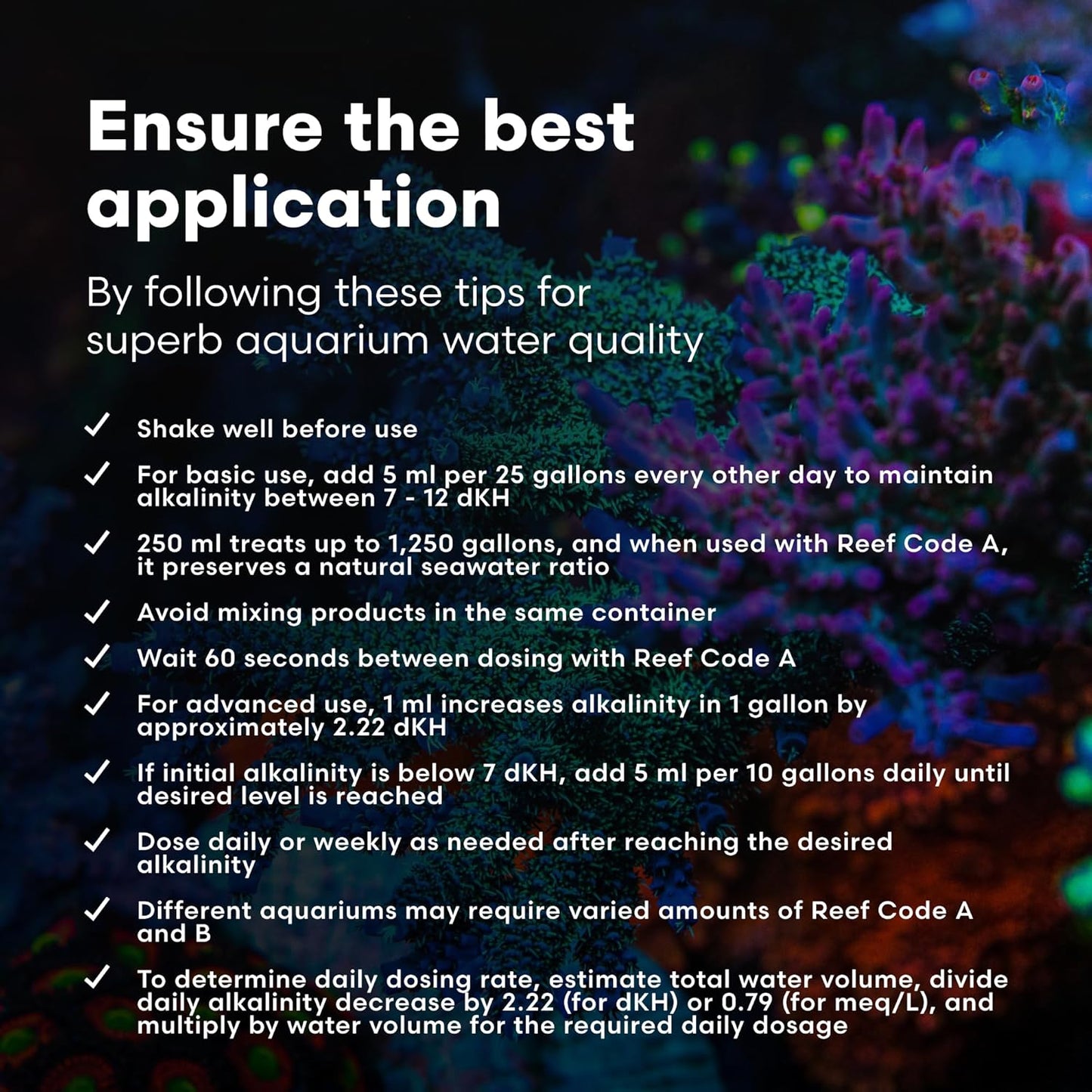
Shake well before use and test your alkalinity before dosing. Each ml of Reef Code B raises the alkalinity of 1 gallon by about 2.22 dKH. For steady maintenance, dose an equal amount to Reef Code A; a common starting point is 5 ml per 25 gallons every other day, adjusted to your test results. If alkalinity is below 7 dKH, you can add up to 5 ml per 10 gallons daily until it reaches your target, then return to maintenance dosing. Aim to keep alkalinity in the 7 to 12 dKH range.
Before you start: bring magnesium to 1,290 to 1,320 ppm with Magnesion. Correct magnesium keeps calcium and carbonate from precipitating, so both stay available to your corals.
Choose Your Size
| Size | Best for |
|---|---|
| 250 ml | Nano and smaller reef tanks, or trying the Reef Code system. |
| 500 ml | Mid-size reef tanks with steady alkalinity demand. |
| 1 L | Larger or coral-heavy systems, with the best value per ml. |
Specifications
| Brand | Brightwell Aquatics |
| Product | Reef Code B, alkalinity component |
| Supplies | Carbonates (alkalinity / buffering capacity) |
| Use with | Reef Code A (equal amounts), plus Magnesion for magnesium |
| Best for | Saltwater reef aquariums |
| Available sizes | 250 ml, 500 ml, 1 L |
| Contains | No phosphate, silicate, or organic material |
| Country of origin | United States |
Recommended Pairings
- Reef Code A is the calcium half, dosed in equal amounts.
- Magnesion keeps magnesium in range so calcium and alkalinity stay stable.
- Brightwell Aquatics is the full brand lineup.
- Additives and supplements for more reef dosing options.
FAQ
Do I have to use Reef Code A as well? For a balanced system, yes. Reef Code A and B are designed to be dosed in equal amounts so calcium and alkalinity stay in the natural seawater ratio. Some tanks need slightly different amounts of each based on demand, so test and adjust.
What does alkalinity do for my reef? Alkalinity is your tank's buffering capacity. It keeps pH stable and supplies the carbonates corals use to build their skeletons. Steady alkalinity is one of the keys to healthy coral growth.
Why check magnesium first? Magnesium keeps calcium and carbonate dissolved. If magnesium is low, dosing calcium and alkalinity can cause them to precipitate out instead of feeding your corals. Hold magnesium at 1,290 to 1,320 ppm with Magnesion.
How much do I need? A rough starting point is 5 ml per 25 gallons every other day, but every tank is different. Test alkalinity regularly and adjust the dose to match your tank's uptake.
Have a question?


Brightwell Aquatics Reef Code B
