

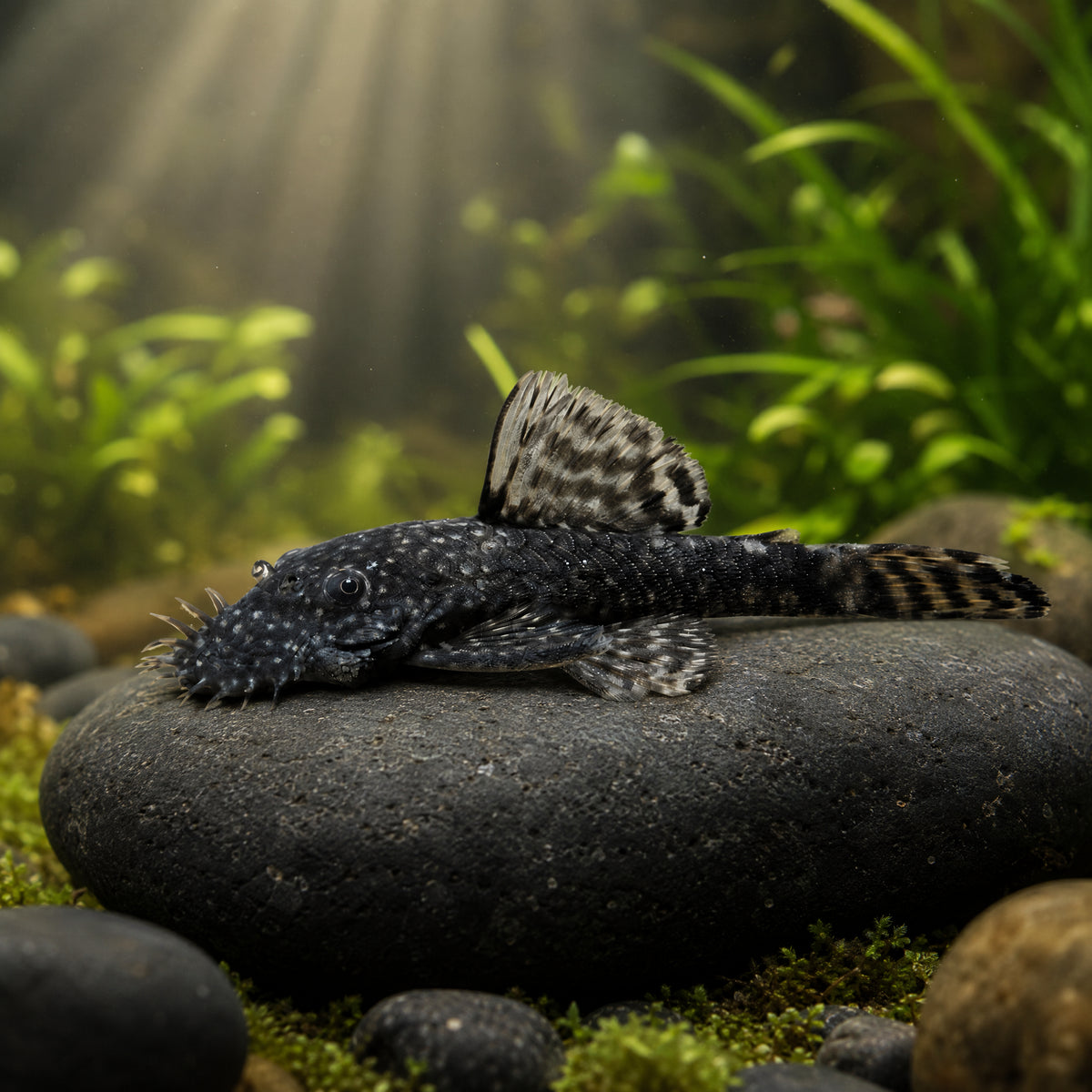
About Bristlenose Pleco
The Bristlenose Pleco (Ancistrus sp.), also sold as the Bushynose Pleco, is the pleco we recommend more than any other. It tops out around four to five inches instead of the eighteen inches a Common Pleco will reach, it is genuinely one of the best algae eaters in the hobby, and it is tough enough for a first tank. Mature males grow a crown of fleshy tentacles across the snout that gives the fish its name and makes it one of the more characterful catfish you can own. Care level is beginner, temperament is peaceful. Browse the rest of our live fish and freshwater supplies to round out the tank.
Choose Your Size
- Small: young juveniles, usually an inch or two. Too young to sex, and the bristles have not developed yet. The economical way to buy a group.
- Large: grown-out fish with real size on them. Males at this stage are showing their bristles, so you have a much better chance of picking the look you want.
Care Guide
- Tank size: 20 gallons for one, 30 gallons or more for a group or a breeding pair. They stay small, but they are messy eaters and appreciate the extra water volume.
- Driftwood is required, not decorative: bristlenose plecos genuinely rasp on wood, and the fiber it provides is part of how they digest. A tank with no driftwood is a tank where a bristlenose will not thrive long term.
- Diet: mostly herbivore. Algae in the tank is never enough on its own. Feed algae wafers or sinking pleco wafers after lights out, plus blanched vegetables like zucchini, cucumber, and deshelled peas. A little protein now and then is welcome, but greens should be the backbone.
- Water parameters: 72 to 80°F, pH 6.5 to 7.8, soft to moderately hard. This is a genuinely adaptable fish that does fine in most tap water once dechlorinated.
- Caves: give each fish somewhere dark to sit out the day. Ceramic caves, wood tangles, or stacked rock all work. Males claim a cave and defend it.
- Behavior: nocturnal by nature but quickly learns feeding time and will come out in daylight once settled.
- Breeding: one of the easiest egg-laying fish in the hobby. The male picks a cave, cleans it, guards the eggs, and fans the fry until they are free swimming. Many keepers end up with babies without ever trying.
Specifications
| Scientific name | Ancistrus sp. |
| Common names | Bristlenose Pleco, Bushynose Pleco, Bristlenose Catfish |
| Origin | South America, Amazon and Orinoco basins. Tank bred. |
| Max size | 4 to 5 inches (10 to 13 cm) |
| Care level | Beginner |
| Temperament | Peaceful |
| Minimum tank | 20 gallons |
| Temperature | 72 to 80°F |
| pH | 6.5 to 7.8 |
| Diet | Herbivore, algae and vegetables |
| Breeding | Cave spawner, paternal care, easy |
| Pickup | In-store only |
Compatibility
About as easygoing as community fish get. Bristlenose plecos ignore mid-water fish entirely and mix well with tetras, rasboras, barbs, livebearers, corydoras, and most peaceful cichlids. They are also fine with dwarf shrimp and nerite snails.
Males are territorial with other male Ancistrus over caves, so in a smaller tank keep one male with one or more females, or provide a cave for every male. Avoid very aggressive cichlids and any fish large enough to swallow them. Also skip known fin-nippers, since a resting pleco is an easy target.
Recommended Foods & Supplies
- Hikari Algae Wafers, the everyday staple
- Xtreme Scrapers Sinking Wafers, built specifically for plecos
- Repashy Soilent Green, an algae gel they go crazy for
- Malaysian Driftwood and Cholla Wood for rasping and cover
- AquaVitro Ceramic Hide for daytime shelter and spawning
FAQ
How do I tell males from females?
By the bristles. Mature males grow long fleshy tentacles across the whole snout and forehead. Females have only a few short bristles around the very edge of the snout, or none at all. Juveniles cannot be sexed reliably, so buy the Large size if you want to choose.
Will it really keep my glass clean?
It will do a lot of the work, which is more than most fish sold as algae eaters. Just do not treat algae as its whole diet. An underfed pleco will start rasping on plants, and a starving one simply wastes away.
How is this different from an L-129 or zebra-type pleco?
Almost completely. An L-129 False Zebra Pleco (and the other Hypancistrus) is a small carnivore that needs meaty foods and will not eat your algae. The Bristlenose is the herbivore and the actual algae eater. They make excellent tankmates for exactly that reason.
Is this the same as a Common Pleco?
No, and the difference matters. A Common Pleco (Pterygoplichthys) reaches a foot and a half and outgrows nearly every home aquarium. The Bristlenose stops at four or five inches, which is why it is the one we point beginners toward.
Bristlenose Pleco (Ancistrus sp.)
Estimated stock: 27
- Quarantined in our store before it's sold
- Pickup in Lawrenceville, GA
- Questions? Call (470) 207-3434
Earn Squeaky's Splash Rewards points on every purchase, in store and online: 5% back, rising to 10% as you climb. Learn more
Find it in the store: Tank FW-B-L1 , Tank FW-C-L2 or Tank SH-A2
Quick facts
- WaterFreshwater
- Care levelBeginner Friendly
- TemperamentPeaceful
- DietHerbivore
- Tank sizeStarts in 15 gallons
 Will it fit my tank?
 Will it fit my tank?
Tank mates
Usually OK with
- Other peaceful fish of a similar size
- Most peaceful community fish
- Their own kind (corys like groups)
Watch out with
- Bigger or pushy tankmates that could bully it
- Sharp gravel and fish that steal all the food
A general guide, not a promise: every fish is an individual. Tell us what's in your tank and we'll help you choose.
What you'll need
The basics for a healthy freshwater tank. Not sure? Call us and we'll help you pick.


 Something look off with your fish? Try our Tank Check-Up
Freshly cleared from quarantine
Our fish start out in our in-store quarantine room. We watch every tank daily and only medicate when that tank and that species need it, never one treatment for every fish. Once a fish is healthy and eating well, it moves to the showroom, ready for your tank.
- Lands in our QT room
- Watched daily, medicated only as its tank and species need
- Cleared, then out to the showroom
Quarantine diary
- Arrived Nov 4
- Cleared quarantine Nov 22 after 18 days
Complete the care
Food that suits it and the water care to keep it thriving, all in stock now.


Tank mates we carry
In the store now, the same water and tank size, with no clashes we know of. A general guide, not a promise.
Kits
Grab it as a kit
The things that go together, in one tap. Untick anything you already have.

Home quarantine tank kit
The simple bare-tank setup we suggest for watching new fish for a few weeks before they meet your other fish. Pairs with a 10 gallon tank.
Kit total
Still thinking about these?