
- Sku: 1500570
- Vendor: Squeaky's Aquatics
Condylactis Anemone (Condylactis gigantea)
The Condylactis Anemone (Condylactis gigantea), also called the Condy or Giant Caribbean Anemone, brings big flowing movement to a saltwater tank without a big price tag. Long tapered tentacles sway in the current, usually glowing white with rose or pink tips, and a healthy specimen can balloon to dinner-plate size. It is one of the hardiest anemones in the hobby and a classic first anemone. Browse the rest of our saltwater livestock while you plan its spot.
Please note: each anemone is a hand-picked individual, so the exact color and tip shade you receive may vary slightly from the photo. You are welcome to come see it in store.
Care Guide
Condylactis anemones are forgiving by anemone standards, but they are still anemones: they want stable, clean water and they go where they please. Attach points matter less than good light and the occasional meaty meal.
- Minimum tank size: 30 gallons.
- Lighting: Moderate to high reef lighting keeps its zooxanthellae fed and colors bright.
- Flow: Moderate. Cover powerhead intakes, wandering anemones find them.
- Water: 75 to 80°F, specific gravity 1.023 to 1.025, pH 8.1 to 8.4, ammonia and nitrite at zero.
- Feeding: Offer a meaty bite (mysis, brine, chopped shrimp, or silverside pieces) once or twice a week alongside what it makes from light.
- Placement: It buries its foot in sand or tucks it into a rock crevice, then may relocate until it finds a spot it likes. Plan your aquascape with that in mind.
Specifications
| Common Name | Condylactis Anemone, Condy Anemone |
| Scientific Name | Condylactis gigantea |
| Origin | Caribbean, Western Atlantic |
| Adult Size | 6 to 12 inches across when open |
| Care Level | Beginner |
| Temperament | Semi-aggressive (potent sting, will wander) |
| Diet | Photosynthetic plus meaty foods |
| Lighting | Moderate to high |
| Minimum Tank Size | 30 gallons |
| Availability | In-store pickup only |
Compatibility
Keep the Condy with peaceful to moderately active fish that will respect its space: chromis, cardinalfish, gobies, blennies, and most wrasses do fine. Skip anemone-nibblers like large angelfish and butterflyfish, and do not count on a clownfish bonding with it. Because it wanders and stings, it is happiest in a fish-only or anemone-focused display rather than packed into a coral garden. Give it a few inches of buffer from anything it could reach.
Recommended Foods & Supplies
- SFBB Freeze Dried Mysis Shrimp for easy weekly feedings.
- A quality mix from our salt mixes and a kit from water testing to keep parameters steady.
- Browse our corals and anemones and the rest of our saltwater livestock.
FAQ
Will my clownfish host it?
Probably not. Clownfish and Condylactis never meet in the wild, and most clowns show no interest. The occasional clown adopts one anyway, but buy this anemone for its own looks, not as a guaranteed host.
Is it reef safe?
With caution. The sting is stronger than most host anemones and it moves around, so keep it out of dense coral gardens or give corals a wide buffer.
What does it eat?
Light does most of the work through its zooxanthellae. Top it off with a meaty bite of mysis, brine shrimp, or chopped seafood once or twice a week.
Will it stay where I put it?
Usually it settles after a few days of exploring, but no anemone is glued down. Cover powerhead intakes and leave it room to roam.
Have a question?
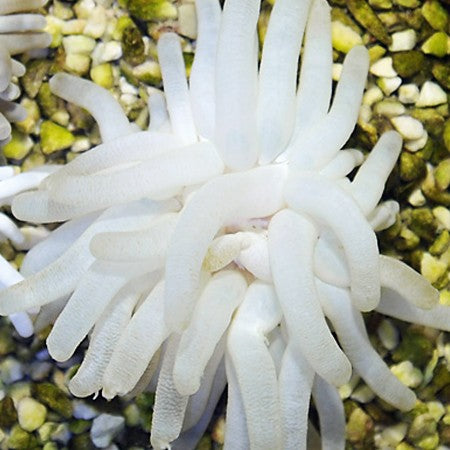
Condylactis Anemone (Condylactis gigantea)
