


- Sku: SW4-SW0110
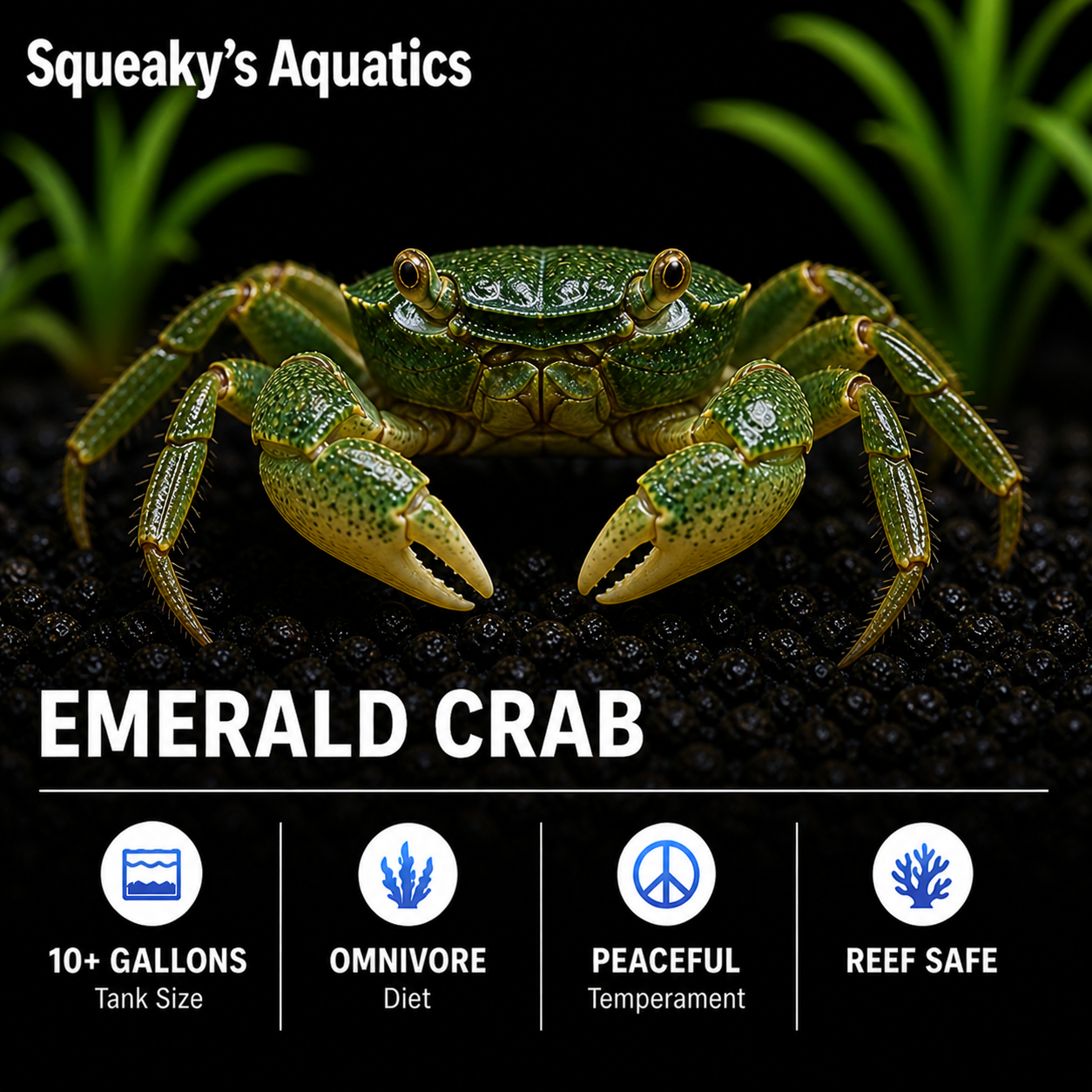
Emerald Crab (Mithraculus sculptus)
The Emerald Crab (Mithraculus sculptus) is the saltwater hobby's go-to natural predator of bubble algae (Valonia / Ventricaria) — one of the few invertebrates that will actually eat the bubbles whole rather than popping them and spreading them. Hardy, beginner-friendly, and reef safe with caution, a single Emerald Crab is a worthwhile addition to most 20+ gallon reef tanks. Browse our other saltwater livestock or stock up on reef nutrition while you're here.
Care Guide
Emerald Crabs are nocturnal Caribbean reef crabs that hide in rockwork during the day and forage at night. They acclimate easily and tolerate a normal reef parameter range, but — like all marine inverts — they are extremely sensitive to copper-based medications and parameter swings. Drip acclimate over 60–90 minutes when introducing.
The single most important rule: keep them well-fed. A hungry Emerald is a problem Emerald — large or starved specimens will pick at LPS, zoanthids, sleeping fish, or small shrimp at night. A well-fed crab focused on bubble algae and detritus is the textbook reef-safe-with-caution citizen. If your tank is clean of bubble algae and other nuisance algae, supplement with sinking pellets, dried nori, mysis shrimp, or any leftover meaty food.
Specifications
| Scientific Name | Mithraculus sculptus (formerly Mithrax sculptus) |
| Common Names | Emerald Crab, Green Mithrax Crab, Green Clinging Crab |
| Care Level | Beginner |
| Temperament | Peaceful (when fed); Semi-aggressive when hungry |
| Reef Safe | With caution — keep well-fed |
| Tank Size Minimum | 10 gallons (20+ gal preferred for reef setups) |
| Max Adult Size | ~2–2.5 in carapace width (occasionally larger) |
| Lifespan | 2–4 years in captivity |
| Water Type | Saltwater / Reef |
| Temperature | 72–78°F |
| Salinity (SG) | 1.023–1.025 |
| pH / dKH | 8.1–8.4 / 8–12 |
| Diet | Omnivore — bubble algae, hair algae, detritus, leftover meaty foods |
| Origin | Caribbean Sea, Gulf of Mexico, tropical western Atlantic |
| Stocking Density | ~1 per 20–30 gallons of reef |
Compatibility
Great with: Most reef-safe fish (clownfish, gobies, blennies, firefish, chromis), other CUC species at reasonable density (snails, cleaner shrimp), and the standard mix of LPS, SPS, and soft corals — provided the crab is well-fed.
Use caution with: Multiple Emerald Crabs in a small tank (food competition can lead to squabbles — stock 1 per 20–30 gallons), small ornamental shrimp, very small or sleeping fish, and tanks with delicate LPS or zoanthid colonies if the crab is large or under-fed.
Avoid with: Hawkfish, puffers, triggers, large wrasses, and groupers — these will all happily eat an Emerald Crab. Other large predatory crabs are also a bad mix.
Recommended Foods & Supplies
- Margarita Snail — round out your reef cleanup crew with reef-safe algae-eating snails
- Nassarius Snails (Large) — sand bed cleaners that handle leftover food the crab misses
- Tiger Sand Snail — sand sifters keep the bottom layer aerated
- Scarlet Skunk Cleaner Shrimp — a peaceful tankmate that eats parasites off your fish
- Browse all nutrition & foods — sinking pellets, dried nori, mysis, and frozen options to keep your crab fed
FAQ
Will it really eat bubble algae?
Yes — Emerald Crabs are the hobby's most reliable invertebrate predator of Valonia bubble algae. They puncture the bubble at the base and consume the contents, which keeps reproductive cells contained instead of spreading them across the tank like manual popping does. One crab won't single-handedly clear a heavy infestation overnight, but it will steadily reduce the population alongside good husbandry.
Is it reef safe?
Reef safe with caution. Most stay well-behaved when fed, but large, hungry, or older specimens can opportunistically pick at LPS or zoanthids, or grab a small fish at night. The fix is simple: keep them fed. If your tank runs out of nuisance algae and you're not adding supplemental food, expect them to start exploring.
How many can I keep?
About one per 20–30 gallons of reef. Multiple Emeralds in a small tank get aggressive over food and territory. A single crab handles bubble algae duty for most home reefs.
How do I acclimate it?
Drip acclimate over 60–90 minutes — marine inverts are sensitive to salinity and pH swings. Float the bag for 15 minutes to match temperature, then drip-acclimate to your tank water. Never expose to copper-based medications.
Have a question?
Emerald Crab (Mithraculus sculptus)
