

- Sku: 8030105
- Vendor: Squeaky's Aquatics
Koi Angelfish (Pterophyllum scalare)
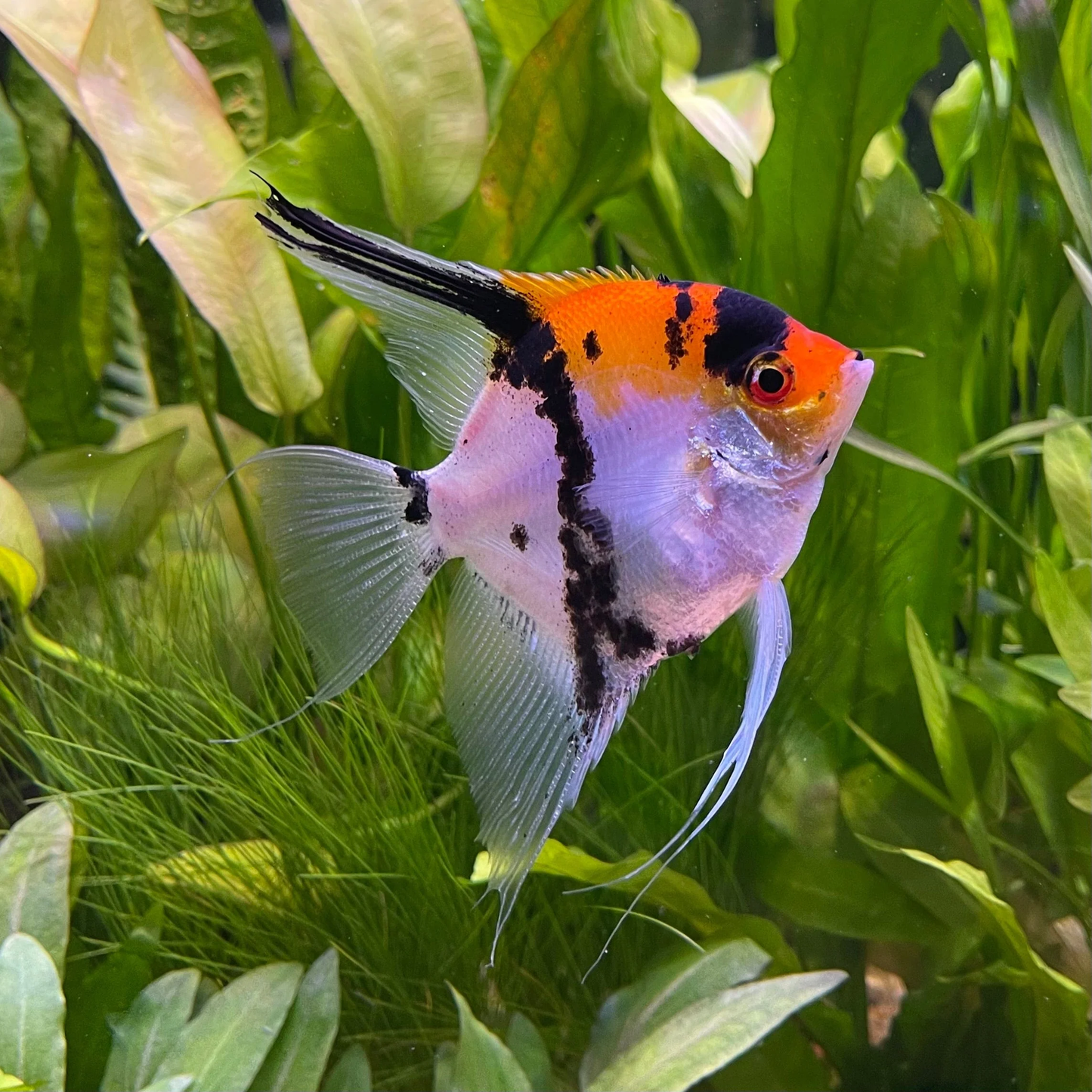
The Koi Angelfish (Pterophyllum scalare) is a tank-bred color form of the classic South American angel, splashed calico-style in orange, black, and pearl white on that tall, gliding body angelfish are loved for. Mature fish often develop a vivid orange cap over the head and shoulders, which is what makes a grown koi angel such a centerpiece in a planted community tank. It is an intermediate, semi-aggressive cichlid. Browse the rest of our freshwater fish.
Care Guide
Angelfish are tall fish, so tank height matters more than footprint. Give them a tall aquarium of at least 29 gallons for a pair, or 55 gallons and up for a small group, with open swimming lanes and some tall plants or driftwood to break up sight lines. An Amazon Sword is the traditional companion plant and suits their body shape perfectly.
Keep the water warm, clean, and steady: 76 to 82 F, pH around 6.5 to 7.5, soft to moderately hard, with weekly water changes. They are hardy once settled but sensitive to high nitrate, so do not let maintenance slide. Use gentle flow, since strong currents stress them and fray their fins, and skip sharp or spiky decor for the same reason.
Feed a varied omnivore diet: a quality flake or pellet once or twice a day, supplemented with frozen bloodworms, brine shrimp, and beef heart for growth and color. Skip feeder fish, which carry parasites for no nutritional gain.
Angels pair off naturally as they mature and turn territorial while spawning, which is normal cichlid behavior. The usual approach is to raise a group of six juveniles and let a pair form, then rehome or separate the extras.
Specifications
| Specification | Detail |
|---|---|
| Common Name | Koi Angelfish |
| Scientific Name | Pterophyllum scalare (koi color form) |
| Family | Cichlidae |
| Origin | Tank-bred (parent species from the Amazon basin) |
| Care Level | Intermediate |
| Temperament | Semi-aggressive |
| Adult Size | About 6 in tall, roughly 4 in long |
| Minimum Tank | 29 gallons (tall) for a pair, 55+ for a group |
| Water Temperature | 76 to 82 F |
| pH | 6.5 to 7.5 |
| Hardness | 3 to 15 dGH |
| Diet | Omnivore |
| Lifespan | 8 to 10 years with good care |
| Water Type | Freshwater |
Compatibility
Angelfish do best in a calm, medium-sized community. Good tankmates include corydoras catfish, larger tetras such as black skirts and bleeding hearts, rainbowfish, gouramis, mollies, platies, rams, and bristlenose plecos.
Two things to avoid. Fin-nippers like tiger barbs and serpae tetras will shred those long fins. And very small fish, neon tetras, ember tetras, chili rasboras, or tiny guppies, are food to an adult angel sooner or later. Pick tankmates too big to swallow and too calm to nip.
Recommended Foods & Supplies
- SFBB Frozen Beefheart, the classic angelfish growth and conditioning food.
- Ocean Nutrition Brine Shrimp Plus Flake for a daily staple.
- SFBB Frozen Bloodworms as a high-value treat.
- Hikari Vibra Bites for variety they go crazy for.
- See our other angels: Mixed Veil, Platinum Veil, and Assorted.
FAQ
When will these be available?
They are on order and heading our way. Every fish we bring in goes through quarantine before it hits the sales floor, so the listing will switch to in stock once they are through and cleared. Ask in store for the latest timing.
Will the orange koi pattern fade as they grow?
The opposite. Koi angels typically intensify with age. Juveniles look pale and washed out; the bold orange cap and black and white marbling develop with maturity, good food, and stable water.
How big do they get?
About 6 inches tall from the top of the dorsal to the bottom of the anal fin, and roughly 4 inches long. Plan your tank height accordingly.
Can I keep just one?
Yes, solo angels do fine. The tricky part is multiple unrelated adults, since pairs form unpredictably and can fight. Keep a single fish, a confirmed bonded pair, or a group of six or more raised together.
Are they hard to care for?
Not especially. Angelfish are one of the more beginner-friendly cichlids, but they are sensitive to high nitrate and sloppy water quality. Weekly 25 percent water changes and a good filter keep them thriving.
Have a question?
Koi Angelfish (Pterophyllum scalare)
