

- Sku: FFIAI500AA-4
- Vendor: Squeaky's Aquatics
Aiptasia Eating Filefish (Acreichthys tomentosus)
The Aiptasia Eating Filefish (Acreichthys tomentosus), also called the Bristletail Filefish, is a small, quirky reef fish that has earned its common name. It is one of the best known biological answers to aiptasia, the glass anemone pest that spreads across rockwork and stings corals. Beyond pest control it is a genuinely charming fish: mottled tan, green, and brown camouflage that shifts to match its surroundings, a single trigger-like dorsal spine, and a slow, hovering swim as it inspects every crevice. Topping out around 4 inches, it fits comfortably in most reef tanks. Browse the rest of our saltwater livestock and supplies and cleanup crew and invertebrates while you plan.
The Honest Aiptasia Story
Many of these filefish eat aiptasia readily, and plenty of reefkeepers have watched one clear a tank in a few weeks. It is not a guarantee, though. Individual fish vary, some prefer small aiptasia and ignore large ones, and a filefish that is fed heavily has less reason to go hunting. Your best odds come from adding it to a tank that has an active aiptasia problem and feeding lightly at first. Once the aiptasia is gone, it needs regular meaty foods like everyone else. If you only have a few pest anemones, a direct treatment like Joe's Juice is faster, and Peppermint Shrimp are another biological option.
Care Guide
- Tank size: 30 gallons or larger, with plenty of live rock for grazing and hiding.
- Water parameters: 72 to 78°F, pH 8.1 to 8.4, salinity 1.020 to 1.026.
- Feeding: omnivore that picks at rock all day. Supplement with small frozen foods like PE Mysis and Arcti-Pods. It is a slow, deliberate eater, so make sure food reaches it before faster tank mates clean up.
- Peaceful setting: it does best with calm tank mates. Pushy, fast-feeding fish can outcompete it at mealtime.
- Handle with care: when startled it locks its dorsal spine upright and wedges into the rock. Catch it with a container rather than a net, since the spine and bristly skin snag easily.
Specifications
| Scientific name | Acreichthys tomentosus |
| Common names | Aiptasia Eating Filefish, Bristletail Filefish, Matted Filefish |
| Origin | Fiji, South Pacific |
| Care level | Intermediate |
| Temperament | Peaceful |
| Reef safe | With caution, see Compatibility |
| Max size | About 4 inches |
| Minimum tank | 30 gallons |
| Temperature | 72 to 78°F |
| pH | 8.1 to 8.4 |
| Salinity | 1.020 to 1.026 |
| Diet | Omnivore, picks at aiptasia and rock |
| Pickup | In-store pickup at Squeaky's Aquatics |
Compatibility
Reef safe with caution. Most leave SPS and the majority of soft corals alone, but some individuals develop a taste for zoanthids, LPS polyps, or clam mantles, especially once the aiptasia runs out. Keeping it well fed lowers that risk. If your tank is built around a zoanthid garden or prized LPS, watch it closely for the first few weeks.
With fish it is a gentle neighbor. Good tank mates include the Ocellaris Clownfish, Royal Gramma, Banggai Cardinalfish, and Firefish Goby. Shrimp, snails, and hermit crabs are generally safe. Avoid aggressive fish, triggers, and larger puffers that will bully or nip a slow swimmer.
Recommended Foods & Supplies
- Piscine Energetics PE Mysis frozen food
- Reef Nutrition Arcti-Pods, small enough for its tiny mouth
- Hikari Bio-Pure Frozen Mysis Shrimp
- Joe's Juice Aiptasia Eliminator for spot treating large or stubborn aiptasia
- Innovative Marine AccuDrip Acclimator for a slow, low-stress introduction
FAQ
Will it definitely eat my aiptasia?
Most do, but not every individual. Add it to a tank with an active aiptasia problem, go easy on feeding at first, and give it a few weeks. For a handful of pests, spot treatment is quicker.
Will it eat my corals?
Usually not, but some nip zoanthids, LPS polyps, or clam mantles. That is why we call it reef safe with caution rather than fully reef safe.
What do I feed it once the aiptasia is gone?
Small meaty frozen foods like mysis and copepods, offered daily. Watch that it actually gets food, since it eats slowly.
Why does it keep changing color?
Camouflage. Filefish shift shade and pattern to match the rock around them, and they look different when resting, feeding, or stressed. It is completely normal.
Have a question?
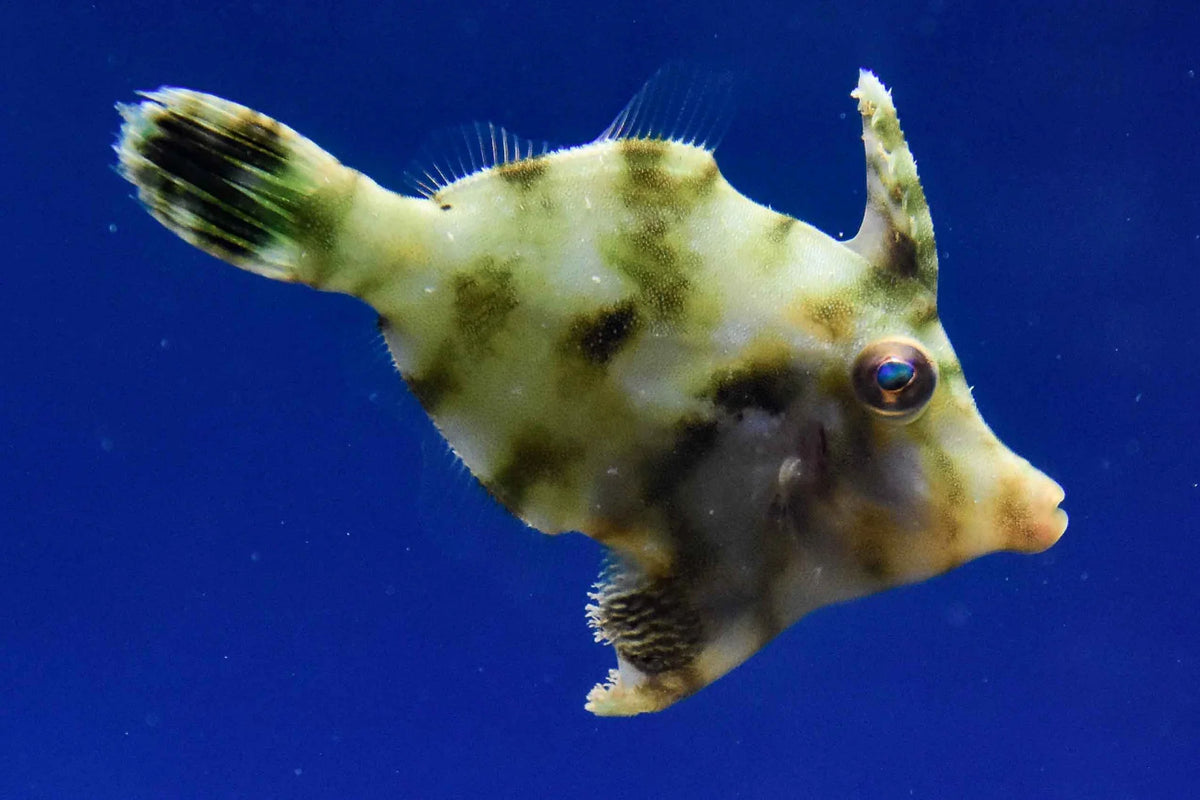
Aiptasia Eating Filefish (Acreichthys tomentosus)
