


- Sku: PLANT-ANUFRA
- Vendor: Squeaky's Aquatics
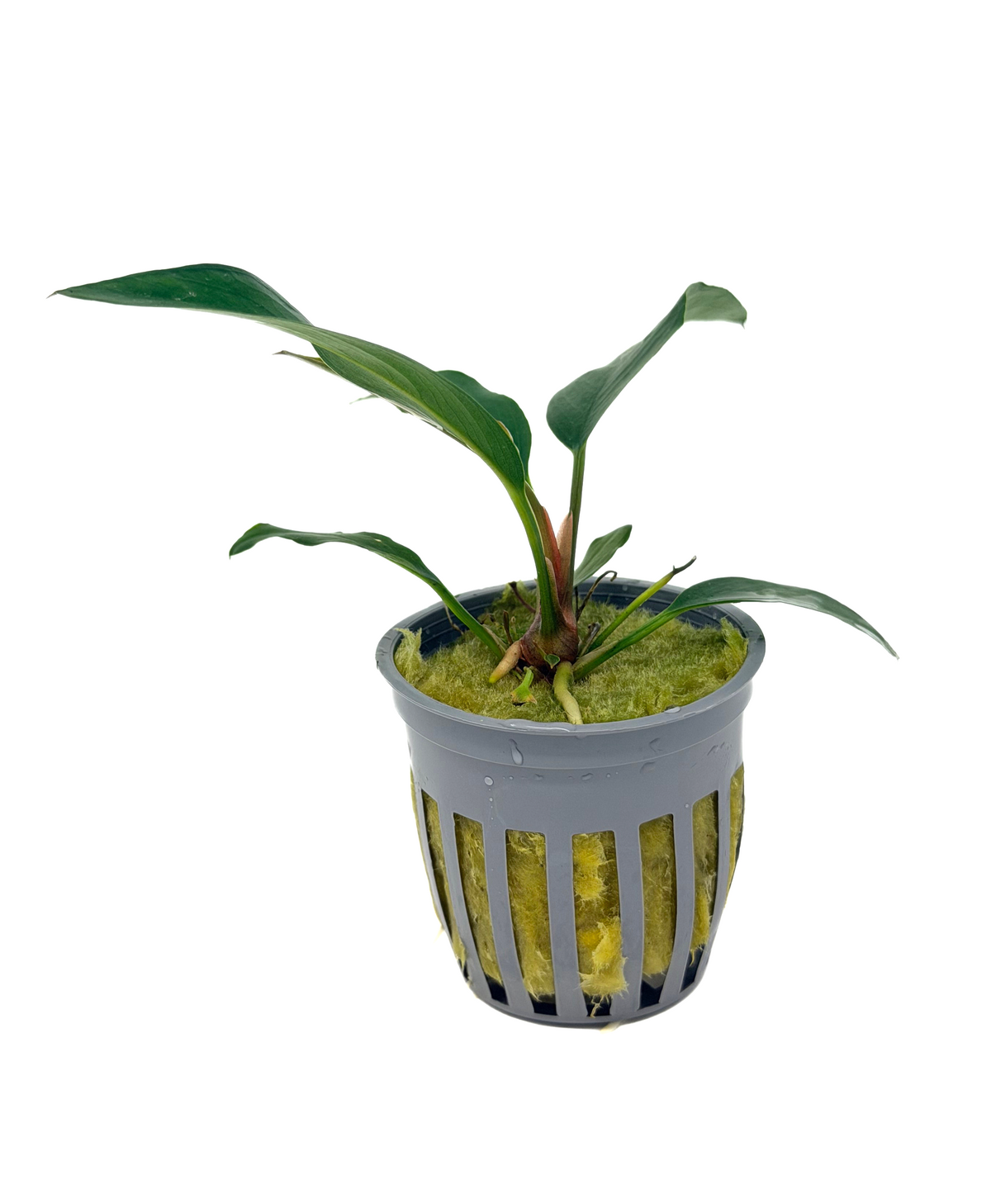
Anubias Frazeri - Potted
Anubias Frazeri (Anubias 'Frazeri') is the hybrid that splits the difference in this genus. Widely held to be a cross between Anubias barteri and Anubias heterophylla, it carries long pointed leaves with a gentle wave along the edge on a plant that lands squarely between the squat Nana types and the towering ones. Thick leathery leaves, low light, no CO2, no special substrate, and tough enough that cichlids and goldfish leave it alone. Browse the rest of our live freshwater plants to build around it.
Care Guide
- Never bury the rhizome. The thick horizontal stem the leaves and roots grow from must sit in open water. Buried, it rots and the plant follows. Tie or glue it to wood or rock, or rest it on the substrate with only the roots below the surface.
- Light: low to moderate. Anubias grows slowly regardless, so surplus light feeds algae on the leaves instead of the plant. Green spot algae on older leaves means dial the light back or shorten the photoperiod.
- CO2 and fertilizer: neither is required. A general water column dose of Seachem Flourish keeps new leaves coming and the green deep, but this plant survives plain water and modest light.
- Water: 72 to 82°F, pH 6.0 to 7.5, soft to hard. Genuinely undemanding.
- It arrived grown above water. Nursery pots are raised emersed, so remove the pot and peel the rockwool off the roots before planting. Rinse, trim mushy roots, and expect some older leaves to melt over the first couple of weeks as it converts to submersed growth. The new leaves are the ones that stay.
- Growth rate: slow. One new leaf every few weeks is normal and healthy. The upside is a plant you never trim.
Specifications
| Botanical name | Anubias 'Frazeri' (A. barteri × A. heterophylla) |
| Common names | Anubias Frazeri |
| Plant type | Rhizome plant |
| Experience level | Beginner friendly |
| Light requirement | Low to moderate |
| CO2 | Not required |
| Placement | Midground |
| Mature height | 8 to 12 in |
| Growth rate | Slow |
| Water temperature | 72 to 82°F |
| pH | 6.0 to 7.5 |
| Propagation | Cut the rhizome, three or four leaves per piece |
| Origin | Nursery hybrid, parent species from West Africa |
| Sold as | One potted plant, grown emersed |
| Pickup | In-store pickup only |
Placement and Companions
Where it goes: midground, either side of a centerpiece or tucked against hardscape where its height reads as a step up from the foreground. Glue or tie it to Malaysian driftwood and it looks settled straight away.
Sits neatly in an Anubias gradient. Put Anubias Nana at the front, Frazeri and Anubias Barteri through the middle, and Anubias Congensis or Hastifolia at the back. Identical care across all of them.
Fish and invertebrates: safe with everything. The leaves shrug off goldfish, African cichlids and silver dollars that destroy softer plants, and the broad surfaces are grazing ground for shrimp, snails and plecos.
Recommended Supplies
- Seachem Flourish: water column fertilizer, the easy way to keep Anubias leaves dark green.
- Fritz aquaADHERE Aquarium Glue: fixes the rhizome to hardscape in seconds, no thread needed.
- Malaysian Driftwood: a natural mounting surface at the right scale.
- Seachem Flourish Tabs: root tabs for the rooted plants sharing the tank.
- Anubias Congensis: the tall one, if you want height behind this.
FAQ
Is Frazeri a real species?
No, and that is fine. It is a nursery hybrid of Anubias barteri and Anubias heterophylla, which is why you will never find a clean botanical name for it. It has been in the hobby for decades and grows exactly like both parents.
My leaves are yellowing and going soft. What happened?
Nine times out of ten the rhizome is buried. Lift the plant and check that the thick horizontal stem is above the substrate. The other usual culprit is leftover rockwool packed around the roots holding debris against them.
Do I need CO2 or a strong light?
No to both. Anubias is the classic low tech plant. Bright light does not speed it up, it just grows algae on the leaves.
How is this different from Anubias Barteri?
Frazeri leaves are longer and more pointed with a slight wave to the margin, and the plant sits a little taller. Care is identical, so pick on leaf shape alone.
Have a question?
Anubias Frazeri - Potted
