

- Sku: FW1-F6171
Wild Type Axolotl (Ambystoma mexicanum) | Live Freshwater Aquatic Salamander
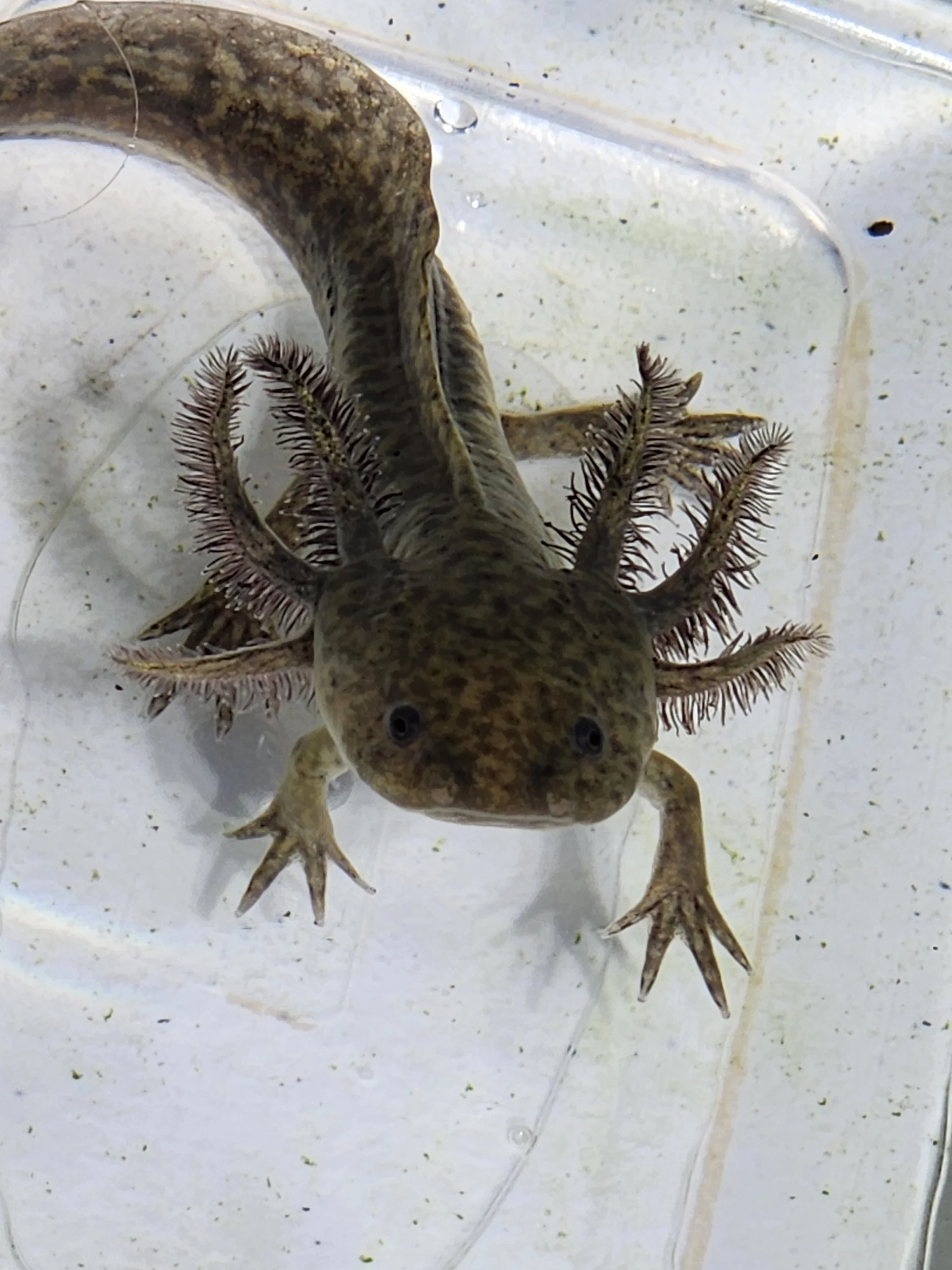
The Wild Type Axolotl (Ambystoma mexicanum) is the original natural color form of this neotenic Mexican salamander — olive-brown to dark grey with greenish-gold flecks, dark eyes, and the iconic feathery external gills that fan out behind the head. Wild types show the deepest pigmentation of any axolotl morph and tend to "color up" further as they mature. They are 100% aquatic for life and stay in their larval form, breathing through gills and absorbing oxygen through skin and lungs.
Looking for more freshwater livestock or accessories? Browse our full Freshwater selection or the Fish & Livestock collection.
- Common Name: Wild Type Axolotl
- Scientific Name: Ambystoma mexicanum
- Adult Size: 9–12 inches
- Lifespan: 10–15 years with proper care
- Minimum Tank: 20 gal long for one; 40 gal+ for a same-sized pair
- Temperature: 60–68 °F (a chiller is often required in summer)
- pH: 7.4–7.6
- Hardness: GH 7–14, KH 6–8
- Care Level: Intermediate — cool-water and substrate-specific
- Temperament: Peaceful with people, but a predator toward anything in the tank
Axolotls are best kept alone. They will mistake fish, shrimp, and snails for food and try to swallow them — and many fish nip back at the gills, causing serious injury. Two same-sized, well-fed adults can sometimes share a 40 gal+ tank, but expect occasional gill or limb nips (axolotls regenerate, but it's stressful). Never house juveniles together.
Keep fine sand or bare bottom only — gravel and small pebbles cause fatal impactions when swallowed. Provide hides (terra-cotta caves, driftwood, large smooth rocks), low flow, and dim lighting. They have no eyelids and prefer shaded spots. A sponge filter or baffled HOB keeps current gentle.
Keeping water cool is the single most important husbandry detail — temperatures above 72 °F cause stress, suppressed appetite, and bacterial/fungal infections. Plan for a chiller, a basement tank, or AC if you can't keep ambient room temps in the mid-60s.
Axolotls are obligate carnivores. Feed a varied diet of high-protein sinking foods:
- Sinking axolotl/salmon pellets as a daily staple
- Earthworms (nightcrawlers, halved or whole) — the gold-standard protein
- Frozen bloodworms, blackworms, daphnia, mysis
- Occasional live blackworms or earthworm pieces for enrichment
Feed juveniles daily, sub-adults every 1–2 days, adults 2–3× per week. Use feeding tongs or a turkey baster to deliver food directly — they hunt by smell and motion, not vision. Remove uneaten food promptly to keep ammonia in check.
Drip-acclimate slowly over 60–90 minutes to match temperature, pH, and hardness. Axolotls are extra sensitive to ammonia/chlorine spikes and to thermal shock — never plop-and-drop. Use a Seachem Prime conditioner on every water change and confirm 0 ammonia / 0 nitrite before introducing your new arrival.
| Common Name | Wild Type Axolotl |
| Scientific Name | Ambystoma mexicanum |
| Origin | Captive-bred (native to Lake Xochimilco, Mexico) |
| Diet | Carnivore — pellets, worms, frozen meaty foods |
| Water Type | Freshwater (cool, neutral-to-slightly alkaline) |
| Reef Safe | N/A — freshwater species |
| Plant Safe | Yes — they ignore plants (anubias, java fern, hornwort recommended) |
- ZooMed Axolotl & Aquatic Newt Food — purpose-formulated sinking pellet
- Frozen bloodworms, blackworms & mysis — protein variety
- Seachem Prime & water conditioners — neutralize chlorine/chloramine on every water change
- Fine sand substrate & freshwater accessories — safe substrate is critical for axolotls
- Aquarium chiller — non-negotiable in warm climates
Can axolotls live with fish?
Not safely. Fish nip at the external gills, and axolotls will try to eat smaller tankmates and choke. Keep them species-only.
Do they ever come onto land?
No. Axolotls are neotenic — they keep their larval, fully-aquatic form for life. They don't need a land area, and dry exposure is harmful.
Why is the temperature so important?
Axolotls evolved in cold high-altitude lakes. Above ~72 °F they get stressed, stop eating, and become prone to bacterial and fungal infections that can be fatal. Plan for cool-water husbandry from day one.
What size will mine grow to?
9–12 inches over 12–18 months with consistent feeding. Wild types tend to darken and develop richer color as they mature.
How long do axolotls live?
10–15 years is typical with good care; some reach 20. They are a long-term commitment.
Are these captive-bred?
Yes. All our axolotls come from established US captive-breeding lines — wild axolotls are critically endangered and not collected.
Have a question?
Wild Type Axolotl (Ambystoma mexicanum) | Live Freshwater Aquatic Salamander