


- Sku: SW3-SW1004
- Vendor: Squeaky's Aquatics
Blue Spotted Sharpnose Puffer (Canthigaster solandri)
The Blue Spotted Sharpnose Puffer (Canthigaster solandri), also sold as the Spotted Toby or Blue Spot Puffer, is a small puffer with a big personality. Its warm orange-brown body is covered in tiny electric blue spots, with blue lines running back from the pointed snout and around the eyes. It tops out around 4.5 inches, learns who feeds it within days, and spends the day inspecting every rock in the tank. Care level is intermediate and temperament is semi-aggressive. Browse more saltwater fish and supplies at Squeaky's.
Care Guide
- Tank size: 50 gallons minimum, with plenty of live rock to explore and open water to swim through. It is a messy eater for its size, so strong filtration and a protein skimmer pay off.
- Water: 72 to 78°F, pH 8.1 to 8.4, salinity 1.020 to 1.025. Puffers have no scales and react to poor water quality faster than most fish, so keep nitrate low and change water on a schedule.
- Diet: Carnivore. Feed meaty frozen foods once or twice a day and include shelled foods several times a week, such as clams on the half shell, whole krill or shell-on shrimp.
- Teeth: Puffer teeth never stop growing. Crunching shells wears them down. Without hard foods the beak overgrows and the fish eventually cannot eat, so if it starts to look long, feed more shelled food.
- Medications: Scaleless and sensitive to copper and many harsh treatments. Check with us before dosing any tank this puffer lives in.
- Handling: Puffers inflate when badly stressed. Move it with a cup or bag rather than lifting it out of the water in a net, so it never gulps air.
Specifications
| Scientific name | Canthigaster solandri |
| Common names | Blue Spotted Sharpnose Puffer, Spotted Toby, Blue Spot Puffer, Solander's Toby |
| Family | Tetraodontidae, the pufferfishes (sharpnose puffers, genus Canthigaster) |
| Care level | Intermediate |
| Temperament | Semi-aggressive, one sharpnose puffer per tank |
| Reef safe | No. Nips corals and clam mantles, eats small inverts |
| Max size | About 4.5 inches |
| Minimum tank | 50 gallons |
| Temperature | 72 to 78°F |
| pH | 8.1 to 8.4 |
| Salinity | 1.020 to 1.025 |
| Diet | Carnivore, needs hard shelled foods |
| Copper sensitive | Yes, scaleless |
| Origin | Indo-Pacific reefs, East Africa to the central Pacific |
| Pickup | In-store only |
Compatibility
Good tank mates: active peaceful and semi-aggressive fish that are not slow or long finned. Tangs like the Tank-Raised Blue Hippo Tang, rabbitfish like the Magnificent Foxface, dwarf angels like the Coral Beauty Angelfish, plus clownfish, damsels, hawkfish and larger wrasses.
Avoid: other sharpnose puffers such as the Valentini Puffer, since tobies fight with their own kind. Skip seahorses, pipefish and other slow, long-finned fish it may nip, and large predators that could try to swallow it.
Invertebrates: shrimp, small crabs, snails, feather dusters and sponges are all on the menu. Plan on a fish-only tank rather than a cleanup crew.
Recommended Foods & Supplies
- Ocean Nutrition Frozen Clams on the Half Shell, the tooth grinder
- Ocean Nutrition Frozen Prime Reef, a meaty daily staple
- Ocean Nutrition Frozen Formula Two, for variety
- SFBB Mysis Shrimp Cube 3.5oz, an easy everyday meal
- More fish food and water care
FAQ
Is the Blue Spotted Sharpnose Puffer reef safe?
No. It will sample fleshy corals, zoanthids, clam mantles and most small inverts. A fish-only or FOWLR tank is the right home.
How big does it get?
About 4.5 inches, which makes it one of the most manageable puffers. A 50 gallon tank works for its whole life.
Can I keep two?
Only in a large tank with both added at the same time, and even then they may bicker. One sharpnose puffer per tank is the safe plan.
Are puffers poisonous?
Like many puffers, its skin and organs carry toxin. That is not a danger to you through the glass, but wash your hands after working in the tank and never keep it with a predator big enough to swallow it.
Have a question?
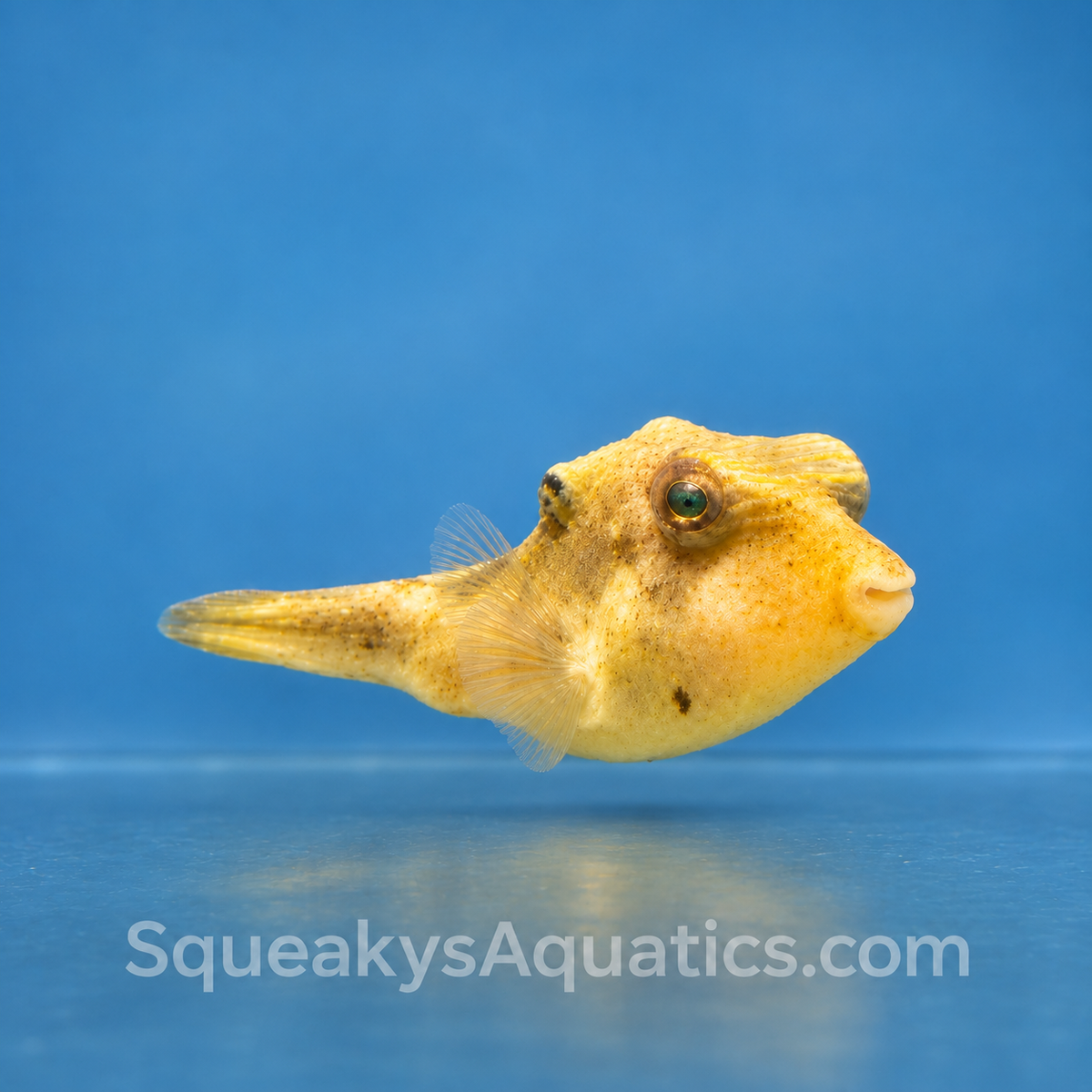
Blue Spotted Sharpnose Puffer (Canthigaster solandri)
