


- Sku: FW1-F8973
Bumblebee Pagoda Snail (Brotia pagodula) | Live Freshwater Invertebrate
The Bumblebee Pagoda Snail (Brotia pagodula) is a striking freshwater grazer with a tall, conical pagoda-spired shell ringed in dark and pale bands — the "bumblebee" patterning that gives the species its trade name. They cruise across rocks, driftwood, and substrate eating biofilm, soft algae, and detritus, and they're equally at home in community planted tanks, biotopes, and harder-water Asian setups.
Looking for more invertebrates or freshwater livestock? Browse our Freshwater selection or the full Fish & Livestock collection.
- Common Name: Bumblebee Pagoda Snail
- Scientific Name: Brotia pagodula
- Adult Size: 2–3 inches (shell length)
- Lifespan: 2–3 years with stable parameters
- Minimum Tank: 20 gal
- Temperature: 75–82 °F
- pH: 7.2–8.0
- Hardness: GH 8–14, KH 4–8 (hard, alkaline preferred for shell health)
- Care Level: Beginner–Intermediate
- Temperament: Peaceful — strict herbivore/detritivore
Bumblebee Pagodas thrive in mature tanks with established biofilm, smooth rockwork, driftwood, and a sand or fine-gravel substrate (rough gravel can chip the long pagoda spires). Hard, alkaline water is the single most important parameter — soft, acidic water erodes their shells over time. Crushed coral or aragonite in the substrate or filter helps buffer KH and supplies dissolved calcium.
Excellent tank mates: peaceful community fish (rasboras, tetras, danios, peaceful gouramis), shrimp (Neocaridina, Caridina), and other non-aggressive snails like Nerites and Mystery snails. Avoid assassin snails (Anentome helena), loaches (yoyo, clown, hillstream), pufferfish, and large cichlids — all will hunt or chew on snail flesh.
Primarily a biofilm and soft-algae grazer in the wild. In aquaria they accept a wide menu:
- Soft algae and biofilm growing on rocks, glass, and wood (their favorite)
- Blanched vegetables — zucchini, spinach, kale, green beans
- Sinking algae wafers, calcium-rich snail food
- Leftover sinking pellets and protein flakes (in moderation)
- Cuttlebone or crushed-coral chunks for supplemental calcium
Feed only what they finish in 12–24 hours and remove rotting veg promptly. Calcium availability is critical — without it, shell pitting and erosion follow within months.
Drip-acclimate slowly over 60–90 minutes. Snails are extra sensitive to sudden changes in pH, KH, and temperature. Confirm 0 ammonia / 0 nitrite, hard alkaline water, and stable temperature before introducing. Use a Seachem Prime conditioner on every water change.
| Common Name | Bumblebee Pagoda Snail |
| Scientific Name | Brotia pagodula |
| Origin | Southeast Asia (commercially farmed) |
| Diet | Herbivore/detritivore — biofilm, algae, blanched veg, calcium foods |
| Water Type | Freshwater (tropical, hard, slightly alkaline) |
| Reef Safe | N/A — freshwater species |
| Plant Safe | Yes — they ignore healthy plants |
- Algae wafers & sinking snail/invert pellets — round out the diet beyond biofilm
- Seachem Prime & water conditioners — stable parameters protect shell integrity
- Crushed coral or aragonite — buffer KH and supply calcium for shells
- Cuttlebone — drop a piece in the tank for calcium grazing
- Other freshwater livestock — pair with peaceful community fish and shrimp
Will they eat my plants?
No. Bumblebee Pagodas are biofilm and detritus grazers. They'll graze rotting plant leaves but ignore healthy growth — they're a great cleanup-crew option for planted tanks.
Will they overrun my tank like other snails?
Unlikely. Pagoda snails reproduce slowly and many keepers see only one or two new snails per year, if any — nothing like the population explosion of bladder or trumpet snails.
Why is hard water so important?
The shell is calcium carbonate. Soft, acidic water dissolves shell over months, leaving pits and weak spots that eventually fail. Keep KH 4–8 and add a calcium source for healthy shells.
What can't I keep them with?
Anything that eats snails: assassin snails, loaches (yoyo, clown, hillstream), pufferfish, larger cichlids. Bettas, gouramis, and tetras are all fine.
How do I tell if a Pagoda is healthy?
Active foot, fully extended tentacles, and a clean shell tip without pitting. They retract when handled — that's normal. A snail that doesn't move for 24+ hours and gives off odor when picked up is failing.
Have a question?
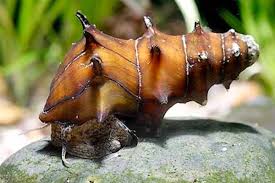
Bumblebee Pagoda Snail (Brotia pagodula) | Live Freshwater Invertebrate
