

- Sku:
- Vendor: Carolina Aquatics
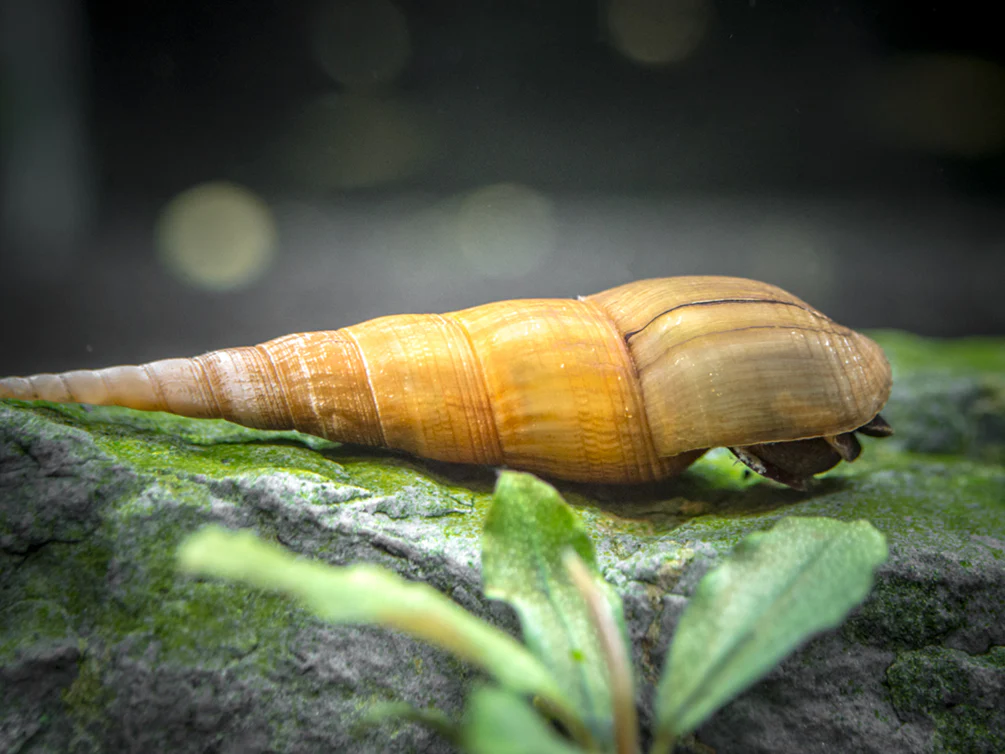
Chopstick Snail (Stenomelania torulosa)
The Chopstick Snail (Stenomelania torulosa) is one of the most unusual looking snails in the freshwater hobby, with a long, slender, tightly spiraled shell that tapers to a fine point like the tip of a chopstick. It spends much of its life half buried in sand, plowing slowly through the substrate and eating detritus, biofilm, and leftover food that other cleaners miss. It is completely peaceful, leaves plants alone, and does not breed in freshwater, so a few of them will never turn into a snail explosion. Pair it with the rest of our freshwater cleanup crew.
Care Guide
- Sand is a must: chopstick snails are burrowers. A soft sand bed such as Estes Natural Aquatic Sand at least an inch or two deep lets them dig, turn over the substrate, and help keep pockets of waste from building up. On coarse gravel they struggle.
- Expect to see them less: they are most active at night and often sit with only the shell tip showing. That is normal, not a sign of trouble.
- Hard water for strong shells: keep pH at 7.0 or higher with moderate to high hardness. Soft, acidic water erodes the long shell, starting at the tip. Seachem Equilibrium helps if your water is soft.
- Feed them too: they eat detritus, biofilm, and leftovers, but a very clean or brand new tank can leave them hungry. Drop a sinking food such as Hikari Mini Algae Wafers or Xtreme Shrimpee Sticks near them a few times a week.
- Mature tanks only: add them to an established, cycled aquarium with stable water. They are wild collected and do not appreciate swings in temperature or chemistry.
- No copper: copper based medications kill snails. Read labels before dosing any tank that holds them.
Specifications
| Scientific name | Stenomelania torulosa |
| Also known as | Chopstick Snail, Tower Snail |
| Care level | Beginner |
| Temperament | Peaceful |
| Adult size | About 2 to 3 inches long |
| Minimum tank | 10 gallons with a sand substrate |
| Temperature | 72 to 80°F |
| pH | 7.0 to 8.0 |
| Hardness | Moderate to hard |
| Diet | Detritus, biofilm, leftovers, and sinking foods |
| Breeding | Does not reproduce in freshwater aquariums |
| Lifespan | About 2 to 3 years |
| Origin | Wild collected, coastal rivers of the tropical Indo-Pacific |
Compatibility
Chopstick snails are harmless to fish, shrimp, other snails, and plants, so the question is only what might bother them.
- Great with: shrimp such as Amano Shrimp and Cherry Shrimp, other hard water snails like the White Hercules Snail, Blue Rabbit Snail, and Racetrack Nerite, and calm community fish like platies and corys.
- Avoid: puffers, clown loaches, yo-yo loaches, crayfish, and large cichlids, all of which eat snails. Very aggressive diggers can also keep them from settling into the sand.
Recommended Foods & Supplies
- Estes Natural Aquatic Sand for a bed they can burrow in
- Hikari Mini Algae Wafers as a sinking supplement
- Repashy Soilent Green, a gel food snails and shrimp both graze
- Seachem Equilibrium for hardness and healthy shells
- Fritz GH Test Kit to confirm your water supports shell growth
FAQ
Will they overrun my tank? No. Their larvae need brackish water to develop, so chopstick snails do not reproduce in a freshwater aquarium. The number you add is the number you keep.
I have not seen mine in days. Is it alive? Probably. They burrow deeply and come out mostly at night. Check after lights out with a flashlight, or look for the pointed shell tip at the sand surface. A dead snail usually floats or gives off a strong smell.
Why is the tip of the shell turning white or breaking? That is shell erosion from soft or acidic water. Test pH and GH, raise hardness if needed, and new shell growth at the opening will come in solid.
Are they safe with shrimp and plants? Completely. They do not eat healthy plants or harm shrimp, and their digging helps keep a sand bed from going stale.
How many should I get? One per 5 to 10 gallons is plenty for a typical community tank. Because they do not breed, you can add more later if you want more visible activity.
Have a question?
Chopstick Snail (Stenomelania torulosa)
