


- Sku: SQ-CLOWNLOACHCHRO
- Vendor: Squeaky's Aquatics
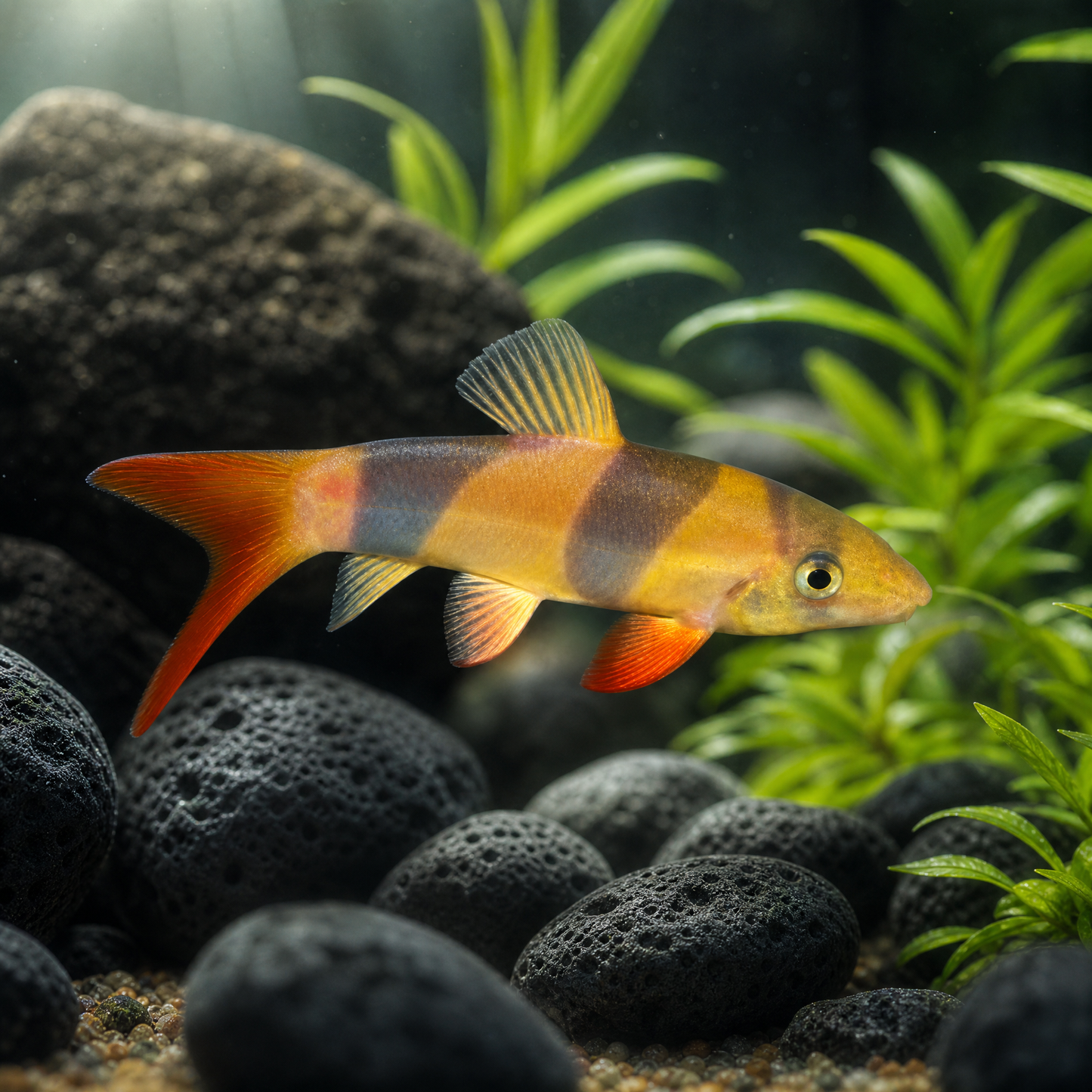
Clown Loach (Chromobotia macracanthus)
Request only, this one is not in our tanks right now.
Use the Request This Fish button to tell us you want it and how many. Nothing is charged and nothing is held. We group requests together and add the popular ones to a regular store order, then email you the moment they land. If you would rather lock in a specific fish just for you, ask us about a special order instead.
About the Clown Loach
The Clown Loach is one of the great personality fish of the freshwater hobby. Bright orange with three bold black bands and flicking red fins, it spends its day rooting through the substrate, wedging itself into caves and driftwood, and socializing with its own kind. They are famous for two odd habits: an audible clicking sound when they are excited, and a dead flat sprawl on their side while resting that alarms every new keeper who sees it. Both are completely normal.
They are also a genuine long term commitment. Clown Loaches grow slowly but they do not stay small, and a well kept group can outlive a car. Buy them as a group of youngsters and plan the tank around the adults they will become.
Care at a glance
| Scientific Name | Chromobotia macracanthus |
| Origin | Sumatra and Borneo, Indonesia |
| Adult Size | 8 to 12 inches |
| Lifespan | 15 to 20 years, often longer |
| Minimum Group | 5, and 6 or more is better |
| Minimum Tank | 75 gallons for a long term group |
| Temperature | 78 to 86 F |
| pH | 6.0 to 7.5 |
| Hardness | 5 to 12 dGH |
| Diet | Omnivore |
| Temperament | Peaceful and highly social |
| Care Level | Intermediate |
Before you request one
- They are a group fish, not a single. A lone Clown Loach hides, stops eating well, and fades. Five is the floor and six or more is where they relax and show their real behavior.
- They get big. Store sizes are usually 2 to 3 inches, but adults reach 8 to 12. A 75 gallon is the honest long term minimum for a group.
- They are sensitive to medication. Their scales are very fine, so copper and full strength ich treatments can hit them hard. Treat at half dose and raise the temperature instead where you can. Our treatment range has loach safe options.
- They want it warm and clean. The upper end of their range suits them, and they show stress in high nitrate faster than most tankmates. Worth keeping a test kit on hand.
- They eat snails. A useful trait if you have a pest snail problem, and something to plan around if you keep ornamental snails.
Tankmates and setup
Peaceful but boisterous, so pair them with fish that can handle a bit of bustle. Larger tetras, barbs, rainbowfish, gouramis and other bottom dwellers all work well. Try our Cherry Barb or Panda Cory for a mixed community, and browse the full fish selection for more.
Give them soft substrate, plenty of caves and driftwood to wedge into, and gentle to moderate flow. They will graze and dig, so choose sturdy or well rooted aquarium plants such as Anubias and Java Fern attached to hardscape.
Feeding
Omnivores with a real appetite. A quality sinking food is the staple, supplemented with frozen bloodworms or brine shrimp and the occasional blanched vegetable. Hikari Sinking Wafers and Hikari Algae Wafers are both good fits, and the rest of our range is in fish food.
How requesting works
- Hit Request This Fish and tell us how many you are after.
- We add your request to the tally. Nothing is charged and nothing is reserved for you.
- When there is enough interest we put it on a store order and email you the day it arrives.
- Everything goes through our quarantine before it reaches the sales floor, so you get a fish that is settled and eating.
Browse the rest of our freshwater range while you wait.
Have a question?
Clown Loach (Chromobotia macracanthus)
