

- Sku: FW5-PCRPA
- Vendor: Squeaky's Aquatics
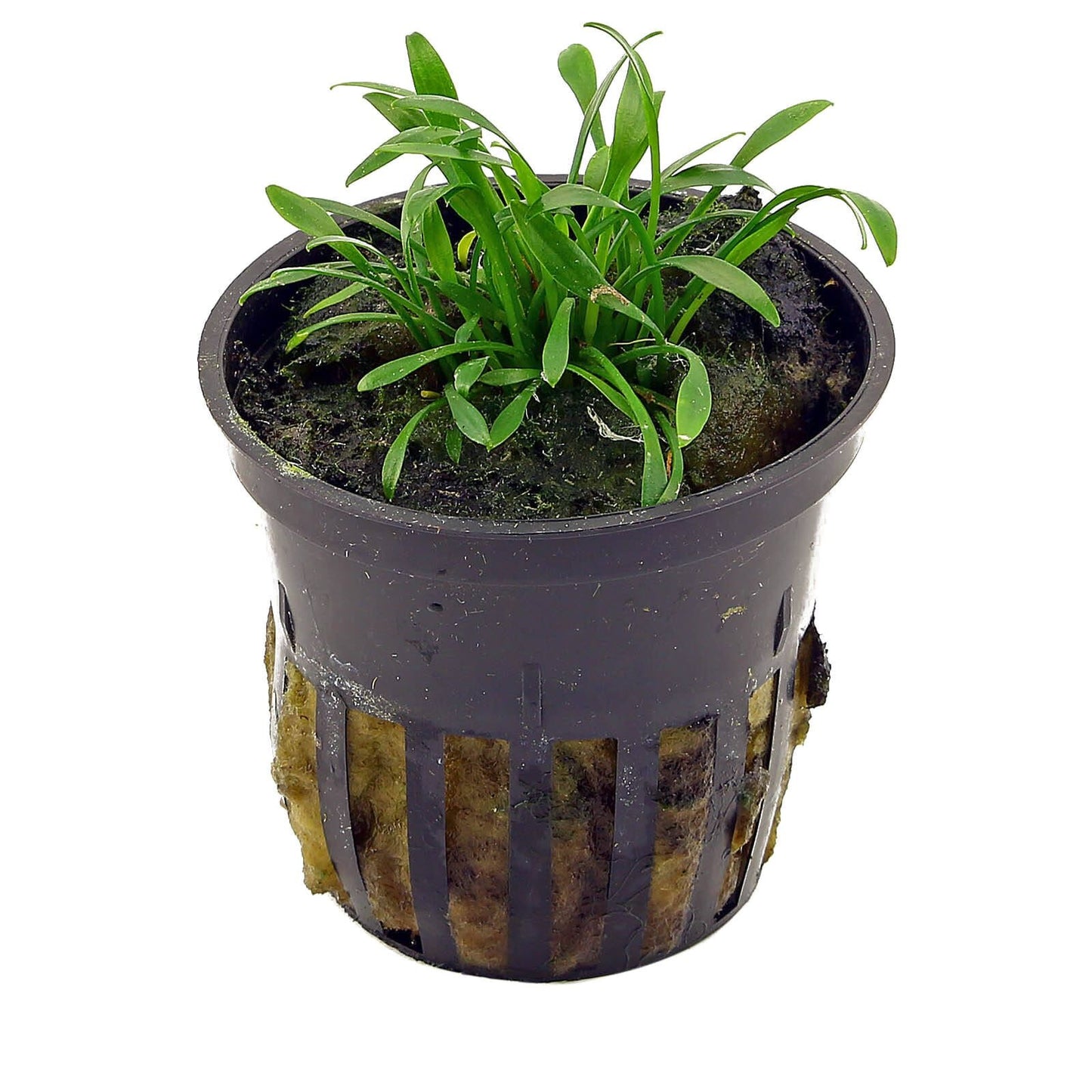
Crypt Parva (Cryptocoryne parva) - Potted
Crypt Parva (Cryptocoryne parva) is the smallest Cryptocoryne in the hobby, a tidy rosette of narrow green blades that tops out around 2 inches. It is the crypt to reach for when you want a foreground that does not need CO2, does not need trimming every week, and will not take over the tank. The trade-off is patience: this plant is genuinely slow, and a proper carpet takes the better part of a year. Browse the rest of our live freshwater plants.
Sold as a nursery pot in rock wool, ready to split into several small clumps. Endemic to Sri Lanka.
Care Guide
| Care Level | Intermediate, easy to keep but slow to establish |
| Lighting | Moderate to high (it is short, so keep it unshaded) |
| CO2 | Not required, but it speeds up a genuinely slow plant |
| Temperature | 72 to 82°F |
| pH | 6.0 to 8.0 |
| Hardness | 2 to 15 dGH |
| Placement | Foreground |
| Growth Rate | Very slow |
| Height | 1 to 2 inches, occasionally 4 |
| Feeding | Root feeder, benefits from root tabs |
| Origin | Sri Lanka |
Why Crypt Parva
- A foreground without the work. Unlike hairgrass or Monte Carlo, it never needs mowing and does not need CO2 to stay compact.
- Stays put. It spreads by short runners into a slow, dense clump instead of throwing shoots across the tank.
- Nano friendly. At 1 to 2 inches tall it holds scale in a 5 or 10 gallon where a sword or wendtii would swallow the layout.
- Wide water tolerance. Happy from soft acidic blackwater through hard alkaline tap, which is unusual for a foreground plant.
- Shrimp safe. The tight rosettes trap biofilm and give Neocaridina somewhere to graze at substrate level.
How to Plant
- Slip the plant out of the pot and rinse the rock wool away from the roots. Any wool left buried will rot.
- Split the mass into small clumps of three to five blades. More, smaller clumps fill in faster than one big one.
- Plant each clump about an inch apart with the crown just above the substrate. Burying the crown is the usual way to kill a crypt.
- Push a root tab under the planting area. Crypts feed mainly through their roots.
- If it melts back in the first few weeks, leave it alone. The roots survive and push new submersed leaves out on their own.
Recommended Pairings
- Aquarium Co-Op Easy Root Tabs, the single biggest upgrade for any crypt.
- CaribSea Eco-Complete, a nutrient-rich substrate that suits root feeders.
- Cryptocoryne wendtii 'Bronze' and Crypt Wendtii Green, taller crypts to layer behind it.
- Dwarf Hairgrass, a finer texture next to the parva blades.
- More freshwater plants and water care for the rest of the scape.
FAQ
All the leaves melted after I planted it. Is it dead?
Probably not. Crypt melt is a normal reaction to a change in water chemistry, and Cryptocoryne parva does it as readily as any other crypt. The rhizome and roots stay alive. Keep the light and dosing steady and new leaves appear in two to four weeks.
How long until it carpets?
Months, not weeks. Plan on six months to a year for small clumps to knit together. Planting more clumps closer together is the only real shortcut.
Do I need CO2?
No. It grows fine low-tech. CO2 mostly buys you speed, which is the one thing this plant is short on.
Why is mine not growing at all?
Check two things: whether the crown got buried, and whether taller plants are shading it. Parva is short enough that it is usually a light problem rather than a nutrient one.
Is it safe with shrimp and snails?
Yes. It is not treated with copper-based pesticides and is safe for Neocaridina, Caridina, and nerite snails.
Have a question?
Crypt Parva (Cryptocoryne parva) - Potted
