

- Sku: SW4-SW3374
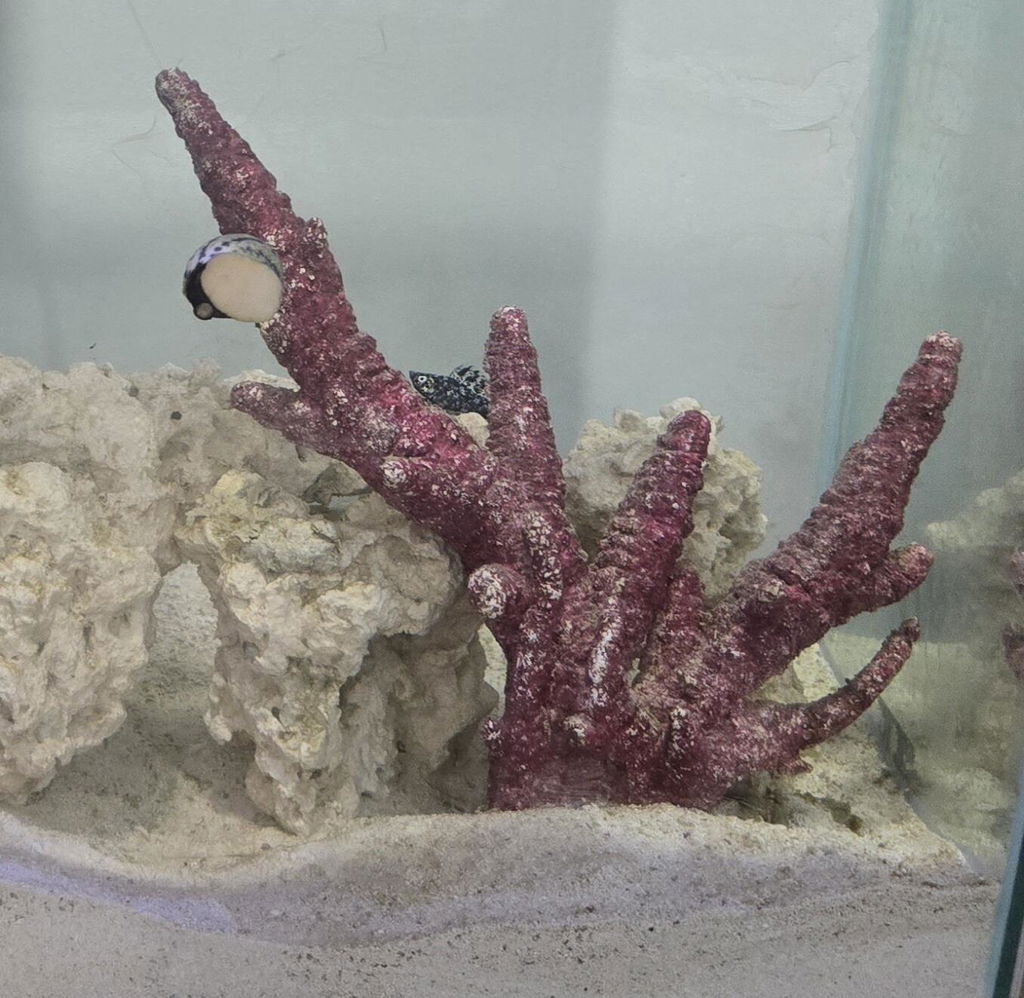
Mexican Turbo Snail (Turbo fluctuosa)
The Mexican Turbo Snail (Turbo fluctuosa) is the heavy-equipment option for algae control in saltwater reef tanks. Bigger appetite than Astrea, Trochus, or Cerith snails — a single Mexican Turbo will mow through hair algae, film algae, and diatoms faster than a half-dozen smaller grazers. Beginner-friendly, peaceful, and reef safe. Pair with our Nassarius, Tiger Sand Snails, and Emerald Crab for a complete saltwater cleanup crew.
Care Guide
Mexican Turbos are subtropical herbivores from the Sea of Cortez and Baja Mexico. They graze constantly across rock and glass, scraping off film algae, diatoms, and tougher hair algae that smaller snails can't keep up with. They self-right easily if knocked over (a big advantage over Astrea snails).
Temperature matters more than you'd think. Mexican Turbos are subtropical, not fully tropical — they live in 70–78°F water in the wild. Tanks running 78–82°F shorten their lifespan to 6–18 months. Cooler reef tanks (72–75°F) get 3–5 years. Many reefkeepers run Mexican Turbos as a "consumable" cleanup crew — they earn their keep clearing an algae bloom, then get replaced annually.
Don't let them starve. If your tank runs out of nuisance algae, supplement with dried nori or seaweed clipped to a magnet. Starvation is a more common cause of death than temperature in well-stocked, low-algae reef tanks.
Heads up on aquascaping: Mexican Turbos are powerful and physically large enough to bulldoze loose frags or knock over stacked rock that isn't glued or aquastix'd in place. Secure your scape and glue your frag plugs.
Specifications
| Scientific Name | Turbo fluctuosa (also seen as Turbo fluctuosus) |
| Common Names | Mexican Turbo Snail, Turban Snail |
| Care Level | Beginner |
| Temperament | Peaceful |
| Reef Safe | Yes |
| Tank Size Minimum | 10–30 gallons (1 per 10–20 gal) |
| Max Adult Size | ~2 in shell diameter |
| Lifespan | 6–18 mo at 78–82°F; 3–5 yr at 72–75°F |
| Water Type | Saltwater / Reef |
| Temperature | 72–78°F (cooler is better) |
| Salinity (SG) | 1.023–1.025 |
| pH / dKH | 8.1–8.4 / 8–12 |
| Diet | Herbivore — hair algae, film algae, diatoms; supplement with nori |
| Origin | Sea of Cortez / Gulf of California, Baja Mexico |
Compatibility
Great with: Reef-safe community fish (clownfish, gobies, blennies, firefish, chromis), other CUC species (other snails, cleaner shrimp, Emerald Crabs), and standard reef coral mixes (LPS, SPS, soft corals).
Use caution with: Hermit crabs (may kill snails for the shell — keep extra empty shells around), and tanks with loose or unglued aquascape (the snails are physically powerful and will knock things over).
Avoid with: Pufferfish, triggers, large wrasses, and hawkfish — these will eat snails. Don't keep with predatory crabs that pry shells open.
Mexican Turbo vs. Other CUC Snails
- Mexican Turbo (this listing): The heavy-equipment grazer. Best for clearing established hair algae and diatoms.
- Margarita Snail: Smaller and slower; gentler grazing on rock surfaces. Won't bulldoze frags.
- Nassarius Snails (Large): Sand-bed scavengers — they eat leftover meaty food and detritus, NOT algae. Run alongside Turbos for a complete crew.
- Tiger Sand Snail: Sand sifters that aerate the substrate.
Recommended Pairings
- Emerald Crab — takes care of bubble algae the snails won't touch
- Scarlet Skunk Cleaner Shrimp — peaceful tankmate that cleans parasites off your fish
- Browse all reef nutrition for nori, sinking pellets, and supplemental food when algae runs low
- Browse other saltwater livestock and supplies
FAQ
How many should I buy for my tank?
The rule of thumb is one Mexican Turbo per 10–20 gallons. A 30-gallon tank with a moderate algae problem can handle 2–3; a clean 30-gallon usually only supports one without supplemental feeding. Don't overstock or they'll starve.
Why do my Mexican Turbos die in 6–9 months?
Usually one of two reasons: temperature or starvation. Mexican Turbos are subtropical (70–78°F), and the warm 78–82°F that most tropical reef tanks run is technically too hot for long-term care. They also need a steady supply of algae — if your tank is too clean, supplement with nori. Run cooler if possible, and keep them fed.
Will they eat my coralline algae?
Mexican Turbos primarily target soft film algae, diatoms, and hair algae. They will graze across coralline-encrusted rock without significantly damaging it, but in tanks where soft algae is scarce, they may leave grazing trails on coralline. The trails recover quickly.
Are they reef safe?
Yes, 100% reef safe. They won't touch corals, anemones, fish, or other inverts. The only caveat is that they're physically large — their movement can dislodge frag plugs that aren't glued down or knock over loose rock.
Have a question?

Mexican Turbo Snail (Turbo fluctuosa)