

- Sku: FWRNE400AT-3
- Vendor: Squeaky's Aquatics
Neon Wrasse (Halichoeres melanurus)
Your order is reserved — we hold off on bagging until you arrive, so it stays healthy in its display tank.
The Neon Wrasse (Halichoeres melanurus) — sometimes called the Tail-spot Wrasse, Hoeven's Wrasse, or Pinstripe Wrasse — is a brilliantly colored reef-safe wrasse with a yellow-orange body and electric blue horizontal pinstriping that runs head to tail. They're always on the move, picking through rockwork for pests and adding constant motion to the display. Care level is intermediate, temperament is peaceful, and they're reef-safe with caution (won't bother corals, but may snack on small ornamental inverts).
Pair with our other saltwater livestock and live corals for a stunning reef community.
Care Guide
- Tank size: 55 gallons minimum, 75+ recommended. Active swimmer needs horizontal length more than depth.
- Aquascape: Plenty of live rock with crevices and a sand bed at least 2–3 inches deep — Halichoeres wrasses bury in sand to sleep and when startled.
- Tight-fitting lid required: Wrasses are accomplished jumpers, especially when first added or stressed. Gaps around overflows are common escape points — cover them.
- Reef safe with caution: Won't pick at corals or clams. Will eat small ornamental shrimp, bristle worms, flatworms, and tiny pest snails — great for pest control, but pricey ornamental inverts may be at risk.
- Diet: Carnivore. Offer a varied diet of mysis, brine shrimp, marine pellets, frozen herbivore blends, and the occasional live copepod treat. Feed 2–3 times daily.
- Single specimen per tank unless you have a very large reef — multiple males of the same species will fight.
Specifications
| Common Names | Neon Wrasse, Tail-spot Wrasse, Hoeven's Wrasse, Pinstripe Wrasse |
| Scientific Name | Halichoeres melanurus |
| Origin | Western Pacific (Indonesia, Philippines, Fiji) |
| Adult Size | 4–5 inches |
| Lifespan | 5–8 years |
| Care Level | Intermediate |
| Temperament | Peaceful |
| Minimum Tank Size | 55 gallons (75+ recommended) |
| Reef Safe | Yes, with caution (may eat small inverts) |
| Temperature | 72–78°F |
| pH | 8.1–8.4 |
| Salinity | 1.020–1.025 SG |
| Diet | Carnivore |
Compatibility
Great with: Most reef-safe community fish — clownfish, gobies, blennies, anthias, peaceful tangs, dwarf angels, cardinals. Plays well with most LPS, SPS, soft corals, and clams.
Use caution with: Small ornamental shrimp (sexy shrimp, peppermint, cleaners may be at risk), small ornamental snails, feather dusters. Other peaceful wrasses are usually OK as long as they're added together; established Halichoeres males may chase newcomers of the same genus.
Avoid: Aggressive predators (lionfish, large groupers, triggerfish), other male Neon Wrasses unless in a very large reef.
Recommended Foods & Supplies
- BRS Premium Saltwater Pellets — high-protein staple
- Nutramar Tigrio Live Copepods — live food enrichment
- Vitalis Marine Pellets 1mm — varied nutrition
- Full nutrition collection — mysis, brine, herbivore blends
- Water testing kits — reef parameters need regular checks
FAQ
Why do I need a deep sand bed? Halichoeres wrasses sleep buried under the sand and dive into it when startled. Without 2–3 inches of fine sand, they'll stress, refuse to eat, and may not survive long-term. This isn't optional.
Are they really good for pest control? Yes — Neon Wrasses are voracious predators of bristle worms, flatworms, pyramidellid snails, and tiny pest crustaceans. They earn their place in any reef tank with a worm problem.
Will they jump? Absolutely. New arrivals and stressed individuals jump. A tight-fitting eggcrate or polycarbonate top, plus covered overflow boxes, is non-negotiable.
Can I keep two together? Two males will fight. A male and a female can sometimes work in a 75+ gallon reef, but sexing them isn't easy — safer to keep a single specimen unless you have a very large tank and add both at the same time.
Will they eat my cleaner shrimp? Adult cleaner shrimp and large peppermint shrimp are usually safe with adult Neon Wrasses, but sexy shrimp, anemone shrimp, and very small specimens can disappear.
Have a question?
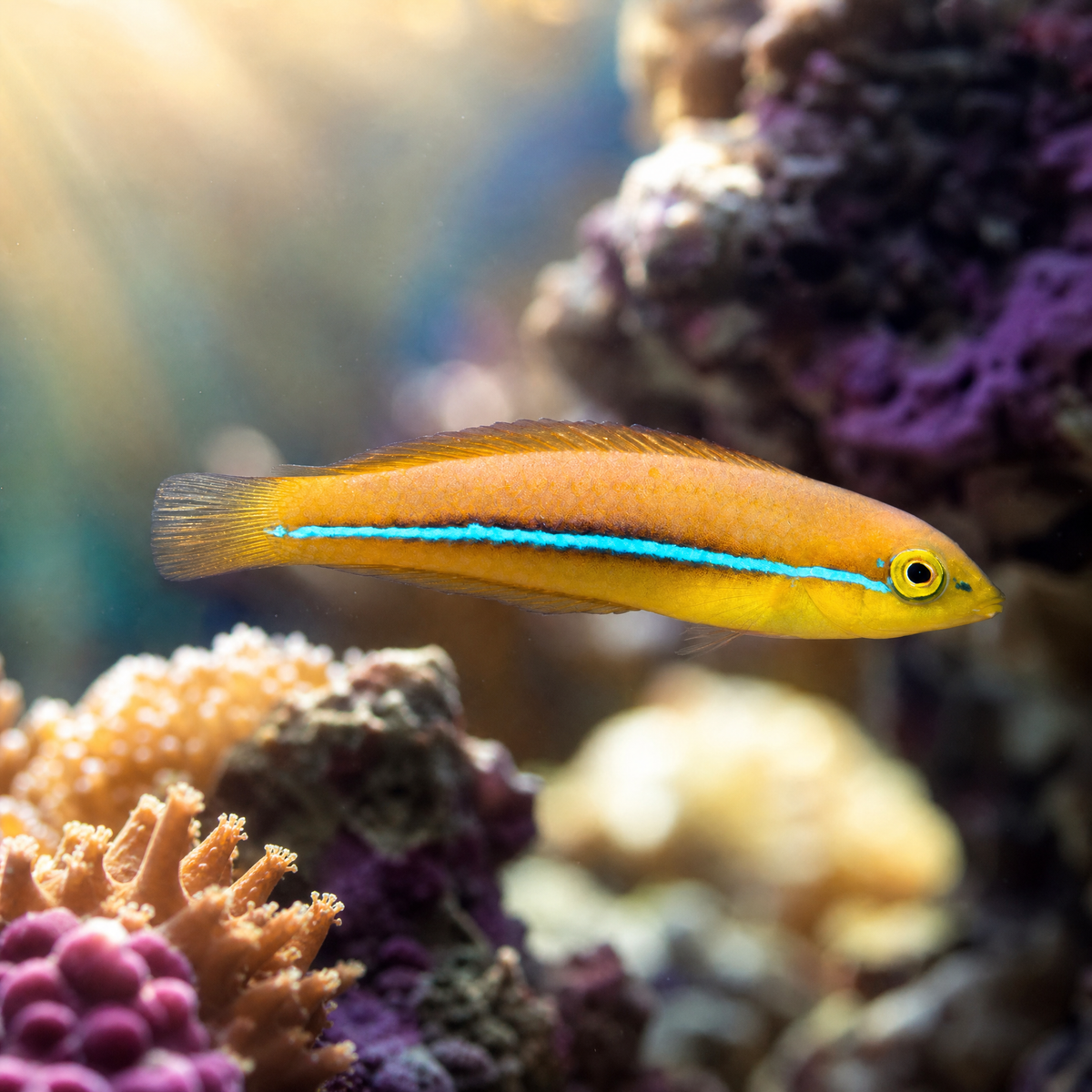
Neon Wrasse (Halichoeres melanurus)
