


- Sku: Orchid
- Vendor: Squeaky's Aquatics
Orchid Dottyback (Pseudochromis fridmani)
The Orchid Dottyback (Pseudochromis fridmani) is the one dottyback you can put in a peaceful reef without regretting it. A Red Sea endemic, it is a solid wash of deep violet-magenta from nose to tail, with a thin dark eye stripe and a graceful, almost anthias-like body. Unlike the scrappy Bicolor and Magenta dottybacks, fridmani is genuinely mild-mannered, and the ones we bring in are tank raised, which makes them hardier, better adjusted to aquarium food, and easier on wild reefs. Pair it with the rest of our saltwater fish and reef-safe livestock.
Expect it to hover near a rockwork cave for the first week and then spend the rest of its life out front. It is reef safe with corals and will not touch clams or ornamental shrimp, though like most dottybacks it will eat very small ornamental crustaceans if the size difference is big enough.
Care Guide
- Tank size: 30 gallons minimum. Footprint and rockwork matter more than height. Give it caves and overhangs to claim.
- Temperament: peaceful to semi-aggressive, and the most peaceful Pseudochromis in the trade. It holds its own without bullying, which is why it works in reef community tanks where other dottybacks do not.
- One per tank: keep a single specimen unless you have a proven bonded pair and a large system. Two unpaired fridmani will fight.
- Diet: carnivore. Frozen mysis, enriched brine, and a quality marine pellet. Tank-raised fish take prepared food from day one, no weaning needed.
- Water: 72 to 78°F, salinity 1.020 to 1.025, pH 8.1 to 8.4. Standard reef parameters, nothing special.
- Lid required: dottybacks are jumpers, especially in the first few days while they are still nervous. A tight lid or mesh screen is not optional.
- Reef safe: yes, with corals, clams, and normal-size cleanup crew. It hunts bristleworms and small pods, which most reefers count as a bonus.
Specifications
| Common name | Orchid Dottyback, Fridmani Dottyback, Purple Dottyback |
| Scientific name | Pseudochromis fridmani |
| Origin | Red Sea endemic, these are tank raised |
| Care level | Beginner to intermediate |
| Temperament | Peaceful, the mildest of the dottybacks |
| Adult size | About 3 inches |
| Minimum tank | 30 gallons |
| Reef safe | Yes |
| Diet | Carnivore |
| Temperature | 72 to 78°F |
| Salinity | 1.020 to 1.025 |
| pH | 8.1 to 8.4 |
| Water type | Saltwater |
Compatibility
Good tankmates are anything peaceful that is not another dottyback: clownfish, gobies, blennies, cardinalfish, wrasses, and small tangs in a big enough system. It also does fine alongside Scarlet Skunk Cleaner Shrimp and standard cleanup crews.
Avoid housing it with other Pseudochromis or Pictichromis species, including our Bicolor Dottyback, since dottybacks are territorial toward each other regardless of how mellow fridmani is with everything else. Also skip very small ornamental shrimp like sexy shrimp in a small tank.
Recommended Foods & Supplies
- SFBB Frozen Mysis Shrimp, the staple for any small carnivorous reef fish
- Piscine Energetics 1 mm Saltwater Pellets for a dry daily food
- See our other dottybacks in store, and browse the full saltwater selection
FAQ
Is it really reef safe?
Yes. It will not nip corals or clams. It does hunt bristleworms and small pods, which most reef keepers consider a feature rather than a problem.
How is it different from a Magenta or Bicolor Dottyback?
Temperament, mostly. Those two are notorious for harassing tankmates as they mature. Fridmani stays peaceful, which is why it is the dottyback recommended for community reefs.
Can I keep two together?
Only as an established bonded pair in a larger system. Two unpaired adults will fight, often fatally. One per tank is the safe rule.
Why tank raised?
Captive-bred fridmani eat prepared food immediately, ship better, adapt faster, and take zero pressure off Red Sea reefs. They are also less prone to the parasites that come with wild collection.
Have a question?
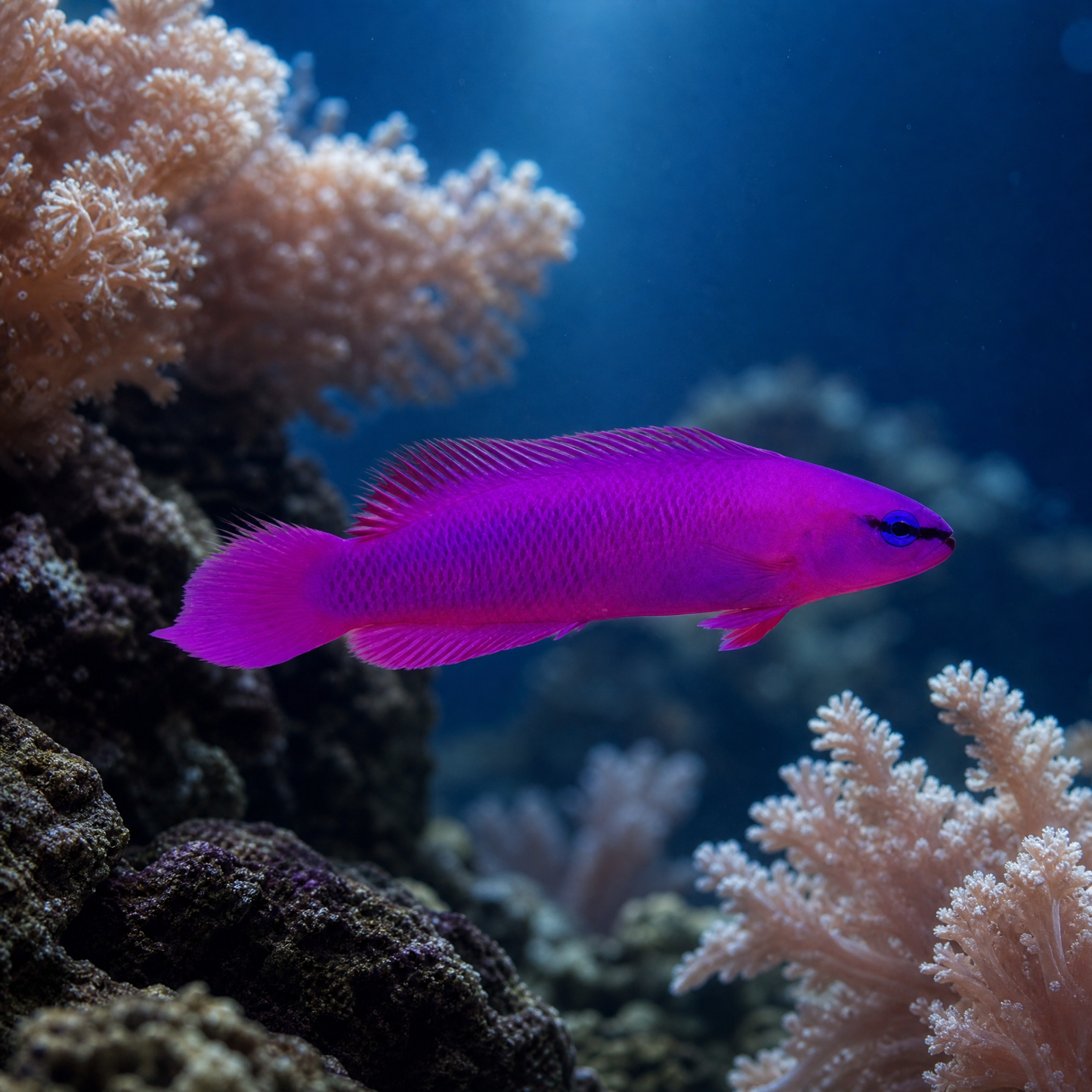
Orchid Dottyback (Pseudochromis fridmani)
