


- Sku: SPLAAN
- Vendor: Squeaky's Aquatics
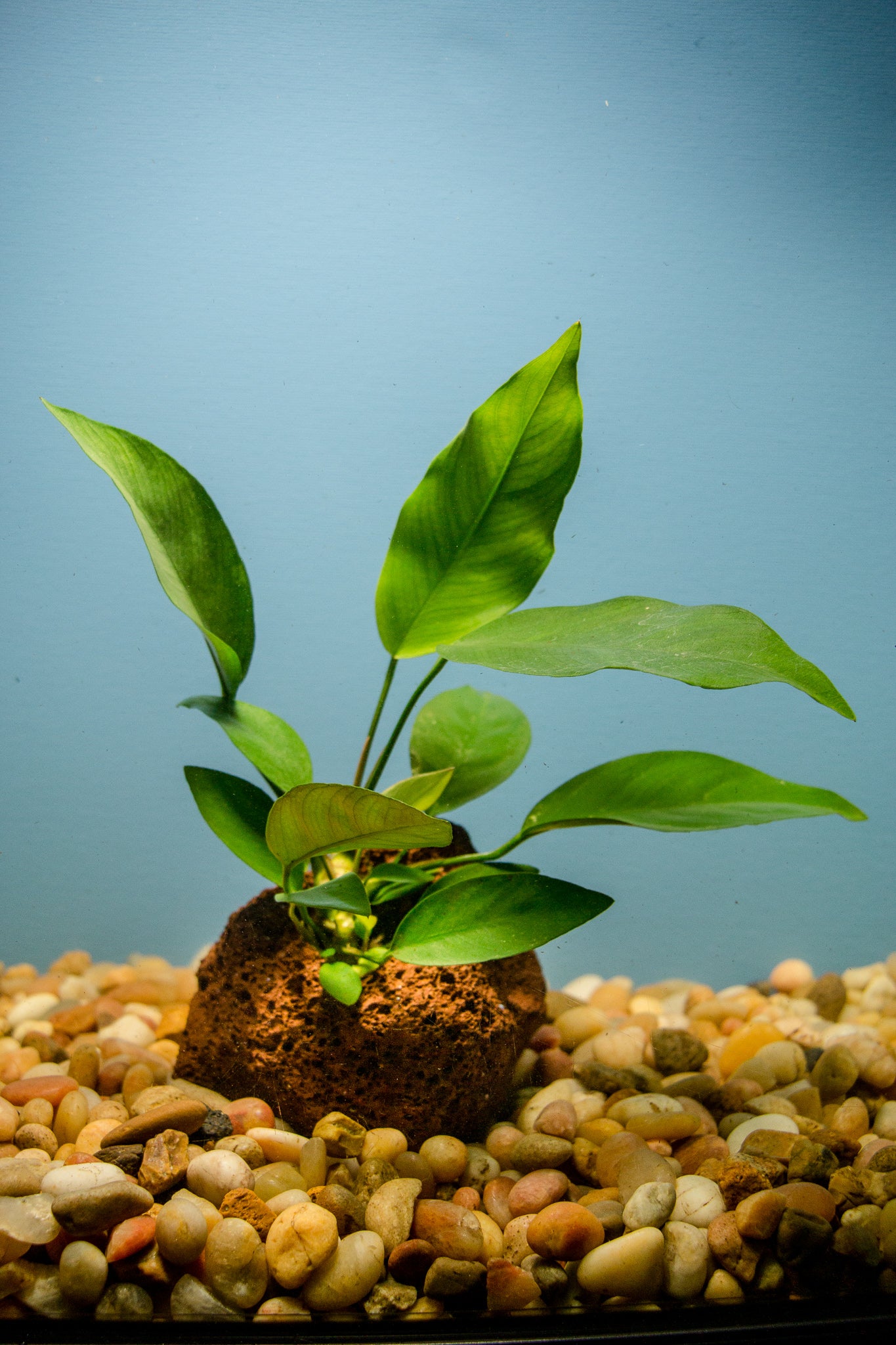
Anubias on Lava Rock
Anubias on Lava Rock (Anubias barteri) comes already mounted, rhizome fixed to a piece of porous volcanic rock and rooted in. There is nothing to glue, nothing to tie, and nothing to plant. The rock holds the rhizome at the right height on its own, and its open pore structure doubles as biological filter media. Low light, no CO2, no substrate needed. Browse the rest of our live freshwater plants to build out the tank.
Choose Your Size
| Size | Best for |
|---|---|
| Small | Nano and betta tanks, or a single accent in the foreground of a larger scape. |
| Large | A fuller plant on a heavier rock, enough to stand as a midground centerpiece on its own. |
Lava rock is a natural material, so the exact shape, size, and leaf count of the piece you take home will differ from the photo.
Care Guide
- Nothing to plant. The rhizome is already fixed to the rock and must stay that way, above the substrate and in open water. Do not bury the rock or press the rhizome into gravel.
- Light: Low to moderate. Anubias is a shade plant, and leaves that sit on the tank for months will collect algae under strong light.
- CO2 and fertilizer: Neither is required. It feeds from the water column, so an occasional dose of Seachem Flourish is plenty. Root tabs do nothing for it.
- Water: 72 to 82F, pH 6.0 to 8.0, soft or hard. Lava rock is inert and will not shift your parameters the way limestone or crushed coral would.
- Growth: Slow, roughly a leaf a month. The roots will keep working their way into the pores of the rock over time and grip harder as they go.
- Propagation: Once the rhizome is long, cut it into sections with three or four leaves each. Every piece becomes a new plant.
Specifications
| Scientific Name | Anubias barteri |
| Common Names | Anubias on Lava Rock, Anubias on Stone |
| Origin | West Africa |
| Care Level | Beginner, very hardy |
| Plant Type | Rhizome plant, pre-attached to hardscape |
| Sizes | Small and Large |
| Placement | Foreground to midground, sits directly on the substrate |
| Lighting | Low to moderate |
| CO2 | Not needed |
| Temperature | 72 to 82F |
| pH | 6.0 to 8.0 |
| Growth Rate | Slow, propagate by rhizome division |
| Sold As | Live plant pre-attached to a natural lava rock |
Placement and Companions
A mounted rock is the easiest way to put a plant exactly where you want it and change your mind later. Nothing is anchored, so you can slide the whole piece around while you settle the layout, and lift it straight out at cleaning time. The dark porous stone also sets off the leaves better than wood does, and it stays put in tanks with diggers that would uproot a potted plant. It is completely shrimp safe, a favorite resting spot for bettas, and tough enough to survive goldfish, large cichlids, and turtles.
For the same idea on wood, see Anubias on Driftwood, or Java Fern on Lava Rock for a different leaf shape on the same kind of stone. If you would rather mount your own, the potted plants are Anubias Nana, Anubias Barteri, and the miniature Anubias Nana Petite. Java Moss around the base of the rock gives you a second texture at the same light level.
Recommended Supplies
- Seachem Flourish, the water-column fertilizer this plant actually uses.
- Batman Nerite Snail to keep algae off the slow-growing leaves.
- Seachem Flourish Glue for adding more plants to the same rock.
- CaribSea PyroFlora Substrate to carry the volcanic look through the rest of the layout.
FAQ
Will lava rock change my water chemistry?
No. It is inert, so unlike limestone or crushed coral it will not raise your hardness or pH.
Can I bury the rock in the substrate?
Leave it sitting on top. Burying it pushes the rhizome down toward the gravel, which is the one thing that reliably kills Anubias.
Can I move the plant off the rock?
You can cut the rhizome free, but the roots work their way deep into the pores and rarely come loose cleanly. It is usually better to leave the mount alone and divide the rhizome instead.
Why is it growing so slowly?
That is normal for Anubias. A leaf a month is healthy. In exchange you get a plant that never needs trimming, never melts, and tolerates almost any water.
Is it safe with fish and shrimp?
Yes, completely. The leaves make excellent grazing surface for shrimp and resting pads for bettas, and the porous rock grows biofilm that shrimp will pick at constantly.
Have a question?
Anubias on Lava Rock
