


- Sku: FW1-F7999-M
- Vendor: Squeaky's Aquatics
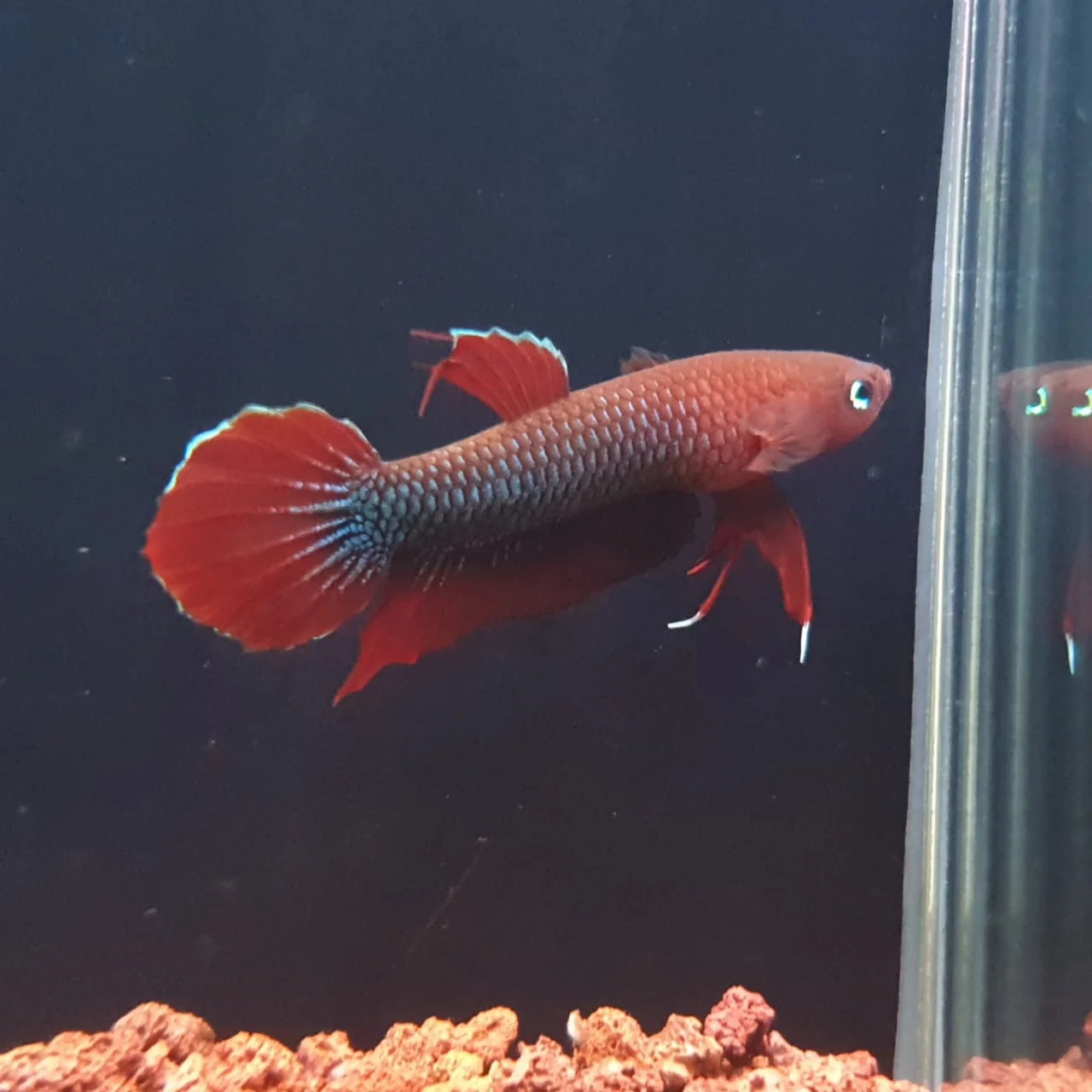
Api Api Betta (Betta mulyadii)
The Api Api Betta is a tiny jewel from the peat swamps of Riau, Sumatra: a deep red wild betta barely an inch and a half long, with dorsal, tail and ventral fins picked out in electric blue and white. Long traded under just its collection locality as Betta sp. "Api Api" (api means fire in Indonesian), it was formally described in 2025 as Betta mulyadii, a member of the Betta coccina complex. This is a bubblenesting species, not a mouthbrooder, and it is a genuine specialist fish: care level is advanced and it wants real blackwater. Browse the rest of our live fish and freshwater supplies to set the tank up properly first.
Choose Your Fish
- Male: intense red with longer, more pointed fins carrying bright blue margins. The one you see in the photos.
- Female: duller brownish red, plumper, with shorter rounded fins.
- Pair: one male and one female. This is the way to buy them if you have any interest in breeding, and a settled pair is also the lowest-risk way to keep the species.
Care Guide
- Tank size: 10 gallons for a pair. A footprint around 45 by 30 cm with plenty of cover beats anything taller and narrower.
- Lid rule number one: a tight-fitting lid with no gaps is mandatory. These are strong jumpers, and the labyrinth organ also needs a pocket of warm humid air above the waterline.
- Water: this is the part that decides whether you succeed. Soft and genuinely acidic, pH 5.0 to 6.0 and 3 dGH or below, with near-zero KH. Hard alkaline tap water will not work. Plan on RO water plus peat, botanicals, and catappa leaves to hold the pH down and stain the water tea-brown.
- Temperature: 75 to 82°F.
- Stability over perfection: swings in pH and hardness kill more coccina-group bettas than any wrong number does. Small frequent water changes with matched RO-based water, never a big sudden one.
- Aquascape: dim lighting, thick floating plant cover, driftwood, caves, and deep leaf litter. This fish is shy and will spend its life hiding if the tank is bright and bare.
- Filtration: a gentle sponge filter and almost no flow. Their home water barely moves.
- Diet: micropredator, and a fussy one. Live and frozen foods should be the staple: mini bloodworms, baby brine shrimp, daphnia, and microworm. Some individuals learn to take micro pellets, but do not count on dry food alone.
- Breeding: bubblenester with paternal care, not a mouthbrooder. The male builds a small nest under a floating leaf or inside a cave, eggs hatch in 24 to 48 hours, and fry are free swimming in three to four days. He guards the nest throughout, so leave him alone and keep the tank covered to hold in humidity.
Specifications
| Scientific name | Betta mulyadii, described 2025 |
| Also traded as | Betta sp. "Api Api", Riau Red Betta |
| Complex | Betta coccina complex |
| Origin | Peat swamp forest, Riau, Sumatra, Indonesia |
| Max size | About 1.5 inches (4 cm) |
| Care level | Advanced |
| Temperament | Peaceful, shy |
| Minimum tank | 10 gallons for a pair |
| Temperature | 75 to 82°F |
| pH | 5.0 to 6.0 |
| Hardness | 3 dGH or below, KH near zero |
| Diet | Carnivore, live and frozen preferred |
| Breeding | Bubblenester, paternal care |
| Pickup | In-store only |
Compatibility
Honestly, a species-only tank is the right answer. A single pair in a well planted blackwater setup will color up, build nests, and behave naturally in a way they never will in a community. If you do want dither fish, keep to tiny blackwater species that thrive in the same acidic water: Ember Tetras, kuhli loaches, and dwarf shrimp. Avoid barbs, danios, larger tetras, gouramis, and Betta splendens entirely, since this fish is too timid to compete for food.
Do not mix coccina-group bettas. Api Api, coccina, rutilans, brownorum, tussyae and their relatives all interbreed freely. Keepers maintain these fish by locality, and a hybrid line is effectively lost to the hobby. One species per tank.
Recommended Foods & Supplies
- Fritz Catappa Leaves and Catappa Tea Bags, non-negotiable for this species
- SFBB Mini Bloodworms and Baby Brine Shrimp for a mouth this small
- Freeze-Dried Daphnia as an easy everyday option
- Hikari Bacto-Surge Sponge Filter for near-zero flow
- Malaysian Driftwood, Java Moss, and Frogbit for shade and nesting cover
FAQ
Is this a mouthbrooder?
No, and you will see it described that way online. Api Api is a coccina-complex fish and coccina-complex fish are bubblenesters. The male builds a nest and guards the eggs from outside his mouth.
Why does the name keep changing?
Because it only just got one. The fish circulated for over a decade under the name of the place it was collected, and a 2025 revision of the coccina complex formally described it as Betta mulyadii. Most sellers still use the old trade name, so you will see both.
Can I keep it in normal tap water?
Not reliably. This is a true peat-swamp fish and hard alkaline water is the usual reason people lose them. If you are not already running RO water or a dedicated blackwater tank, start with a hardier wild betta and come back to this one.
Why is it more expensive than a splendens?
Wild-type bettas come from a small collection area, breed in small clutches, and are not mass produced. This one's home swamp in Riau is being cleared for oil palm, which makes the aquarium population genuinely worth maintaining.
Have a question?
Api Api Betta (Betta mulyadii)
