


- Sku: SQ-LOACHKUHLIBLAC
- Vendor: Squeaky's Aquatics
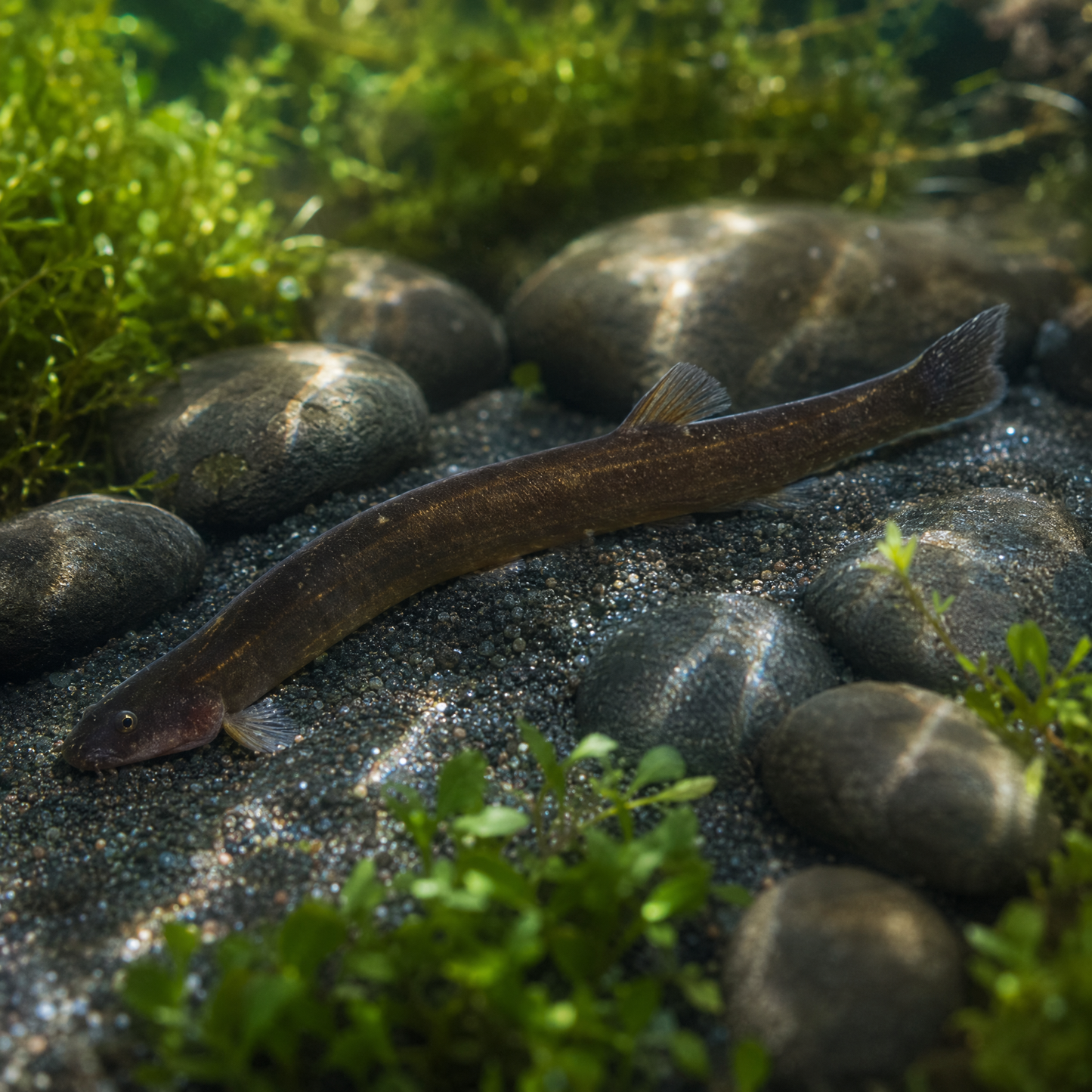
Black Kuhli Loach (Pangio oblonga)
The Black Kuhli Loach (Pangio oblonga) is the understated cousin of the banded kuhli: same eel-like body and same restless burrowing habit, but finished in solid chocolate brown to near black instead of tiger stripes. Against pale sand the effect is striking, a set of dark ribbons winding through the substrate and vanishing under the wood. They are peaceful, almost comically shy at first, and they live a genuinely long time. Also sold as the Java Loach or Cinnamon Loach. Browse the rest of our freshwater livestock and supplies to build the tank around it.
Care Guide
- Sand, not gravel. Kuhlis burrow, and they do it with sensitive barbels leading the way. On sharp gravel those barbels wear down and get infected, and the fish loses the behavior that makes it interesting. Estes Natural Aquatic Sand or CaribSea Super Naturals Moonlight is the right call, and pale sand shows off a black loach far better than dark substrate does.
- Keep at least six. These are social fish and a lone kuhli spends its life hidden. A group relaxes, comes out earlier, and eventually piles into the same cave together, which is half the appeal. We have plenty in stock, so take a real group.
- Tank size: 20 gallons for a group. Floor space and cover matter far more than water volume.
- Cover: give them somewhere to disappear. Malaysian Driftwood, Cholla Wood, a rock cave, and a mat of Java Moss all get used. Counterintuitively, more hiding places means you see them more, because a secure loach is a confident one.
- Water parameters: 75 to 82°F, pH 6.0 to 7.0, soft to moderately soft water. They come from tannin stained streams and appreciate a bit of botanical cover.
- Feeding: they will not compete at the surface. Feed sinking food after lights out: Hikari Sinking Wafers, Repashy Bottom Scratcher, and frozen mini bloodworms, which they go genuinely wild for.
- Seal the tank. Kuhlis are escape artists. They will find a gap around a filter hose or a corner of the lid, and they can climb the intake tube. Tight lid, no open gaps, and a covered intake.
- Medication warning: like most loaches, they have very fine scales and are more sensitive to treatments than the average fish. Half dose is the standard advice, and avoid copper entirely where possible.
Specifications
| Scientific name | Pangio oblonga |
| Common names | Black Kuhli Loach, Java Loach, Cinnamon Loach, Chocolate Kuhli |
| Family | Cobitidae, the true loaches |
| Care level | Beginner |
| Temperament | Peaceful, shy, nocturnal |
| Minimum group | 6, and more is better |
| Max size | About 3 inches |
| Minimum tank | 20 gallons for a group |
| Temperature | 75 to 82°F |
| pH | 6.0 to 7.0 |
| Substrate | Sand, required for burrowing and barbel health |
| Diet | Omnivore, needs sinking food |
| Lifespan | Up to 10 years |
| Origin | Southeast Asia, in slow tannin stained streams |
| Pickup | In-store pickup at Squeaky's Aquatics |
Compatibility
Peaceful with everything and interested in nothing above the substrate, which makes them one of the safest additions to a community tank. They work well beneath Neon Tetras, Ember Tetras, and Cherry Barbs, and share the floor happily with Skunk Corys or a Bristlenose Pleco. Amano Shrimp are safe, though tiny shrimplets may not be.
Black or striped. We also stock the classic banded Kuhli Loach and the plain cinnamon Indian Kuhli Loach. Care is identical and they all shoal together perfectly well, so it comes down to whether you want stripes, a solid dark ribbon, or warm cinnamon. A mixed group looks excellent over pale sand.
What to avoid. Anything large enough to swallow a thin 3 inch fish, and any aggressive bottom dweller that will claim the caves. Large cichlids are the usual problem.
Recommended Foods & Supplies
- SFBB Mini Bloodworms, the one that brings them out of hiding
- Hikari Sinking Wafers
- Repashy Bottom Scratcher
- Estes Natural Aquatic Sand, required substrate rather than a nice-to-have
- Cholla Wood branches for cover and tannins
FAQ
I never see mine. Did I waste my money?
Almost certainly not. Kuhlis are nocturnal and a new group will spend the first week or two buried or wedged in wood. Two things fix it: keep six or more, and feed after the lights go off. Within a month most groups start coming out during the day, and an established group will swarm the food the moment it hits the sand.
Where did it go? I have searched the whole tank.
Under the substrate, inside the filter, or behind the background. Kuhlis fit through gaps that look impossible and regularly turn up weeks later in perfect health. Before assuming the worst, check inside the filter housing, and make sure the lid has no openings, because the other possibility is the floor.
Black Kuhli or regular Kuhli, which should I get?
Whichever you like the look of. Pangio oblonga is solid dark brown to black, the common Kuhli is banded gold and black. Size, care, diet, and temperament are the same, and they will shoal together.
Are they safe with plants and shrimp?
Plants are completely safe, including delicate carpets, since kuhlis burrow in open sand rather than uprooting. Adult shrimp are fine. Very small shrimplets are opportunistic snacks, which only matters if you are actively breeding shrimp.
Have a question?
Black Kuhli Loach (Pangio oblonga)
