


- Sku: 2565532
- Vendor: Squeaky's Aquatics
Derasa Clam (Tridacna derasa)
This Derasa Clam (Tridacna derasa) is a stunning, striped specimen with a vivid blue rim along its mantle. One of the hardiest and fastest-growing giant clams, the Derasa is a living centerpiece for an established reef, a photosynthetic showpiece that adds movement, color, and biological filtration. Pair it with the rest of our saltwater livestock and corals.
Care Guide
- Care level: Intermediate, among the most forgiving giant clams, making it a great first clam for a stable reef.
- Lighting: High. Like corals, it relies on symbiotic zooxanthellae, so it needs strong reef lighting.
- Placement: Rests well on the sandbed; smaller clams can sit on low rockwork. Choose a permanent spot, since clams dislike being moved.
- Calcium & alkalinity: Builds a large shell, so it needs stable, elevated calcium (400 to 450 ppm) and alkalinity (8 to 11 dKH). Dose a calcium/alkalinity/magnesium supplement or run a coral-pro salt.
- Feeding: Mostly photosynthetic, but it also filter-feeds, so dose phytoplankton for the best growth, especially while it's small.
- Acclimation: Drip acclimate, then place gently. Avoid sudden swings in salinity, light, or flow.
Specifications
| Common Name | Derasa Clam, Smooth Giant Clam |
| Scientific Name | Tridacna derasa |
| Origin | Indo-Pacific |
| Adult Size | Large, up to ~20" over many years |
| Care Level | Intermediate |
| Temperament | Peaceful |
| Diet | Photosynthetic + filter feeder |
| Lighting | High (reef) |
| Placement | Sandbed or low rockwork |
| Water Temperature | 72 to 78°F |
| pH | 8.1 to 8.4 |
| Salinity | 1.024 to 1.026 SG |
| Calcium / Alkalinity | 400 to 450 ppm / 8 to 11 dKH |
| Reef Safe | Yes |
Compatibility
The Derasa Clam is reef-safe and peaceful, thriving alongside corals and most reef inhabitants:
- Corals and other photosynthetic reef invertebrates
- Peaceful reef fish and reef-safe cleanup crew
Avoid known mantle-nippers: some large angelfish, certain wrasses, and triggers may pick at the clam. Inspect new clams for tiny pyramidellid snails (a common clam pest) and keep parameters stable, as clams are sensitive to swings.
Recommended Foods & Supplies
- Reef Juice Clam Blend Phytoplankton, a live phyto blend formulated for clams
- Fritz RPM Calcium and Alkalinity, fuel for shell growth
- Red Sea Coral Pro Salt, elevated calcium/alkalinity for clams and corals
- Reef LED lighting, high-output lighting for photosynthesis
- Build your reef with our saltwater livestock
FAQ
Is the Derasa Clam good for a first clam?
Yes, it's one of the hardiest, fastest-growing giant clams. It still needs strong light and stable calcium/alkalinity, so it's best in an established reef.
Do I need to feed it?
It's largely photosynthetic, but dosing live phytoplankton boosts growth and health, especially for smaller clams.
Where should I place it?
On the sandbed (or low rock for small specimens) where it receives strong light and moderate flow. Pick a permanent location and avoid moving it.
Will my fish bother it?
Most reef fish leave clams alone, but avoid known mantle-nippers like some large angelfish and certain wrasses. Watch for pyramidellid snails as a pest.
Have a question?
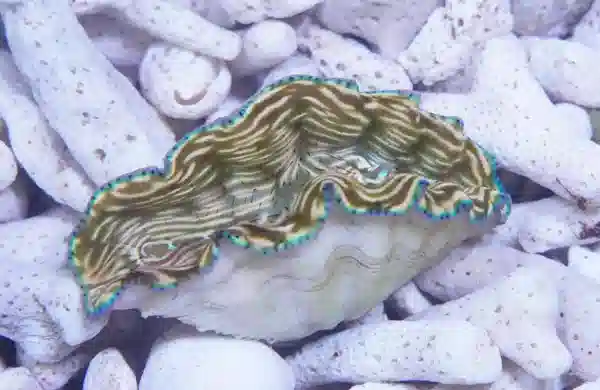
Derasa Clam (Tridacna derasa)
