


- Sku: PLANT-HYGODO
- Vendor: Squeaky's Aquatics
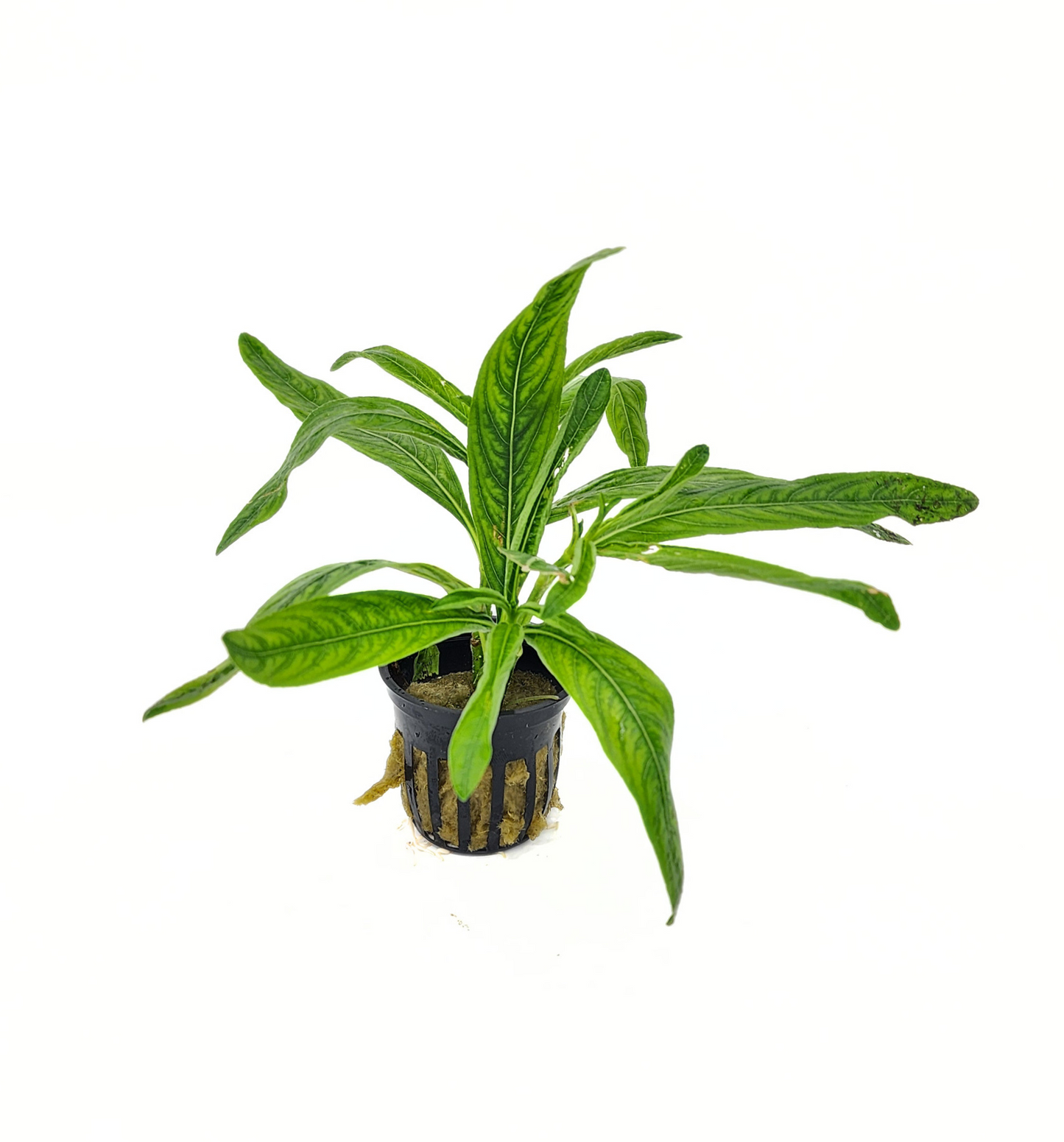
Hygrophila Odora (Hygrophila odora) - Potted
Hygrophila Odora (Hygrophila odora) is the uncommon one in a very common genus. Where Water Wisteria and Corymbosa grow fast and coarse, odora takes its time and produces narrow, deeply cut leaves that look closer to a fern than a Hygrophila, building a fine textured bush that holds its shape instead of sprawling. It is a rewarding midground to background plant for a well-run tank, though it asks for more than its easygoing relatives. Browse the rest of our live freshwater plants to build around it.
Care Guide
- Light: Moderate is enough, but it must never be shaded. This plant declines quickly when taller neighbors grow over it, so give it an open position rather than simply a bright tank.
- CO2: Not strictly required, but strongly recommended. With CO2 the leaves come in finer and more deeply cut, and growth is far more reliable.
- Water: Prefers soft water, carbonate hardness up to about 6 dKH. Hard, high-KH water is the most common reason it sulks.
- Phosphate matters here. Odora is unusually hungry for phosphate. Keep PO4 above roughly 0.3 mg/l. Lean, phosphate-limited dosing schedules stunt it and deform the new leaves.
- Fertilizer: Demanding on both macros and micros. A nutrient-rich substrate plus a consistent column dosing routine is the setup it wants.
- Trimming: Slow grower, so trim sparingly. Top the stems and replant the cuttings to build a denser group over time.
What to Expect From a Potted Plant
This arrives as a potted nursery plant grown emersed, so the leaves you see now are broad, plain, and lance shaped. Submerged, the plant converts and the new growth comes in narrow and pinnately cut, which is the fern-like look this species is grown for. Expect it to shed some of the emersed leaves during that changeover. Remove the pot and rock wool, separate the stems, and plant them individually a couple of inches apart so light reaches each one.
Specifications
| Common Names | Hygrophila Odora, Fragrant Hygrophila |
| Scientific Name | Hygrophila odora |
| Care Level | Intermediate |
| Plant Type | Stem plant |
| Leaf Character | Narrow and pinnately cut when submersed, to 4 in |
| Placement | Midground to background, unshaded |
| Lighting | Moderate to high, never shaded |
| CO2 | Optional but strongly recommended |
| Growth Rate | Slow to moderate submersed |
| Water Hardness | Soft, up to about 6 dKH |
| Phosphate | Keep above 0.3 mg/l |
| Temperature | 73 to 82F |
| Sold As | Potted nursery plant, grown emersed |
In the Aquascape
Odora fills a gap most planted tanks have: fine texture that stays put. Because it grows slowly and holds a compact bush shape, you can use it as a standing feature in the midground without it swallowing the layout in a month, which is exactly what its faster cousins do. Plant it in a group of three to five stems and let it thicken. The cut leaves read well against broad-leaved plants and against smooth hardscape.
Pairs Well With
- Hygrophila Pinnatifida, a relative with bronze, lobed leaves for a low counterpoint.
- Water Wisteria if you want the fast, easy Hygrophila alongside the slow one.
- Anubias Coffeefolia for solid, corrugated leaves against all that fine cut texture.
- Aquaforest AF Macro, the NPK dosing that keeps its phosphate need satisfied.
- CaribSea PyroFlora Substrate as a nutrient-rich base.
Browse all plant additives and supplements to round out your dosing.
FAQ
Is this an easy Hygrophila like Water Wisteria?
No, and it is worth knowing that up front. Most Hygrophila are beginner plants, but odora wants soft water, steady nutrients, and an unshaded spot. It is very manageable in a maintained planted tank and frustrating in a neglected one.
Why are the new leaves shaped differently from the ones in the photo?
That is the plant converting from emersed to submersed growth. Emersed leaves are broad and plain, submersed leaves are narrow and deeply cut. The submersed form is the one you want, so judge it by the new growth.
My leaves are coming in small and deformed.
Usually phosphate. Odora needs more of it than most stems, so check that PO4 is not bottoming out, and look at KH too since hard water sets it back.
Does it need CO2?
It will grow without, just slowly and with coarser leaves. CO2 is what brings out the fine, fern-like foliage this plant is grown for.
Is it safe with fish and shrimp?
Yes, completely. Shrimp graze the finely cut leaves happily and no livestock is bothered by it.
Have a question?
Hygrophila Odora (Hygrophila odora) - Potted
