


- Sku: SW4-SW3685
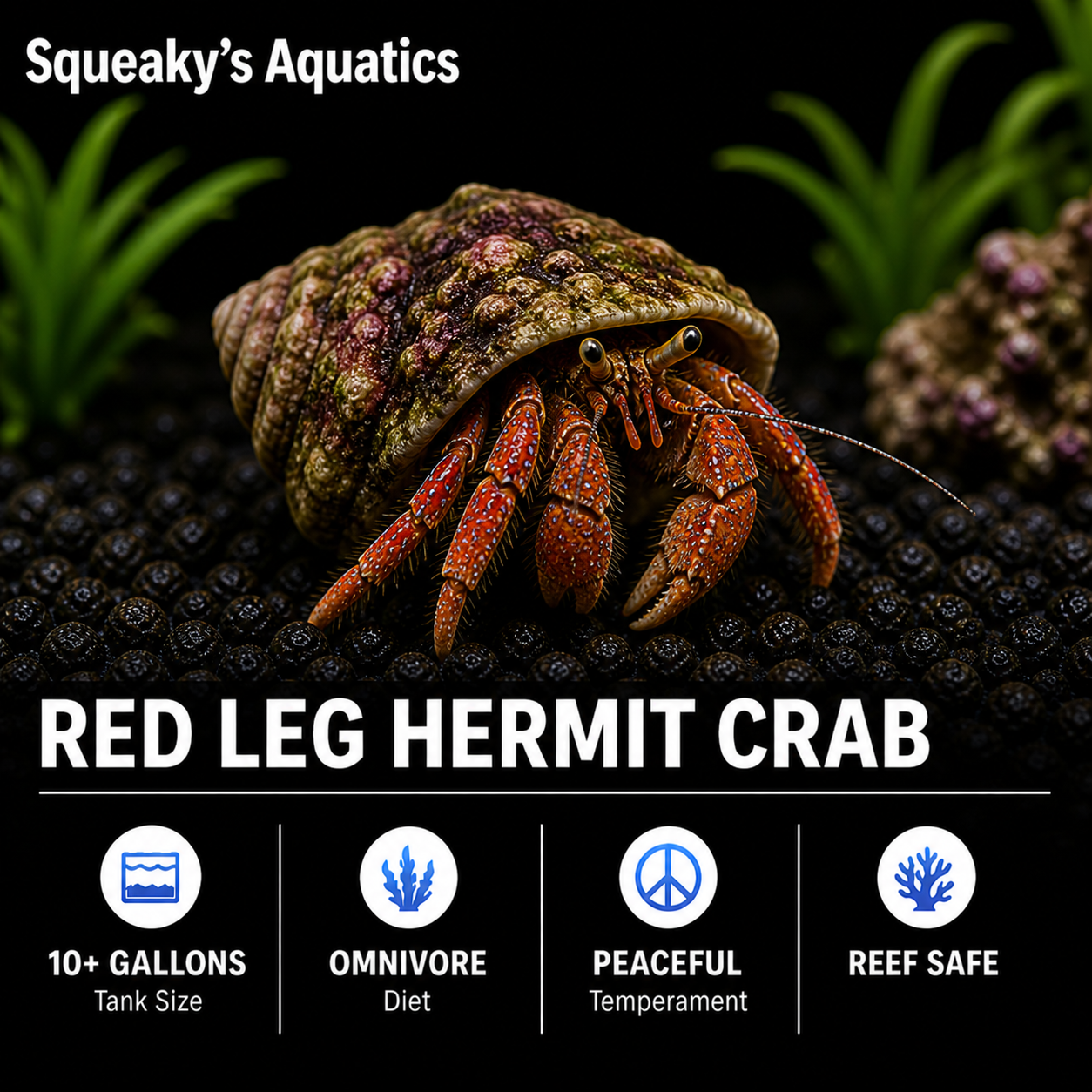
Mexican Red Leg Hermit Crab (Clibanarius digueti)
The Mexican Red Leg Hermit Crab (Clibanarius digueti) is one of the most cost-effective workhorses in the saltwater hobby. A scrappy, omnivorous scavenger that grazes hair algae, film algae, leftover food, detritus, and even some cyanobacteria. Beginner-friendly, peaceful in groups, and reef safe with caution. Pair with our Mexican Turbo Snails and Emerald Crab for a full saltwater cleanup crew.
Care Guide
Mexican Red Legs are subtropical hermits from the Sea of Cortez and Baja Mexico. They tolerate standard tropical reef temperatures (76–78°F) without a chiller, and unlike Mexican Turbo Snails they don't suffer in warm tanks. Drip acclimate over 60–90 minutes when introducing — like all marine inverts they're sensitive to salinity and pH swings, and copper-based meds will kill them.
The shell rule: Hermits grow into bigger shells over their lifetime, and if you don't provide upgrades they will kill snails to take theirs. Always keep 2–3 spare empty shells per hermit on hand, in graduated sizes (¼" to 1¼" openings, turbo/trochus/astrea shapes work). Drop them on the substrate so the hermits find them. This is the single most important step to keeping hermits and snails coexisting.
Don't crowd them. Hermits fight over shells and food in tight quarters. Stick to roughly 1 hermit per 5 gallons of display volume; a 30-gallon reef supports about 6 Red Legs comfortably.
Iodine helps with molting. They periodically shed their exoskeleton — provide trace iodine (most reef supplements have it) and don't disturb them mid-molt. The spent exoskeleton looks like a dead crab; don't toss it without a closer look.
Specifications
| Scientific Name | Clibanarius digueti |
| Common Names | Mexican Red Leg, Cortez Red Leg, Red Tip Hermit, Equal-Handed Hermit |
| Care Level | Beginner |
| Temperament | Peaceful (semi-aggressive over shells) |
| Reef Safe | Yes, with shell-supply caveat |
| Tank Size Minimum | 10 gallons (20+ for groups) |
| Max Adult Size | Body ~1–1.25 in; shell up to 2 in |
| Lifespan | 2–4 years |
| Water Type | Saltwater / Reef |
| Temperature | 72–78°F |
| Salinity (SG) | 1.023–1.025 |
| pH / dKH | 8.0–8.4 / 8–12 |
| Diet | Omnivore — algae, detritus, leftover food, some cyano |
| Stocking Density | ~1 per 5 gallons of display volume |
| Origin | Sea of Cortez / Gulf of California, Baja Mexico |
Compatibility
Great with: Most reef-safe community fish (clownfish, gobies, blennies, firefish, chromis, tangs), Emerald Crabs, cleaner shrimp, and other CUC species — provided spare shells are stocked.
Use caution with: Snail-heavy tanks (always provide spare shells in 2–3 sizes per hermit). Multiple hermits in tight quarters will fight over shells and food.
Avoid with: Wrasses (especially harlequin tuskfish, six-line, melanurus), triggers, puffers, large hawkfish, lionfish, and predatory crabs — they will all eat hermits.
Mexican Red Leg vs. Other Reef Hermits
- Mexican Red Leg (this listing): Hardy, aggressive grazer, eats some cyanobacteria, the cheapest reef hermit. Ideal CUC workhorse.
- Blue Leg Hermit (Clibanarius tricolor): Smaller and more peaceful with snails, but less aggressive on algae. Best for nano tanks.
- Scarlet/Red Reef Hermit (Paguristes cadenati): The most peaceful with snails, brightest red color, but more expensive and less effective on cyano.
Recommended Pairings
- Mexican Turbo Snail — heavy-duty algae grazer (give the hermits spare shells if you stock these together)
- Emerald Crab — handles bubble algae the hermits won't touch
- Margarita Snail — gentle reef-safe algae grazer
- Nassarius Snails — sand-bed scavengers; eat meaty waste the hermits miss
- Scarlet Skunk Cleaner Shrimp — peaceful tankmate that picks parasites off your fish
- Browse all reef nutrition for sinking pellets and supplemental food
FAQ
How many should I get for my tank?
Standard cleanup-crew rule is one hermit per 5 gallons of display volume — so a 20-gallon reef supports 4 hermits, a 50-gallon supports 10. Add gradually so the existing crew acclimates and so you can monitor shell competition.
Will they kill my snails?
Only if they run out of empty shells to grow into. Stock 2–3 spare empty shells per hermit at the start, in graduated sizes (¼" to 1¼" opening). Replenish whenever you see a hermit upgrade. With shells available, they leave snails alone and focus on algae and detritus.
Are they reef safe?
Yes, with the shell caveat above. They won't touch corals, fish, or anemones. Larger hermits can occasionally bump or knock over loose frags — glue your frag plugs.
Do they need a chiller for a reef tank?
No. Unlike Mexican Turbo Snails (which are subtropical and short-lived in warm reef tanks), Mexican Red Leg Hermits adapt well to standard tropical reef temps in the 76–78°F range and live a full 2–4 years.
Have a question?
Mexican Red Leg Hermit Crab (Clibanarius digueti)
