


- Sku: 1315387
- Vendor: Squeaky's Aquatics
Sailfin Tang (Zebrasoma veliferum)
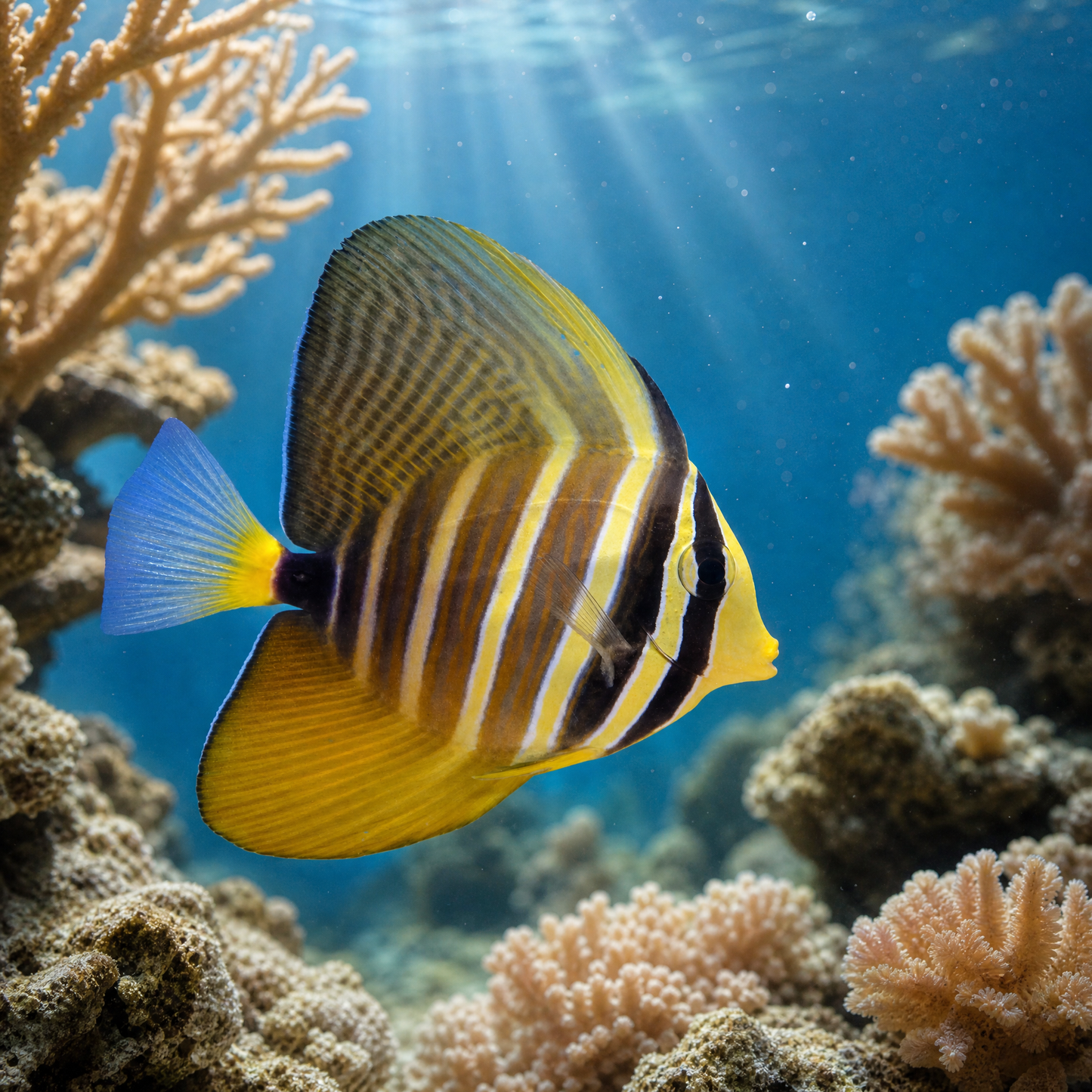
The Sailfin Tang (Zebrasoma veliferum) is the one that stops people at the tank. When it flares, the dorsal and anal fins unfold into a disc nearly as tall as the fish is long, banded in alternating gold and dark brown with fine speckling across the top. Juveniles are boldly striped, adults fill in mottled and smoky, and the tail brightens to yellow and blue. It is a heavyweight algae grazer and a genuine centerpiece fish. Browse the rest of our saltwater fish.
Care Guide
- Tank size: 180 gallons for an adult, with a long footprint and at least 18 inches of front-to-back width so it can turn comfortably. A juvenile can start in 75 to 125 gallons only if you have a real upgrade plan.
- Established tank required: it grazes constantly and wants mature live rock with algae growing on it. This is not a fish for a tank that just finished cycling.
- Diet: herbivore, and a serious one. Dried seaweed on a clip every day, plus a quality marine pellet and the occasional frozen mysis. Feed at least twice a day. Underfeeding is what turns a reef-safe tang into one that nips corals.
- Temperament: semi-aggressive. Peaceful enough with unrelated fish, but territorial toward other tangs, especially other Zebrasoma with the same disc-shaped body. One Sailfin per tank unless the system is very large.
- Water: 72 to 78°F, salinity 1.020 to 1.025, pH 8.1 to 8.4. Strong flow and good oxygenation, and keep nitrate under control.
- Health watch: tangs are more prone to marine ich than most reef fish, and to head and lateral line erosion when the diet is short on vegetable matter. Heavy seaweed feeding and stable water are the prevention.
- Lid recommended: a spooked tang jumps.
Specifications
| Common names | Sailfin Tang, Pacific Sailfin Tang, Sailfin Surgeonfish |
| Scientific name | Zebrasoma veliferum |
| Family | Acanthuridae (surgeonfish) |
| Origin | Indo-Pacific |
| Care level | Intermediate |
| Temperament | Semi-aggressive, territorial with other tangs |
| Adult size | 12 to 15 inches |
| Minimum tank | 180 gallons for an adult |
| Reef safe | Yes, when well fed |
| Diet | Herbivore, heavy algae and seaweed feeder |
| Temperature | 72 to 78°F |
| Salinity | 1.020 to 1.025 |
| pH | 8.1 to 8.4 |
| Water type | Saltwater |
Compatibility
Good with most non-tang reef fish: clownfish, wrasses, gobies, blennies, cardinalfish, dottybacks, and angels in a big enough system. Reef safe with corals and inverts as long as it is kept well fed.
Plan carefully around other surgeonfish. A Sailfin will push back hard at another Zebrasoma, so pairing it with a Yellow, Scopas, or Purple Tang needs real space. Different-shaped tangs like our Flame Fin Tomini or Convict Tang are an easier mix. Adding tangs together rather than one at a time takes most of the heat out of it.
Recommended Foods & Supplies
- Dried seaweed sheets on a feeding clip, daily and non-negotiable for this fish
- Piscine Energetics Saltwater Pellets as a dry daily food
- SFBB Frozen Mysis Shrimp for occasional protein
- Browse the full saltwater selection for tankmates and reef supplies
FAQ
Can I keep it in a 100 gallon?
Not long term, and we would rather tell you now. It reaches 12 to 15 inches with an enormous fin span. 180 gallons is the honest adult minimum. A juvenile will be fine in a smaller tank for a year or two if you have a real upgrade planned.
Is it reef safe?
Yes, provided you feed it properly. A hungry tang will start sampling corals. Daily seaweed keeps it grazing rock instead.
Will it fight my Yellow Tang?
Quite possibly. Both are Zebrasoma with the same body shape, which is exactly what triggers tang aggression. In a large system with plenty of rockwork it can work, especially if introduced together. In a marginal tank it will not.
Why does it look different from the photos of adults?
Sailfins change as they grow. Juveniles show bold vertical bands; mature fish become smokier and more mottled with a brighter yellow and blue tail. Both stages are striking, just different.
How is this different from a Desjardin's Sailfin?
Zebrasoma desjardinii is the Red Sea and Indian Ocean counterpart, near identical in shape but more heavily spotted, and it is often sold under the same "Sailfin" name. Care is effectively the same for both.
Have a question?
Sailfin Tang (Zebrasoma veliferum)
