


- Sku: 3210002
- Vendor: Squeaky's Aquatics
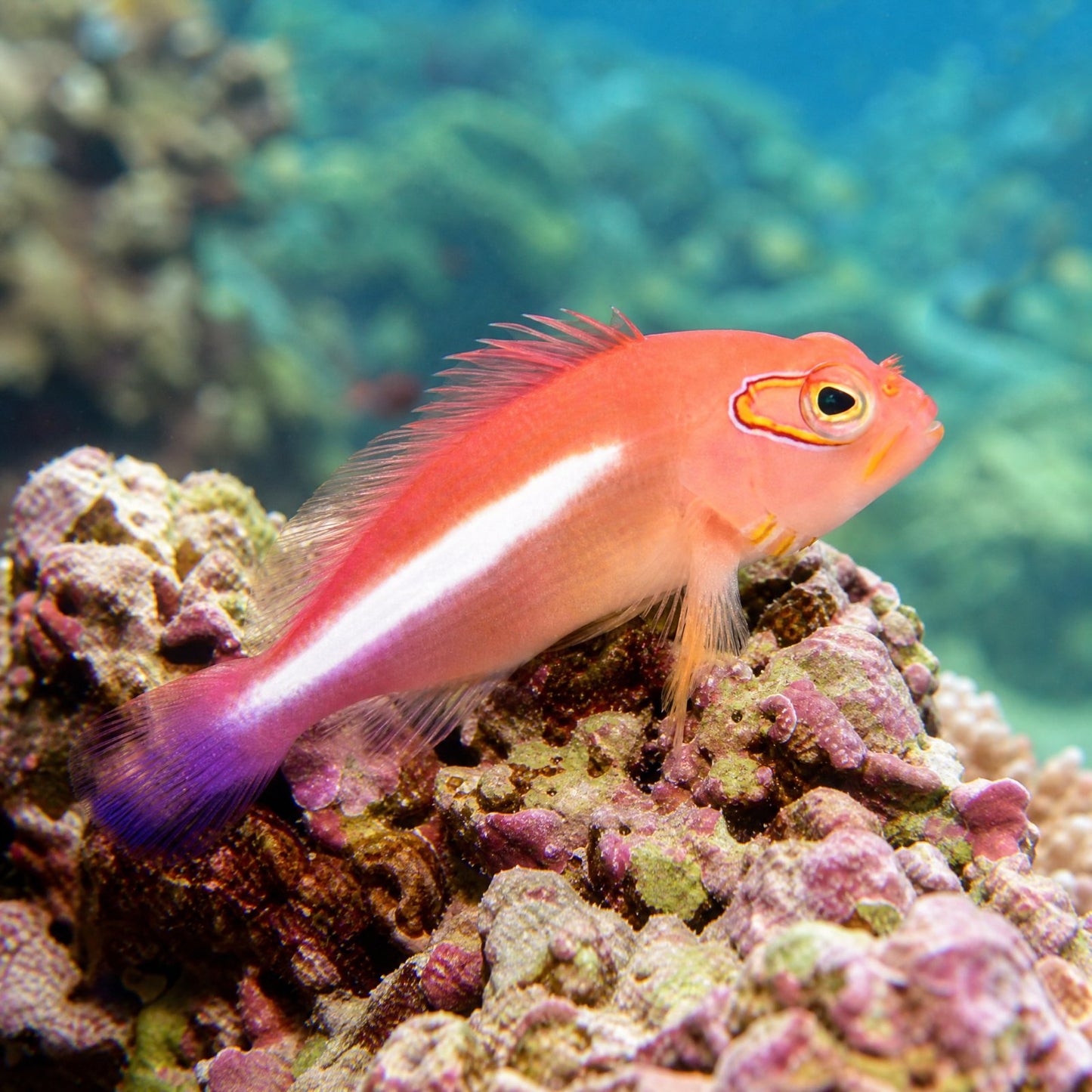
Arc Eye Hawkfish (Paracirrhites arcatus)
The Arc Eye Hawkfish (Paracirrhites arcatus) is all personality. It has no swim bladder, so instead of hovering it props itself on its thick pectoral fins and perches on the rockwork like a bird on a branch, swiveling to watch the room and darting out when something edible moves. A salmon body, a clean white stripe down the back half, and that unmistakable orange and blue horseshoe painted behind the eye make it one of the most recognizable fish on the reef. Hardy, long-lived, and endlessly watchable. Browse the rest of our saltwater livestock and supplies to round out the tank.
Care Guide
- Tank size: 55 gallons or larger is the comfortable answer. A young one will do fine in 30 gallons, but adults grow to five inches and claim territory, so more room means less friction with tank mates.
- Water parameters: 72 to 78°F, pH 8.1 to 8.4, salinity 1.020 to 1.026. One of the tougher marine fish once it is settled, and it tolerates the ordinary ups and downs of a young tank better than most.
- Aquascape is the whole game. Give it plenty of rockwork, ledges, and branchy coral to perch on. A tank with good structure turns a hawkfish from a fish that hides into one that sits out in the open all day.
- Feeding: carnivore. Frozen PE Mysis, chopped seafood, brine shrimp, and meaty marine pellets. It will eat from day one and is not remotely fussy. Feed it well, since a hungry hawkfish hunts harder.
- Lid required, no exceptions. Hawkfish are strong, determined jumpers, and this is the most common way people lose one. Cover the tank properly and check the gaps behind the overflow and filter.
- One hawkfish per tank. They are territorial with their own kind and with other hawkfish species. Pairs only work in very large systems.
- Add it last. Because it turns territorial as it settles, put it in after the peaceful fish are established rather than before.
Specifications
| Scientific name | Paracirrhites arcatus |
| Common names | Arc Eye Hawkfish, Arceye Hawkfish, Ring-eyed Hawkfish |
| Care level | Beginner |
| Temperament | Semi-aggressive, territorial once settled |
| Reef safe | With caution. Safe with corals, not with shrimp or small crustaceans |
| Max size | About 5 inches |
| Minimum tank | 30 gallons, 55 gallons preferred |
| Temperature | 72 to 78°F |
| Salinity | 1.020 to 1.026 |
| Diet | Carnivore |
| Swimming level | Perches on rock, rarely open water |
| Origin | Indo-Pacific reefs |
| Pickup | In-store pickup at Squeaky's Aquatics |
Compatibility
Good tank mates. Anything roughly its own size or larger that can hold its own: the Ocellaris Clownfish, Coral Beauty Angelfish, Melanurus Wrasse, Banggai Cardinalfish, and tangs such as the Scopas Tang or Powder Brown Tang. Larger snails like the Mexican Turbo Snail are left alone and make a good cleanup crew alongside it.
Keep away from. Ornamental shrimp of every kind, small hermit crabs, and tiny fish such as firefish and small gobies, all of which are prey. Also avoid other hawkfish, since they will fight.
Want the same perching personality in a smaller, bolder red package? Our Flame Hawkfish stays around three inches and carries the same habits, including the same appetite for shrimp.
Recommended Foods & Supplies
- Piscine Energetics PE Mysis frozen staple
- Ocean Nutrition Frozen Mysis Shrimp
- Xtreme Marine PeeWee Pellets for daily feeding
- Saltwater Refractometer for accurate salinity
FAQ
Why does it sit on the rocks instead of swimming?
Hawkfish have no swim bladder, so hovering costs them energy. Perching is how they are built to live. Those thick pectoral fins are landing gear, and the fish is watching for prey the whole time it sits there.
Can I really not keep a cleaner shrimp?
Not reliably. Some people keep a big, established cleaner shrimp with a hawkfish for years and some lose one within a week. If the shrimp matters to you more than the fish does, skip the hawkfish. If you want both, add the shrimp first, make it a large one, and accept the risk going in.
Is it safe with my corals?
Yes, completely. It will perch on them and may flatten a soft coral it likes to sit on, but it does not eat coral tissue and will not nip polyps.
What are the little tufts on its back?
Those are cirri, small feathery tips on the dorsal spines that give the whole family its name. They are normal and healthy, not damage or parasites.
Will it bother my clownfish?
Generally no. Clownfish are similar in size and hold their own, and a hawkfish that has been fed well tends to ignore anything it cannot swallow. Add the hawkfish after the clowns are established and it usually settles in without a fuss.
Have a question?
Arc Eye Hawkfish (Paracirrhites arcatus)
