


- Sku: 8170560
- Vendor: Squeaky's Aquatics
Black Venezuela Cory (Corydoras aeneus)
The Black Venezuela Cory (Corydoras aeneus "Black Venezuela") is a captive-bred, all black line of the bronze cory group, with a velvety charcoal to jet black body and dark fins from nose to tail. Against pale sand or a bright green planted tank it stands out in a way no other cory does. It is peaceful, hardy and beginner friendly, spending the day sifting the substrate with its whisker-like barbels and cleaning up food that the fish above miss. Browse the rest of our live freshwater fish and freshwater supplies to build the tank around it.
Care Guide
- Keep them in a group. Corys are schooling catfish and are shy and stressed when kept alone. Plan on six or more. Black Venezuelas are uncommon, so if we only have one or two, they will happily group up with their close relatives, the Orange Venezuela Cory and other bronze-type corys.
- Tank size: 20 gallons or more for a group, with plenty of open floor space. Corys use the bottom of the tank, so a long tank beats a tall one.
- Substrate: sand or smooth, rounded gravel. Sharp gravel wears down their barbels, which are how they find food.
- Temperature: 72 to 79°F. Like all bronze-type corys they do well toward the cooler end of tropical.
- Water parameters: pH 6.0 to 8.0, soft to moderately hard. Corys are sensitive to nitrate buildup and dirty substrate, so do regular water changes and vacuum the open areas of the sand. See our water care and conditioners and water test kits.
- Feeding: omnivore and bottom feeder. They need food that reaches the floor, so feed a sinking staple like Hikari Mini Algae Wafers or Hikari Algae Wafers, plus frozen bloodworms or brine shrimp a few times a week. Leftover flakes from the top of the tank are not enough on their own.
- Medications: corys are sensitive to copper and some strong treatments. Use half doses or cory-safe medications if you ever need to treat the tank.
Specifications
| Common name | Black Venezuela Cory, Black Venezuelan Corydoras |
| Scientific name | Corydoras aeneus "Black Venezuela" |
| Care level | Beginner |
| Temperament | Peaceful, schooling, keep 6 or more |
| Max size | About 2.5 inches |
| Minimum tank | 20 gallons for a group |
| Temperature | 72 to 79°F |
| pH | 6.0 to 8.0 |
| Diet | Omnivore, bottom feeder |
| Tank level | Bottom |
| Lifespan | 5 years or more with good care |
| Origin | Captive bred line, bronze cory group from northern South America |
| Pickup | In-store pickup at Squeaky's Aquatics |
Compatibility
Black Venezuela Corys get along with almost any peaceful community fish that will not try to eat them. Great tank mates include Neon Tetras, Harlequin Rasboras, Otocinclus, Cherry Shrimp and other corys like the Panda Cory. They also share a tank well with a single betta or a pair of dwarf gouramis.
Avoid large cichlids, big barbs and anything with a mouth big enough to swallow a 2 inch fish. Fin-nipping species can harass them too. Corys have sharp spines in their fins as a defense, so net them gently and never let a predator try to swallow one.
Recommended Foods & Supplies
- Hikari Mini Algae Wafers, a sinking staple sized for corys
- Hikari Algae Wafers for larger groups
- Orange Venezuela Cory and our Assorted Cory Catfish to round out a group
- Water care and conditioners for regular water changes
- Water test kits to keep an eye on nitrate
FAQ
Is the Black Venezuela Cory a different species from the bronze cory?
It belongs to the same bronze cory group, Corydoras aeneus, and is sold as a black line of it. Its exact relationship to the wild forms is still debated, which is why you will see it labeled "Corydoras sp. Black Venezuela" in some places. Care is the same as for bronze, albino and orange Venezuela corys.
How many should I keep?
Six or more is ideal. A single cory will usually hide and act stressed. If we do not have six black ones, mixing them with other bronze-type corys gives them the group they need.
Why does my cory dart to the surface?
Corys can gulp air from the surface and absorb it through their gut. An occasional dash to the top is normal. Constant trips can mean poor water quality or low oxygen, so test the water.
Will it clean my tank?
It eats leftover food that sinks to the bottom, which helps, but it does not eat waste and is not a replacement for water changes. It still needs its own sinking food.
Have a question?
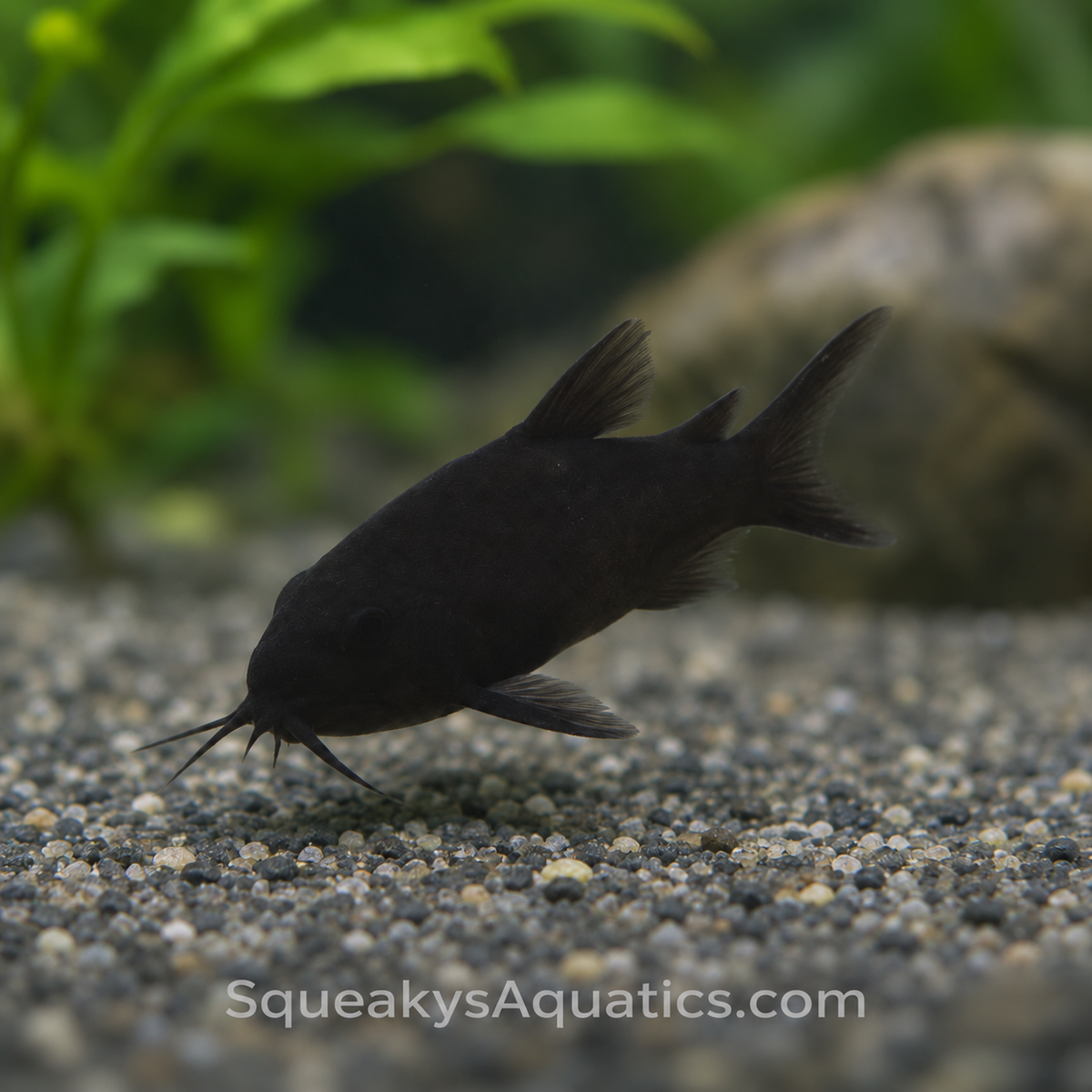
Black Venezuela Cory (Corydoras aeneus)
