


- Sku:
- Vendor: Squeaky's Aquatics
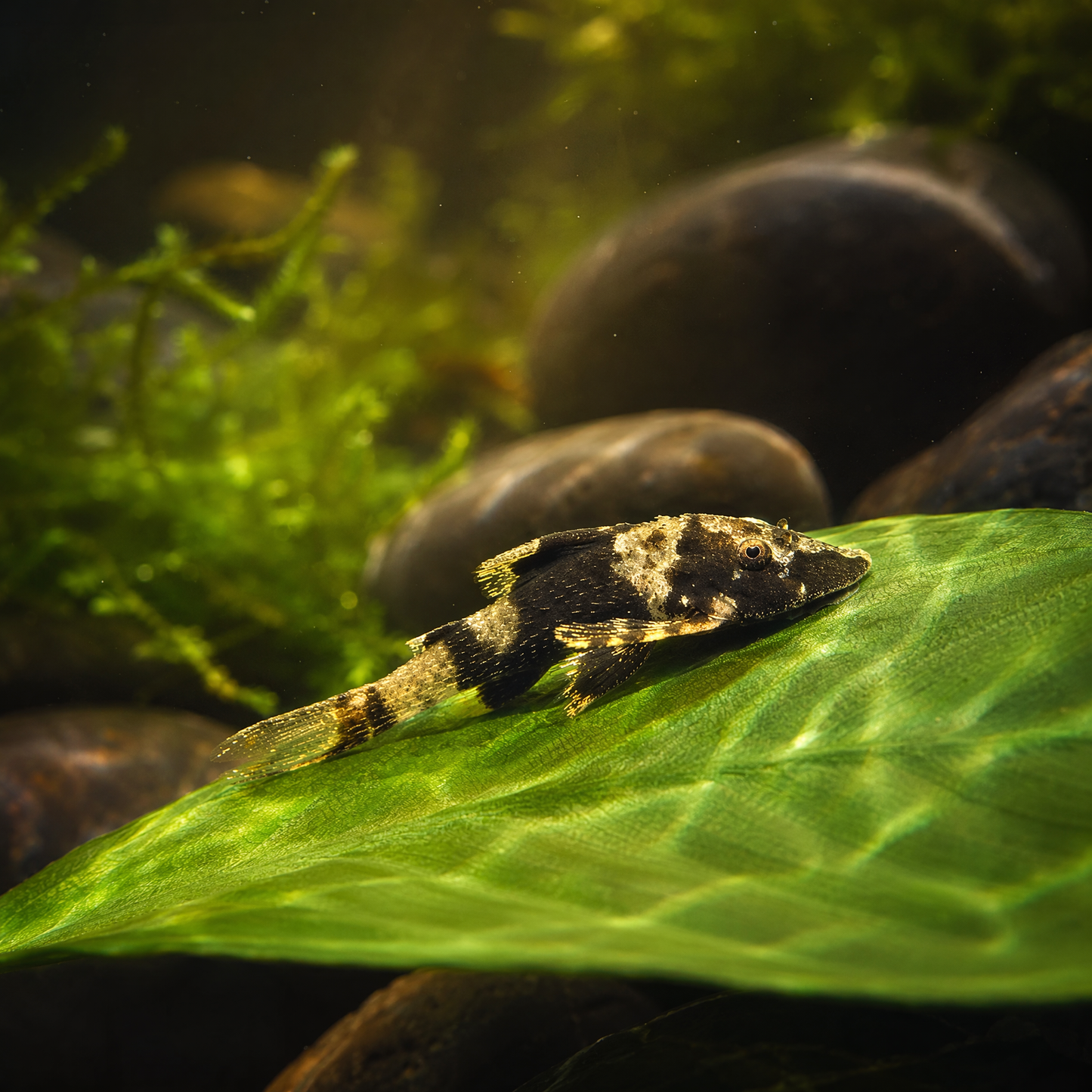
Bumblebee Otocinclus (Otocinclus cocama)
Bumblebee Otocinclus (Otocinclus cocama), also sold as the Zebra Oto, is the eye-catching striped cousin of the common Oto, wrapped in bold black-and-gold bands. It offers all the algae-grazing usefulness of a regular Otocinclus with far more visual punch, staying under two inches and never bothering a soul. Like all Otos it is social and a little delicate, so keep a group in a mature, established planted tank. Browse the rest of our freshwater livestock and supplies to build the tank around it.
Care Guide
- Established tank only: Otos live on the soft algae and biofilm of a mature aquarium. Add them to a stable, cycled tank several months old, never a brand-new setup. This is the single biggest reason Otos fail.
- Keep a group: They are shoaling fish that graze boldly in the open when kept in groups of six or more.
- Water: Clean, well-filtered water at 72 to 79°F and a pH of 6.0 to 7.5. They are sensitive to ammonia and nitrite, so stability matters.
- Acclimation: Drip acclimate slowly. Otos ship more delicately than hardier fish and reward a patient introduction.
- Do not let them run out of food: a clean tank is a starving tank for an Oto. Once the visible algae is gone, they need blanched vegetables and sinking algae wafers or they quietly waste away.
Specifications
| Common Name | Bumblebee Oto, Zebra Oto |
| Scientific Name | Otocinclus cocama |
| Family | Loricariidae, the suckermouth catfishes |
| Origin | Peru (South America) |
| Care Level | Intermediate |
| Temperament | Peaceful |
| Adult Size | 1.5 to 2 in |
| Minimum Group | 6 or more |
| Minimum Tank Size | 10 gallons, group of 6+ |
| Temperature | 72 to 79°F |
| pH | 6.0 to 7.5 |
| Diet | Herbivore, algae and biofilm grazer |
| Sold As | Juvenile |
| Pickup | In-store pickup at Squeaky's Aquatics |
Compatibility
Bumblebee Otos are model community citizens that mix beautifully with small, peaceful fish and inverts. Excellent tankmates include Neon Tetras, Ember Tetras, Rummy Nose Tetras, small rasboras, Neocaridina shrimp, and Amano Shrimp. Avoid large or aggressive fish that may harass or eat them.
Sharing the bottom. Otos work the glass, leaves, and hardscape rather than the substrate, so they pair naturally with fish that work the floor instead. Skunk Corys and Black Kuhli Loaches forage the sand, and a Bushynose Pleco takes on the tougher algae an Oto will not touch. If you want the same job done by a hardier, cheaper fish, our common Otocinclus Catfish is the plain brown version of this one.
Recommended Foods & Supplies
A planted, algae-friendly tank does much of the feeding, but algae runs out fast with a hungry group, so supplement regularly.
- Sea Veggies Floating Clip for blanched zucchini, cucumber, or nori
- Hikari Algae Wafers and spirulina-based sinking foods
- Repashy Soilent Green algae gel
- Live aquarium plants to grow the biofilm and soft algae they graze
FAQ
How are they different from regular Otos?
Care is the same, but Bumblebee (Zebra) Otos are a distinct striped species that is rarer and more striking than the plain brown Otocinclus.
Do I need an established tank?
Yes. They rely on the algae and biofilm of a mature aquarium. A brand-new, algae-free tank is the most common reason Otos fail to thrive.
How many should I keep?
Six or more. They are shoaling fish that are bolder and healthier in a group.
My tank has no algae left. Is that a problem?
Yes, and it is the second most common way Otos are lost. They do not switch to flake food when the algae runs out. Keep blanched vegetables on a clip and algae wafers going in a few times a week, and watch that their bellies stay rounded rather than sunken.
Are they safe with shrimp and snails?
Completely. They are strict algae and biofilm grazers and will not harm shrimp, fry, or snails.
Have a question?
Bumblebee Otocinclus (Otocinclus cocama)
