


- Sku: FW1-F4017
- Vendor: Squeaky's Aquatics
Gold Freshwater Clam (Corbicula fluminea)
The Gold Freshwater Clam (Corbicula fluminea), also called the Golden Clam or Asian Clam, is a small burrowing bivalve with a glossy golden yellow shell ringed with fine growth ridges. Half buried in soft sand with its two tiny siphons showing, it pulls water in, strains out microscopic food, and pushes the clean water back out. It is a genuinely interesting animal to keep, but it is not a set and forget cleanup crew member, and we want you to know that before you buy. Browse the rest of our freshwater invertebrates to see what else suits your tank.
Care Guide
- Fine sand is required: give it at least 2 inches of soft sand such as Estes Natural Aquatic Sand or CaribSea Moonlight Sand. A clam that cannot bury itself in gravel or on a bare bottom is stressed and rarely lasts.
- Mature tank only: add it to an aquarium that has been running for several months, with some algae and biofilm. A brand new, spotless tank has almost nothing for a filter feeder to eat.
- Feed it on purpose: a few times a week, turn off the filter for 15 to 20 minutes and squirt a small amount of fine food near the clam with a pipette. Good options are liquid phytoplankton or a pinch of powdered shrimp or algae food stirred into a cup of tank water. Feed lightly, since uneaten food fouls the water.
- Check it every day: a healthy clam keeps its shell closed tight or opens slightly with siphons out, and it moves around now and then. A shell that gapes wide and does not close when touched, or a clam that smells bad when lifted out, is dead. Remove it right away and test for ammonia.
- Hard water for the shell: keep pH at 7.0 or higher with moderate hardness. Soft, acidic water slowly pits and dissolves the shell. Seachem Equilibrium raises GH if your tap water is soft.
- No copper: copper-based medications kill clams, and many other fish treatments stress them. Move the clam to another tank before medicating.
- Plants: it plows slowly through the sand and can uproot delicate carpeting or newly planted stems. Well rooted plants are fine.
Specifications
| Scientific name | Corbicula fluminea |
| Also known as | Golden Clam, Gold Clam, Asian Clam, Asiatic Clam |
| Care level | Intermediate, mostly because of feeding |
| Temperament | Peaceful |
| Size | Usually under 1 inch in aquariums, up to about 2 inches in the wild |
| Minimum tank | 20 gallons, established |
| Substrate | Fine sand, at least 2 inches deep |
| Temperature | 65 to 80°F |
| pH | 7.0 to 8.0 |
| Diet | Filter feeder: phytoplankton, bacteria, and fine suspended particles |
| Lifespan | 1 to 4 years in the wild, often shorter in aquariums |
| Origin | Native to eastern Asia. Invasive in North America: never release |
Compatibility
A clam cannot run or fight back, so tank mates matter more than you might expect.
- Great with: calm fish that do not dig or pick at the bottom, such as Ember Tetras, Neon Tetras, and Otocinclus; Amano Shrimp and other dwarf shrimp; and nerite snails.
- Avoid: puffers and loaches that crack or pick at shellfish, goldfish and digging cichlids that uproot it, crayfish and crabs, and large plecos that rasp at shells.
Recommended Foods & Supplies
- Estes Natural Aquatic Sand for a soft, burrow friendly bottom
- Dinkins Live Phytoplankton, a marine culture, but the cells still make a good particle food for filter feeders. Dose a few drops at a time
- Hikari Shrimp Cuisine, crushed to a fine powder and mixed with tank water for target feeding
- Fritz Ammonia Test Kit to catch trouble early
- Seachem Equilibrium for the minerals a healthy shell needs
FAQ
Will a clam clear up my cloudy water? Not in any way you would notice. One small clam filters a tiny fraction of a typical tank, and cloudy water needs a real fix such as filtration, cycling, or less feeding. Keep a clam because it is interesting, not as a filter.
How can I tell if it is still alive? A living clam closes its shell when disturbed and usually shifts position every few days. A dead clam gapes open, does not close when touched, and smells strongly when lifted out. If in doubt, check it, since a dead clam left in the sand can crash water quality.
Will it reproduce in my tank? It can. This species can fertilize itself and releases tiny juvenile clams. Most do not survive in an aquarium, but it is another reason to dispose of unwanted clams in the trash and never in a waterway.
Can I put it in my pond? We do not recommend it. Outdoor ponds flood and overflow into local streams, and this clam is already a serious invasive pest in American rivers, where it clogs water intakes and competes with native mussels. Keep it indoors in an aquarium.
How many should I get? Start with one or two in a 20 gallon or larger tank. More clams means more competition for the same limited food and a higher chance one dies unnoticed.
Have a question?
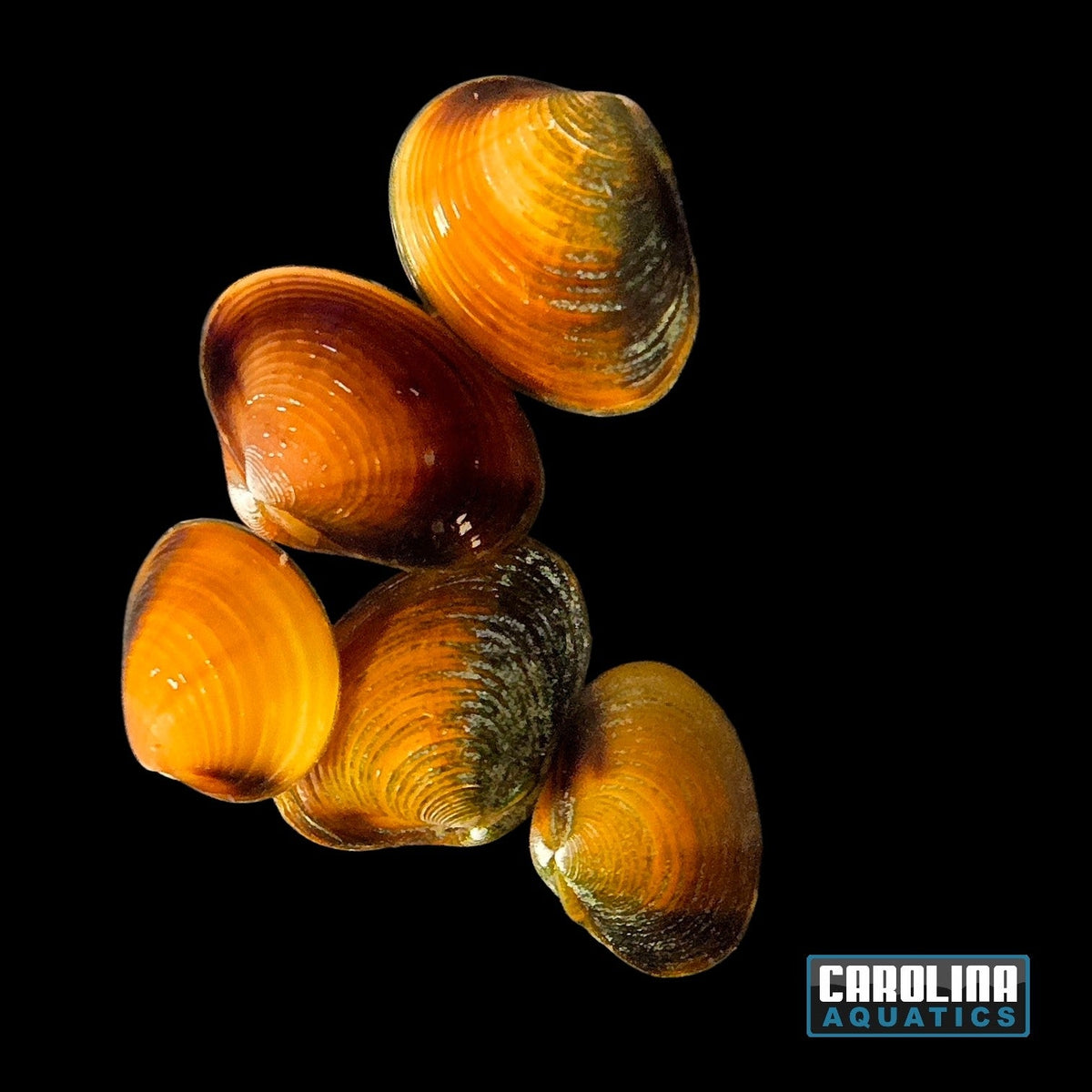
Gold Freshwater Clam (Corbicula fluminea)
