

- Sku: FRAST500AA-4
- Vendor: Squeaky's Aquatics
Starry Rabbitfish (Siganus stellatus)
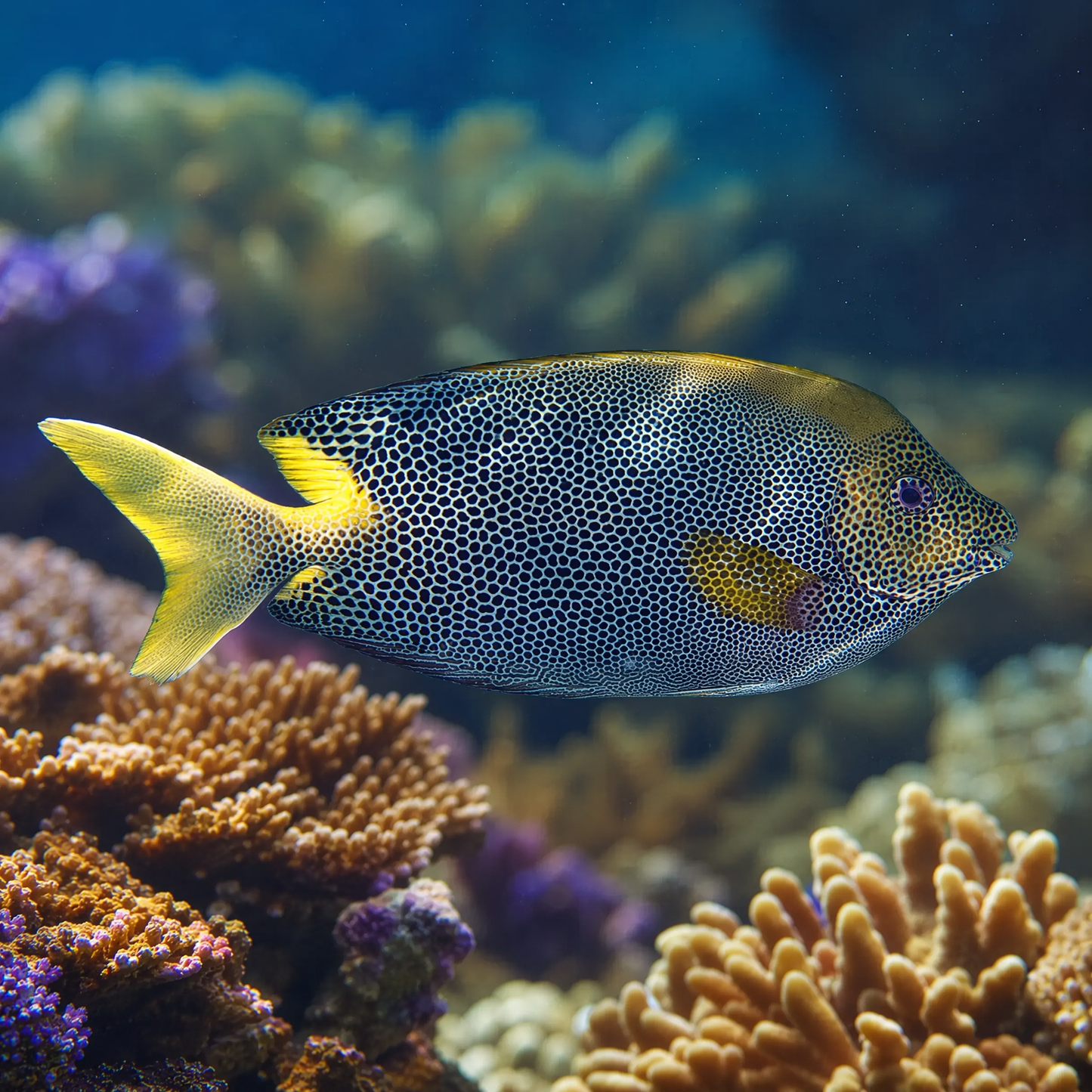
The Starry Rabbitfish (Siganus stellatus) is one of the most striking algae eaters in the marine hobby. Thousands of tiny dark spots tile across a warm bronze body in a honeycomb pattern so fine it looks printed, the tail flares bright yellow, and the whole fish glides rather than darts. It has the rabbitfish face too, that blunt, gentle grazing muzzle that gives the family its name. Beyond looks, it earns its keep: this is a serious herbivore that works hair algae hard and will take on growth most cleanup crews will not touch. New to the family? Our Foxface Rabbitfish care guide covers the basics that apply across the group. Browse the rest of our saltwater livestock and supplies to build the tank around it.
Care Guide
- Tank size: 150 gallons. This is a 12 inch, deep bodied, open water grazer that patrols constantly, and there is no version of this fish that works long term in a 75.
- The spines: venomous, in the dorsal, pelvic, and anal fins. Never handle one bare handed, never net it if you can avoid it, and move it in a container of water instead. A sting is intensely painful and warrants a doctor if you react badly. Puncture wounds from marine species should be taken seriously.
- Feeding: herbivore, and a hungry one. Dried seaweed on a VeggieMag clip should be available most of the day, backed up with algae based pellets. A well fed rabbitfish is the difference between a reef safe fish and one that starts sampling your corals.
- Water parameters: 72 to 78°F, pH 8.1 to 8.4, salinity 1.020 to 1.025. Hardy and undemanding once settled.
- Rockwork: give it open swimming lanes plus a cave or overhang it can wedge into at night. Rabbitfish sleep tucked away and often shift to a blotchy, mottled night coloration while they do it.
- One per tank: peaceful toward almost everything, but rabbitfish do not tolerate other rabbitfish unless the tank is very large and they went in together.
- Lid: recommended for a fast, easily spooked open water fish.
Specifications
| Scientific name | Siganus stellatus |
| Common names | Starry Rabbitfish, Brown-Spotted Rabbitfish, Honeycomb Rabbitfish, Star-Spotted Spinefoot |
| Family | Siganidae, the rabbitfishes |
| Care level | Intermediate, driven by adult size rather than fussiness |
| Temperament | Peaceful, except toward other rabbitfish |
| Venomous | Yes. Dorsal, pelvic, and anal spines. Handle with care |
| Reef safe | With caution. Usually ignores corals when well fed, may nip zoanthids and soft corals when not |
| Max size | About 12 inches |
| Minimum tank | 150 gallons |
| Temperature | 72 to 78°F |
| pH | 8.1 to 8.4 |
| Salinity | 1.020 to 1.025 |
| Diet | Herbivore, needs constant access to greens |
| Origin | Indian Ocean and Red Sea reefs |
| Pickup | In-store pickup at Squeaky's Aquatics |
Compatibility
Genuinely peaceful for a fish this size, and safe with your cleanup crew including the Scarlet Skunk Cleaner Shrimp, snails, and hermits. It suits a large mixed community: the Purple Tang, Scopas Tang, Naso Tang, Mimic Eibli Tang, Naoko's Fairy Wrasse, Premium Picasso Clownfish, Banggai Cardinal, and the Engineer Goby all work well.
The coral question. Rabbitfish are reef safe conditionally, not absolutely. A rabbitfish with seaweed in front of it all day almost never bothers corals. One that runs out of greens starts investigating zoanthids, soft corals, and fleshy LPS. Feed generously and the risk stays low, but a prized zoa collection and a hungry herbivore is a gamble worth knowing about.
Other grazers. Rabbitfish will squabble with their own kind, so pick one: this or our smaller Scribbled Rabbitfish. Tangs and a Lawnmower Blenny are fine alongside it, since they work different surfaces.
Recommended Foods & Supplies
- Two Little Fishies SeaVeggies Green Seaweed with a VeggieMag clip, the daily staple
- Ocean Nutrition Green Marine Algae
- Vitalis Marine Grazing Pellets
- Hikari Seaweed Extreme
- Ocean Nutrition Grazing Wafers
FAQ
How bad is the sting?
Bad enough to take seriously. It is comparable to a lionfish sting: sharp, throbbing pain that can last hours. Hot water immersion is the usual first aid, and you should see a doctor if you have swelling, a strong reaction, or a deep puncture. The fish is not aggressive and will not come after you, so the risk is almost entirely about handling and netting.
Will it eat my hair algae?
Yes, and it is one of the better fish for the job. It grazes constantly and takes on tougher growth than most tangs will. It is not a substitute for fixing nutrients, but as a working grazer it is hard to beat.
Why did its color go blotchy?
That is normal. Rabbitfish switch to a mottled, camouflaged pattern when they sleep or feel threatened, then snap back to full color within minutes. A new arrival often shows the stress pattern for the first day or two.
Can I keep it with a Foxface?
Not in most tanks. Foxfaces are rabbitfish too, and the family does not share space well. One rabbitfish per system is the safe rule unless you are working with a very large tank and adding them at the same time.
Is 150 gallons really necessary?
For an adult, yes. A juvenile will look fine in something smaller for a while, and that is exactly how people end up with a cramped 12 inch fish and no upgrade path. Buy the tank first.
Have a question?
Starry Rabbitfish (Siganus stellatus)
