


- Sku: FTANA750AA-5
- Vendor: Squeaky's Aquatics
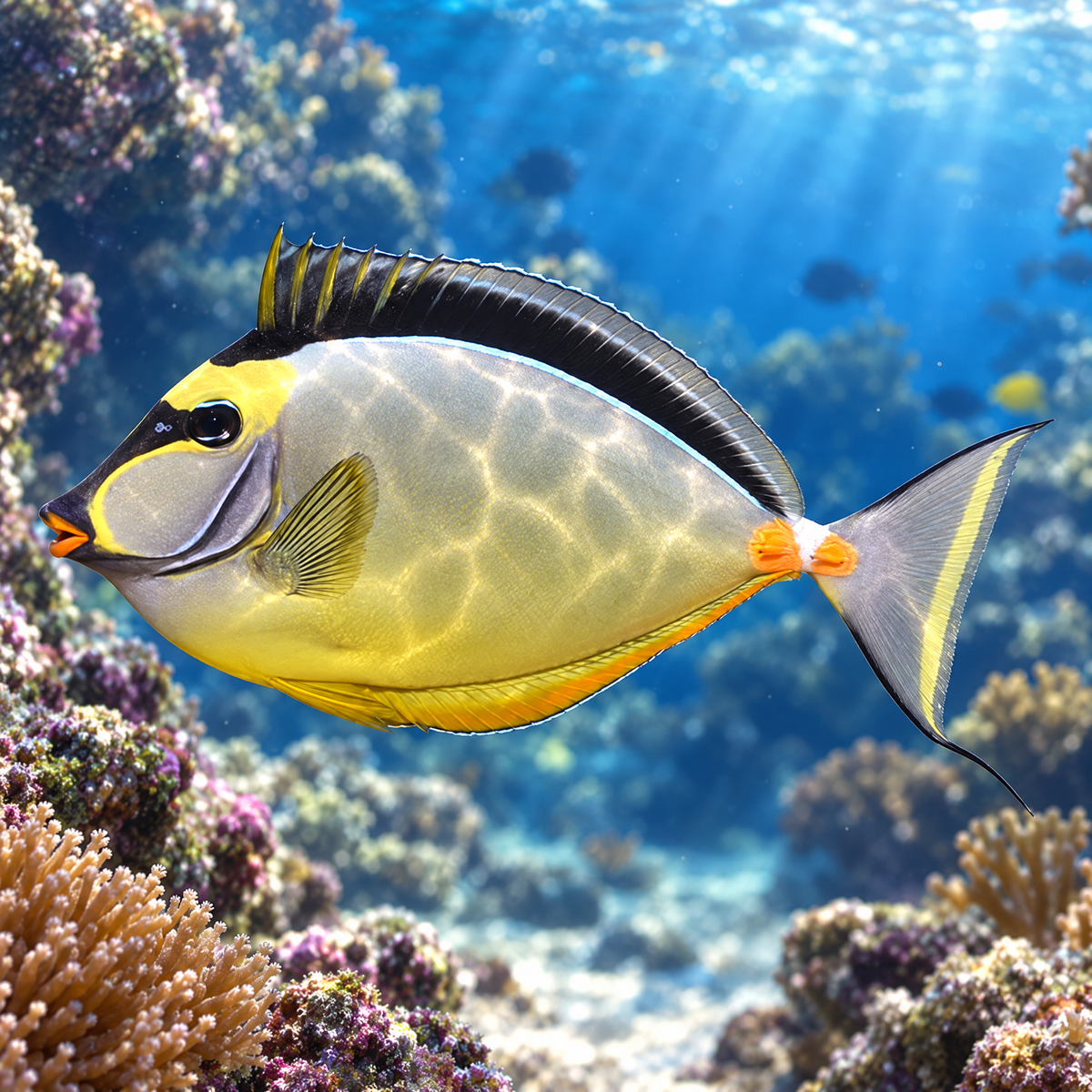
Naso Tang (Naso lituratus) - Large
The Naso Tang (Naso lituratus) is the showpiece grazer of the tang family. A silvery olive body, a black mask painted around yellow lips, sweeping yellow and black dorsal and anal fins, and two fixed orange blades at the base of the tail that give it its other name, the Orangespine Unicornfish. This one is a large specimen, fresh out of our quarantine system, eating hard and cruising nonstop. Browse the rest of our saltwater livestock and supplies.
Care Guide
- Tank size: 180 gallons or larger. This is not a fish that grows into a 125 later, it needs the room now and it needs open lanes to cruise.
- Water parameters: 72 to 78°F, pH 8.1 to 8.4, salinity 1.020 to 1.026, dKH 8 to 12. Tangs are sensitive to swinging parameters, so steady beats perfect.
- Flow and oxygen: strong, turbulent flow and a well-run skimmer. These are high-energy fish from surge zones and they burn oxygen accordingly.
- Feeding: herbivore first. Dried seaweed on a clip every single day, backed by algae and spirulina based frozen foods. A Naso that is not fed enough greens goes thin through the belly fast, and a thin tang is a hard fish to bring back.
- Feed often: two to three small feedings a day beats one large one. In the wild they graze constantly.
- Lid required. Startled tangs jump, and a fish this size hits the floor hard.
- Add it last, or at least after the smaller fish. It is peaceful toward other species but will claim the open water once it settles.
- Watch for ich and lateral line erosion. Both are common in underfed, stressed tangs. Good greens, stable salinity, and clean water prevent most of it.
Specifications
| Scientific name | Naso lituratus |
| Common names | Naso Tang, Orangespine Unicornfish, Lipstick Tang |
| Size offered | Large |
| Care level | Intermediate, advanced because of the tank size it demands |
| Temperament | Peaceful with other species, aggressive toward other tangs |
| Reef safe | Yes. Grazes algae, leaves corals and inverts alone |
| Max size | About 18 inches in the wild, commonly 12 to 14 inches in aquaria |
| Minimum tank | 180 gallons, longer footprint preferred |
| Temperature | 72 to 78°F |
| Salinity | 1.020 to 1.026 |
| Diet | Herbivore, heavy on marine algae and seaweed |
| Swimming level | Open water, constant cruiser |
| Origin | Indo-Pacific reefs and surge zones |
| Quarantine | Completed in house, eating and cleared for sale |
| Pickup | In-store pickup at Squeaky's Aquatics |
Compatibility
Good tank mates. Almost anything peaceful that is not another tang. Clownfish such as the Ocellaris Clownfish or the Black Ice Clownfish, the Pajama Cardinalfish, wrasses, angelfish, larger gobies, and a full cleanup crew all work well. Corals and ornamental inverts are completely safe.
Keep away from. Other Naso species and most other tangs unless the system is genuinely huge and everyone goes in together. A Unicorn Tang, Vlamingii Tang, or a Scopas Tang added later will get chased. Also avoid small nippy triggers and anything aggressive enough to harass a fish that will not fight back.
Not sure you have the footprint for a Naso? A Powder Brown Tang or Scopas Tang gives you the same grazing habit in a smaller package. Ask us on the floor and we will be straight with you about what your tank can hold.
Recommended Foods & Supplies
- Two Little Fishies SeaVeggies Green Seaweed for daily grazing
- Hikari Seaweed Extreme algae based pellets
- Ocean Nutrition Grid Feeding Clip to hold sheets in the flow
- Hikari Spirulina Mysis Shrimp for a protein boost
- Saltwater Refractometer for accurate salinity
FAQ
Can I keep a Naso Tang in a 125 gallon tank?
We would not recommend it for a large one. A 125 is six feet long but only 18 inches front to back, and this fish swims laps. 180 gallons is the honest floor, and bigger is better. If your tank is smaller, a Zebrasoma tang is the better call.
What is the difference between this and a Blonde Naso?
Same genus, different fish. The Blonde Naso is Naso elegans from the Indian Ocean and carries a bright orange dorsal fin. This is Naso lituratus from the Pacific, with the black and yellow dorsal and the orange lips.
Will it eat my corals?
No. It grazes film and hair algae off rock and glass and leaves coral tissue and ornamental inverts alone. It is one of the better algae control fish for a large reef.
Do I really have to feed seaweed every day?
Yes. Tangs graze from sunrise to sunset in the wild and a once-a-week nori sheet is not enough. Daily greens are the single biggest factor in whether a Naso stays fat, colored up, and free of head and lateral line erosion.
Has it been quarantined?
Yes. This one came through our quarantine system, is eating prepared foods, and was moved to the showroom only after it cleared.
Have a question?
Naso Tang (Naso lituratus) - Large
