


- Sku: FTAVL170AA-2
- Vendor: Squeaky's Aquatics
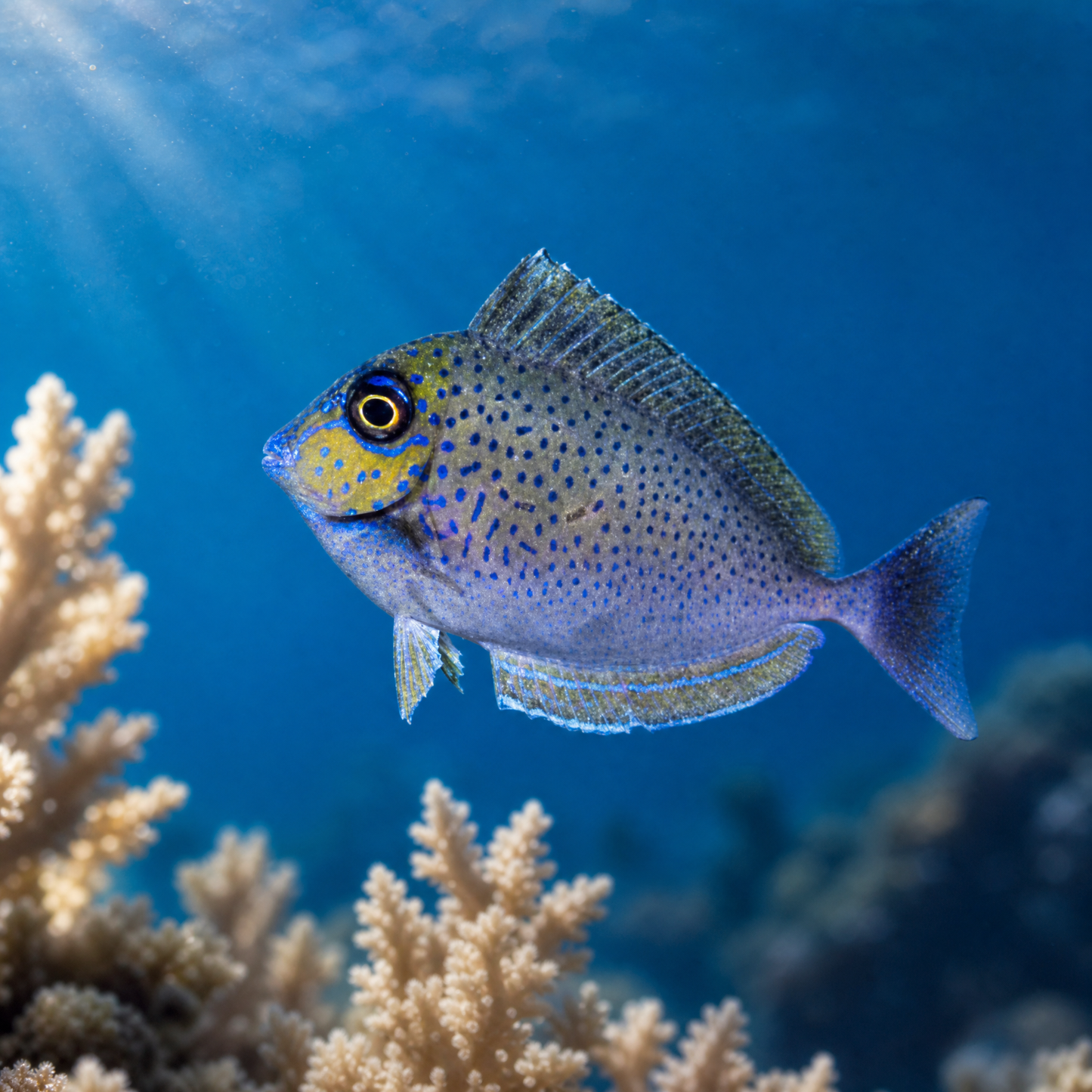
Vlamingii Tang (Naso vlamingii)
The Vlamingii Tang (Naso vlamingii), also called the Bignose Unicornfish, is one of the most quietly spectacular fish in the family. Juveniles arrive dusted in fine blue spots over a soft grey-lavender body with a yellow mask around the eye. As they mature the spots stretch into blue scribbles and vertical bars, the body deepens toward purple, and males develop the blunt forehead bump that gives the species its name. A displaying adult can switch its pattern on and off in seconds. Peaceful with almost everything, reef safe, and long-lived. Browse the rest of our saltwater livestock and supplies to round out the tank.
Care Guide
- Tank size: 300 gallons and up for a growing fish, more for an adult. Length matters more than anything else here, since this is an open-water cruiser that needs room to turn.
- Water parameters: 72 to 78°F, pH 8.1 to 8.4, salinity 1.020 to 1.026. Hardy for a tang once settled, and Naso species generally ship and adapt better than the Acanthurus powder tangs.
- Feeding: herbivore with a planktivore streak. In the wild it grazes macroalgae and picks zooplankton out of the current. In a tank that means dried seaweed on a clip at least three times a week, backed by marine grazing pellets and spirulina flake. Well-fed Nasos are calmer and hold better color.
- Do not skimp on greens. A tang on a thin or meat-heavy diet loses condition behind the eyes and becomes prone to head and lateral line erosion. Consistent algae plus clean water prevents it.
- Flow and oxygen: strong flow and good surface agitation. They come from reef slopes and drop-offs with real water movement.
- Lid required. Startled Nasos jump, and a big one hits a cover hard. Keep the tank covered and mind the gaps.
- Handle with a container, not a net. The paired blades at the tail base are fixed rather than folding in this genus, and they will shred a net and cut a hand.
Specifications
| Scientific name | Naso vlamingii |
| Common names | Vlamingii Tang, Bignose Unicornfish, Scribbled Unicornfish |
| Care level | Advanced, due to adult size |
| Temperament | Peaceful with most fish, territorial toward other tangs |
| Reef safe | Yes |
| Max size | Up to 24 inches, usually smaller in captivity |
| Minimum tank | 300 gallons and up |
| Lifespan | 40 years or more |
| Temperature | 72 to 78°F |
| Salinity | 1.020 to 1.026 |
| Diet | Herbivore, also takes zooplankton |
| Origin | Indo-Pacific reef slopes and drop-offs |
| Pickup | In-store pickup at Squeaky's Aquatics |
Compatibility
One of the more good-natured large tangs. It ignores corals and inverts entirely and gets along with angels, wrasses, clownfish, and anything else that is not shaped like a tang. In a system big enough to hold it, most of the usual reef community works.
The exception is other surgeonfish, particularly other Naso. Two large tangs of similar shape will fight unless the tank is genuinely huge and both went in together. Also avoid pairing it with fish small enough to be pushed off food by a foot-long grazer.
Other tangs worth comparing: our Naso Tang is the closest relative and shares the same space requirement, while the Powder Brown Tang, Sailfin Tang, and Scopas Tang all stay far smaller and suit a normal reef tank.
Recommended Foods & Supplies
- Rod's Food Leafy Purple Seaweed grazing sheet
- Rod's Food Three Weed Blend for variety
- Vitalis Marine Grazing Pellets
- Two Little Fishies VeggieMag magnetic seaweed clip
- Vitalis Universal Grazing Station for continuous feeding
- Saltwater Refractometer for accurate salinity
FAQ
Will mine look like the photo forever?
No, and that is part of the appeal. Juveniles are spotted with a yellow eye mask. As the fish matures the spots elongate into blue scribbles and bars, the base color shifts toward purple-grey, and males grow the forehead bump. Adults can also flash their pattern brighter or duller depending on mood.
Does it really need 300 gallons?
For a fish that can reach two feet and swims open water all day, yes. A juvenile will be fine in something smaller for a while, but only if the big tank is actually planned. Buying one for a 90 gallon and hoping is how these end up rehomed or dead.
Is it hard to keep compared to a Powder Blue or Powder Brown?
Easier, honestly. Naso tangs tend to ship and acclimate better than the Acanthurus powders and are less prone to crashing with ich. The hard part with this species is not health, it is square footage.
Is it safe with corals?
Completely. It grazes algae and picks plankton, and will not touch coral tissue or inverts.
Why is it called a unicornfish if it has no horn?
Some Naso species grow a forward-pointing horn. This one instead develops a rounded snout bump, most obvious in mature males, which is where Bignose Unicornfish comes from.
Have a question?
Vlamingii Tang (Naso vlamingii)
