


- Sku: 48083117670619
- Vendor: Squeaky's Aquatics
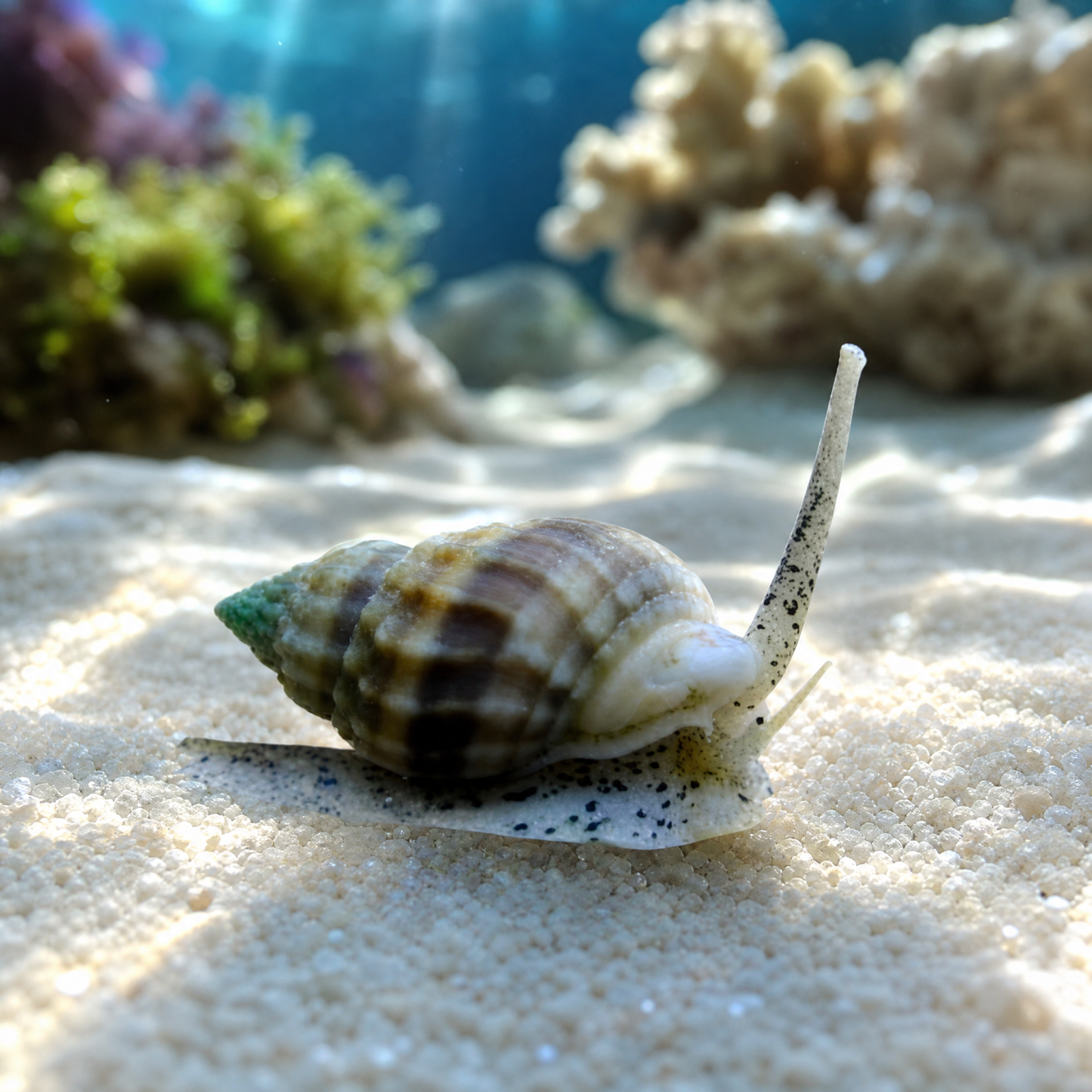
Nassarius Snail (Nassarius sp.)
The Nassarius Snail (Nassarius sp.) is the sand bed's night shift. It spends the day buried with only a snorkel-like siphon poking out, then erupts from the sand the moment food hits the water, racing across the bottom faster than a snail has any right to move. As a dedicated scavenger it clears uneaten food, detritus, and anything that dies unseen behind the rockwork, and its constant burrowing keeps the sand bed turned and aerated. Completely reef safe and a must-have for any tank with a sand bottom. Build the rest of your crew from our saltwater livestock and supplies.
Care Guide
- Sand bed required: at least an inch of sand or fine substrate. They live buried and will not thrive in bare-bottom tanks.
- Water parameters: 72 to 78°F, salinity 1.023 to 1.026, pH 8.1 to 8.4. Like all inverts they are sensitive to swings, so drip acclimate and keep copper-based medications far away.
- Diet: carnivorous scavenger. In a stocked tank, leftover fish food and natural detritus usually cover it. In very clean or lightly stocked tanks, drop in a small piece of frozen meaty food once or twice a week.
- Stocking: roughly 1 snail per 5 to 10 gallons is plenty. More than that and they can run short of food.
- Not an algae eater: pair them with grazers like Turbo Snails for algae control; the Nassarius handles the meaty leftovers side of the job.
Choose Your Size
| Size | What you get |
|---|---|
| S/M | Standard Nassarius, about 1/2 inch. Perfect for nano and mid-size sand beds. |
| Large | A grown standard Nassarius with more cleanup horsepower per snail. |
| Super | The jumbo Tongan variety (Nassarius distortus), up to about 1 inch. Best for larger tanks and deeper sand beds. |
Specifications
| Scientific name | Nassarius sp. |
| Common names | Nassarius Snail, Super Nassarius, Sand-Sifting Snail |
| Care level | Beginner |
| Temperament | Peaceful |
| Reef safe | Yes, completely |
| Max size | 1/2 inch, Super variety up to 1 inch |
| Temperature | 72 to 78°F |
| Salinity | 1.023 to 1.026 |
| Diet | Scavenger: uneaten food, detritus, carrion |
| Origin | Indo-Pacific and Caribbean |
| Pickup | In-store pickup at Squeaky's Aquatics |
Compatibility
Safe with corals, fish, shrimp, and every peaceful tank mate; it wants nothing but leftovers. Round out a balanced cleanup crew with algae-grazing Mexican Turbo Snails, Bumble Bee Snails for the rockwork crevices, Red Leg Hermit Crabs, and a Pincushion Urchin for film algae. Skip them in tanks with snail hunters like triggers, puffers, and larger predatory wrasses, and watch hermit crabs if shells are scarce, they occasionally evict a snail to steal its home.
Recommended Crew Mates & Supplies
- Mexican Turbo Snail for algae duty
- Mexican Red Leg Hermit Crab
- Scarlet Skunk Cleaner Shrimp
- Ocean Nutrition Frozen Brine Shrimp Plus for supplemental feeding
FAQ
My snails disappeared into the sand. Are they dead?
Almost certainly not. Buried is their default state. Drop in a pinch of food and watch the sand come alive within a minute or two.
Will they eat algae?
No. Nassarius are meat-eating scavengers. For algae you want grazers like Turbo, Astraea, or Trochus snails; the two types work best together.
How many do I need?
About one per 5 to 10 gallons. A 40 gallon tank does great with 4 to 6, heavier-fed tanks can support more.
Which size should I pick?
S/M fits nano tanks and shallow beds. Supers move more sand and handle bigger leftovers, ideal for 50 gallons and up or deep sand beds. Mixing sizes works great too.
Have a question?
Nassarius Snail (Nassarius sp.)
