

- Sku: 2.49
- Vendor: Squeaky's Aquatics
Pygmy Cory (Corydoras pygmaeus)
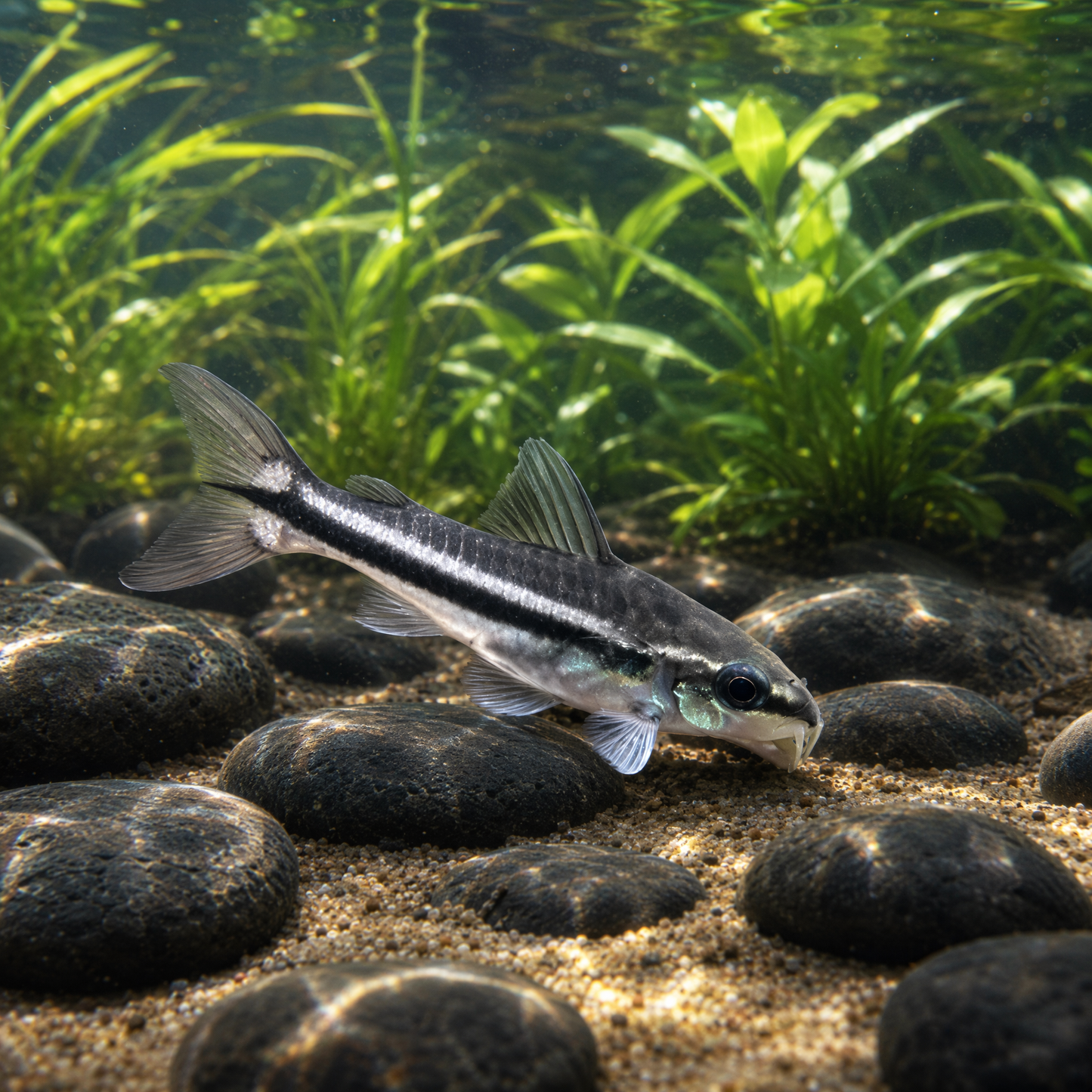
The Pygmy Cory (Corydoras pygmaeus) is the smallest corydoras in the hobby, a silver sliver about an inch long with a crisp black stripe running nose to tail. What makes it special is not the size, it is the behavior: unlike every other cory, pygmies school in the open water column like tetras, drifting through the middle of the tank in a tight group and only dropping to the sand to forage. A dozen of them turn a nano tank into something alive. Care level is beginner, temperament is peaceful. Browse the rest of our live fish and freshwater supplies to build the tank around them.
Care Guide
- Tank size: 10 gallons is plenty for a school, and longer beats taller since they are constantly on the move. They are one of the few catfish genuinely suited to a nano tank.
- Sand is not optional: cories feed by sifting substrate through their barbels, and sharp gravel wears those barbels down until they get infected. Use fine aquarium sand or very smooth, rounded fine gravel. Nothing sharp.
- Diet: micro foods only. Their mouths are far too small for standard flakes and wafers, so what works is micro pellets, nano sinking pellets, crushed food, baby brine shrimp, and mini bloodworms. Make sure food actually reaches the bottom; faster tankmates will beat them to it.
- Water parameters: 72 to 79°F, pH 6.4 to 7.4, soft to moderately hard. Adaptable, but sensitive to nitrate buildup, so keep up with water changes.
- Aquascape: planted tanks suit them perfectly. Java moss, crypts, and some floating cover give them confidence, and open sand at the front gives them somewhere to forage where you can watch.
- Filtration: gentle. They are tiny and weak swimmers compared to a stream fish, so avoid strong outflow, and screen any intake that could catch a fish this small.
- Breeding: egg scatterers rather than cave spawners. A well fed group in clean water will lay eggs on plants and glass. Adults will eat the eggs, so move them to a separate container if you want fry.
Specifications
| Scientific name | Corydoras pygmaeus |
| Common names | Pygmy Cory, Pygmy Corydoras, Dwarf Corydoras |
| Origin | Rio Madeira basin, Brazil |
| Max size | About 1 inch (2.5 cm) |
| Care level | Beginner |
| Temperament | Peaceful |
| Minimum group | 6, ideally 8 to 12 |
| Minimum tank | 10 gallons |
| Temperature | 72 to 79°F |
| pH | 6.4 to 7.4 |
| Substrate | Fine sand or smooth rounded gravel |
| Diet | Omnivore, micro sinking foods |
| Swim level | Midwater and bottom, unusual for a cory |
| Pickup | In-store only |
Compatibility
Peaceful with everything, which is exactly the problem: at one inch long, a pygmy cory is a snack for a lot of ordinary community fish. Anything with a mouth big enough will eventually try. Skip angelfish, larger cichlids, big gouramis, and adult bettas with a hunting streak.
The right tankmates are nano fish. Ember Tetras, Galaxy Rasboras, Neon Tetras, Otocinclus, and dwarf shrimp all make excellent company. They also mix happily with larger cories such as Panda Cories, though the two groups tend to school separately rather than together.
Recommended Foods & Supplies
- Hikari Micro Pellets, small enough for a pygmy mouth
- Xtreme Nano Slow-Sinking Pellets, made for exactly this size of fish
- SFBB Baby Brine Shrimp and Mini Bloodworms for frozen variety
- Estes Natural Aquarium Sand, the barbel-safe substrate they need
- Java Moss and Cryptocoryne wendtii for planted cover
FAQ
How many should I get?
Eight to twelve. Six is the absolute floor. Below that they stay hidden and stressed, and you lose the schooling behavior that is the whole reason to keep them.
Why is mine swimming in the middle of the tank instead of the bottom?
Because that is normal for this species. Pygmy cories are the odd one out in the genus and spend much of the day hovering and drifting in open water. Nothing is wrong.
Can I keep them on gravel?
Only if it is fine and smooth with no sharp edges. Sand is much safer. Sharp substrate wears down their barbels, and damaged barbels get infected and make it hard for them to find food.
Are they good algae eaters?
No. Cories are scavengers that sift the substrate for leftover food, not algae grazers. They will help keep uneaten food from rotting, but they still need to be fed properly. For algae, look at Otocinclus or a Bristlenose Pleco.
Have a question?
Pygmy Cory (Corydoras pygmaeus)
