


- Sku: 1315577
- Vendor: Squeaky's Aquatics
Bristletooth Two Spot Tang (Ctenochaetus binotatus)
The Bristletooth Two Spot Tang (Ctenochaetus binotatus), also sold as the Two Spot Surgeonfish or Pencilled Bristletooth, is one of the most easygoing tangs in the hobby. A dusky brown body carries fine blue-white speckling that sharpens with maturity, and the two dark spots at the base of the tail give the fish its name. Unlike the scraping Acanthurus tangs, bristletooths have comb-like teeth built for combing film algae, diatoms, and detritus off rock and sand, which makes this one a genuinely useful worker as well as a good looking fish. Peaceful, reef safe, and a sensible first tang. Browse the rest of our saltwater livestock and supplies to round out the tank.
Care Guide
- Tank size: 75 gallons is the practical minimum, 90 or more for the long term. They are active cruisers, so linear length matters more than height, and they need grazing surface as well as swimming room.
- Water parameters: 72 to 78°F, pH 8.1 to 8.4, salinity 1.020 to 1.025, dKH 8 to 12. Steady beats perfect, and a refractometer is worth the small cost here.
- Mature tank preferred. A bristletooth wants a rock surface that already grows something. In a brand new sterile tank there is nothing to graze, and grazing is most of what this fish does all day.
- Feeding: herbivore first. Clip dried seaweed daily, backed by marine grazing pellets and spirulina flake. Frozen mysis a couple of times a week is a fine supplement, not the base. Several small feedings beat one big one.
- Watch the condition. Tangs kept short on greens go hollow behind the eyes and get prone to head and lateral line erosion. Steady algae plus clean water is the prevention.
- Flow and oxygen: good movement and surface agitation suit them.
- Handle with a container. The blade at the tail base is sharp and will cut a net and a hand.
Specifications
| Scientific name | Ctenochaetus binotatus |
| Common names | Bristletooth Two Spot Tang, Two Spot Surgeonfish, Pencilled Bristletooth |
| Family | Acanthuridae |
| Care level | Intermediate |
| Temperament | Peaceful, one of the most docile tangs |
| Reef safe | Yes |
| Max size | About 7 inches |
| Minimum tank | 75 gallons, 90 preferred |
| Temperature | 72 to 78°F |
| Salinity | 1.020 to 1.025 |
| Alkalinity | 8 to 12 dKH |
| Diet | Herbivore and detritus grazer |
| Lifespan | 7 to 10 years or more |
| Origin | Wild caught, Indo-Pacific |
| Pickup | In-store pickup at Squeaky's Aquatics |
Compatibility
Good tank mates. One of the easiest tangs to fit into a community reef. Clownfish such as the Ocellaris, plus Banggai Cardinalfish, Royal Gramma, Blue Green Chromis, Coral Beauty Angelfish, peaceful wrasses, gobies, blennies, and anthias. Corals, clams, shrimp, snails, and hermits are all safe with it.
Avoid. Other bristletooths above all, since same-genus tangs fight. One tang per tank is the rule unless the system is 180 gallons or more and everyone goes in together, from different genera. Also skip aggressive triggers, large angels, and anything predatory enough to harass a slim peaceful grazer.
Comparing the grazing tangs? The Flame Fin Tomini Tang is the near twin, the Scopas Tang and Sailfin Tang are hardy Zebrasoma options, and the Powder Brown Tang is the showier but more demanding choice.
Recommended Foods & Supplies
- Rod's Food Leafy Purple Seaweed daily grazing sheet
- Rod's Food Three Weed Blend for variety
- Vitalis Marine Grazing Pellets
- Two Little Fishies VeggieMag magnetic seaweed clip
- Vitalis Universal Grazing Station for continuous feeding
- Saltwater Refractometer for accurate salinity
FAQ
How is this different from a Tomini Tang?
They are close relatives in the same genus and behave almost identically. The quickest tell is the markings: the Two Spot has its namesake pair of dark spots near the tail, while the Tomini carries bright yellow fin tips. Two Spots also grow a little larger, around seven inches against roughly six. Either one makes a good first tang, but do not keep both.
What does bristletooth actually mean?
It refers to the teeth. Ctenochaetus species have flexible comb-like teeth for sweeping fine algae, diatoms, and detritus off surfaces, rather than the rigid scraping teeth of other tangs. That is why they work sand and rock so thoroughly and never bother coral.
Is it safe with corals and inverts?
Yes, completely. It eats film algae and detritus and leaves corals, clams, shrimp, and snails alone.
Will it clear my algae?
It helps a great deal with film algae and diatoms and works constantly, but it is not a fix for a nutrient problem. Treat it as cleanup, not as the cure.
Can I keep it with another tang?
In most home tanks, no. In 180 gallons or more it can work with tangs from different genera added at the same time. Never pair it with another bristletooth.
Have a question?
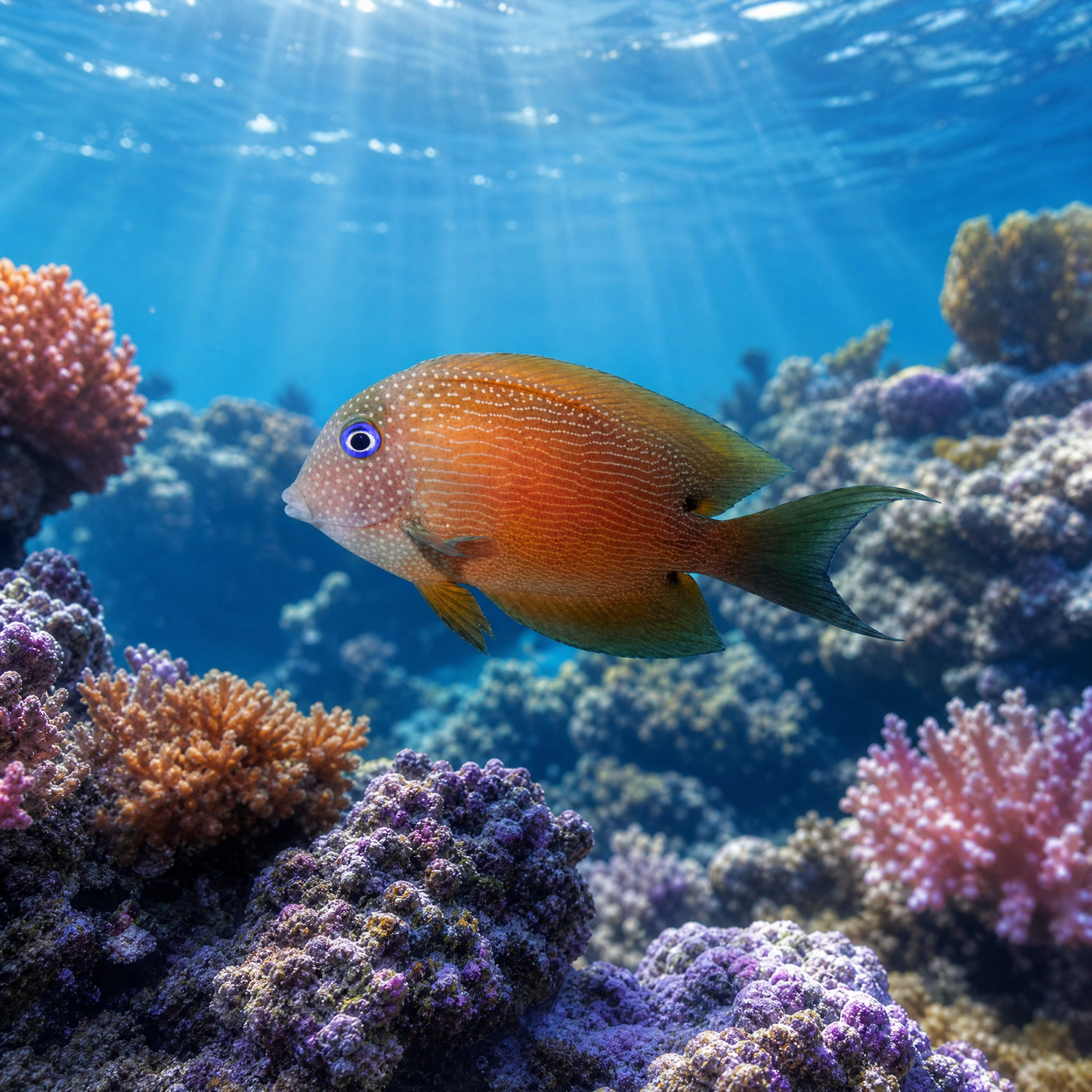
Bristletooth Two Spot Tang (Ctenochaetus binotatus)
