


- Sku: FW1-F8703
- Vendor: Squeaky's Aquatics
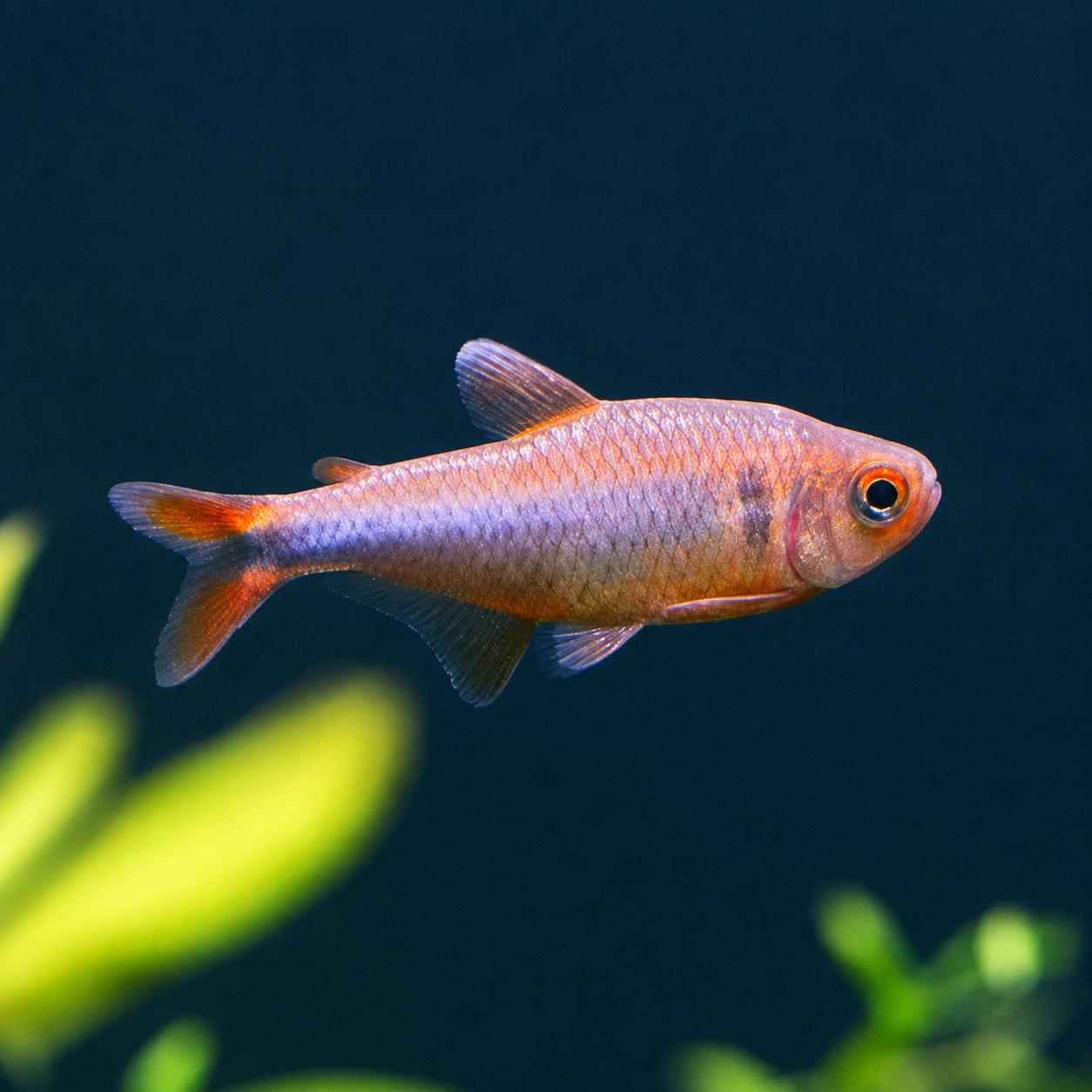
Blueberry Tetra (Hyphessobrycon wadai)
The Blueberry Tetra (Hyphessobrycon wadai) is one of the newest characins in the hobby, formally described only in 2016. It is a small, glassy, blue to violet fish with a warm red flush behind the gill and a bright iridescent line down the flank that lights up under good light and against a dark substrate. Peaceful, beginner friendly, and genuinely uncommon on shop shelves. Browse the rest of our freshwater livestock and supplies while you plan the tank.
Why Tank Raised Matters Here
In the wild this fish comes from soft, acidic, tannin stained streams in the upper Tapajos basin, the kind of water that reads near zero on a hardness test. Wild caught soft water characins routinely struggle in ordinary tap water, and plenty of hobbyists have lost a bag of them for exactly that reason.
Ours are tank raised, which changes the math. Captive bred generations have been grown in normal aquarium water, so they are far more forgiving of moderate hardness and a neutral pH than their wild parents would be. You still get the best color and the best breeding behavior in soft, slightly acidic water, but you are no longer required to run an RO unit just to keep them alive. If you already keep Neons or Embers successfully, you can keep these.
Care Guide
- Tank size: 15 gallons is the practical minimum, and a 20 long is better. These are strong little swimmers that use horizontal space, so footprint beats height.
- Group size: six is the floor, eight to ten is where they actually behave like themselves. In a proper group they hold a loose shoal in open water and color up hard. In a group of two or three they hide in the plants and stay washed out, which is how most people conclude the fish is dull.
- Water parameters: 68 to 79°F, pH 5.5 to 7.0, and soft water at 1 to 6 GH if you can manage it. Tank raised stock tolerates harder and more neutral water, but color deepens noticeably as you move toward the soft acidic end.
- Blackwater suits them: a dark substrate, some driftwood, and catappa leaves for tannins will do more for their appearance than any light upgrade. Against pale gravel they look like clear glass.
- Feeding: omnivore with a genuinely tiny mouth, so particle size is the whole game. Xtreme Nano Slow-Sinking Pellets or Hikari Micro Pellets as the staple, with frozen baby brine shrimp or cyclops a couple of times a week. Standard flake is often too large for them to swallow.
- Flow and cover: they come from streams with steady current, so gentle to moderate flow is welcome. Give them planted edges to retreat into and open midwater to cruise.
- Sexing: males are slimmer and more intensely colored, females noticeably rounder and plainer. Worth buying a group if you want a shot at both.
Specifications
| Scientific name | Hyphessobrycon wadai |
| Common names | Blueberry Tetra, Wadai Tetra |
| Care level | Beginner |
| Temperament | Peaceful |
| Adult size | About 1 to 1.5 inches |
| Minimum group | 6, with 8 to 10 preferred |
| Minimum tank | 15 gallons, 20 long preferred |
| Temperature | 68 to 79°F |
| pH | 5.5 to 7.0 |
| Hardness | 1 to 6 GH, soft water preferred |
| Diet | Omnivore, micro pellets and small frozen foods |
| Lifespan | Up to 5 years |
| Origin | Rio do Sangue, upper Rio Tapajos basin, Mato Grosso, Brazil |
| Sourcing | Tank raised |
| Water type | Freshwater |
| Pickup | In-store pickup at Squeaky's Aquatics |
Compatibility
Start with the hard part: this is a one inch fish, and one inch fish are food. Anything with a mouth big enough will eventually take one, which rules out angelfish, most cichlids past dwarf size, larger gouramis, and any grown out community fish you are hoping to "just try." It also rules out fin nippers such as tiger barbs and serpae tetras, which will shred a shoal this delicate. Judge every tankmate by mouth width, not by reputation.
What does work is a nano community of equals. Pair them with Ember Tetras, Neon Tetras, Cardinal Tetras, or Micro Tiger Rasbora, with Pygmy Corys or Panda Corys on the floor and Otocinclus on the glass. Adult Neocaridina shrimp are safe company, though a mouth this size will still pick off newborn shrimplets, so expect a slower colony than in a fish free tank.
Recommended Foods & Supplies
- Xtreme Nano Slow-Sinking Pellets sized for a mouth this small
- Hikari Micro Pellets alternate staple
- SFBB Baby Brine Shrimp conditioning food that triggers real color
- Fritz Catappa Leaves tannins, softer water, better color
- Estes Natural Aquatic Sand a dark floor makes them glow
- Anubias Nana and Dwarf Sagittaria planted cover to retreat into
FAQ
When will these be in?
They are on order and this page will switch over to buyable the moment they clear our quarantine. Everything here is accurate now, so you can plan the tank ahead of time.
Do I need RO water for them?
No. Wild Hyphessobrycon wadai would want very soft water, but these are tank raised and adapt fine to ordinary aquarium water. Soft and slightly acidic simply gives you better color, so treat it as an upgrade rather than a requirement.
Why do they look pale in the bag?
Because they are stressed, transported, and sitting against a bright background. This species shows its blue over a dark substrate in a settled tank, so give a new group two weeks before you judge them.
How many should I buy?
Six minimum, eight to ten if the tank allows. A bigger group is the single biggest difference between a shy, colorless fish and the one you saw in the photo.
Is this a dyed or painted fish?
No. Some fruit named fish in the trade are artificially dyed, which is worth being suspicious of. This is not one of them. Hyphessobrycon wadai is a real species with natural blue to violet coloring, described by scientists in 2016, and ours are captive bred.
Are they safe with my shrimp?
Adult shrimp, yes. Newborn shrimplets are small enough to be eaten. A heavily planted tank with moss will still let a colony grow, just more slowly.
Have a question?
Blueberry Tetra (Hyphessobrycon wadai)
