


- Sku: FW1-F1275
- Vendor: Squeaky's Aquatics
Clown Pleco (Panaqolus maccus)
The Clown Pleco (Panaqolus maccus) is a small, peaceful suckermouth catfish with a dark body crossed by orange to gold bands, and no two carry quite the same pattern. It tops out around 3.5 inches, so it fits comfortably in a 20 or 30 gallon community tank where a common pleco never could. The one thing to know before you buy: this is a wood eater. Clown plecos rasp on driftwood all day and night, and wood is a real part of their diet, not decoration. Browse the rest of our freshwater livestock and supplies and our aquarium driftwood to set up the tank around it.
It Is Not an Algae Eater
Clown plecos get sold as cleanup fish, and that sets them up to fail. They graze a little soft algae and biofilm, but they will not clear a tank of algae and they cannot live on it. What they actually eat is wood, plus vegetables and sinking foods you provide. If algae control is the goal, an Otocinclus group or a Bushynose Pleco does that job far better. Buy a clown pleco because you want a clown pleco.
Care Guide
- Driftwood: give it hardwood to chew. Malaysian Driftwood or CaribSea Scapers Select make a long lasting base, and softer Cholla Wood is easy for it to rasp. Replace cholla as it gets worn down.
- Tank size: 20 gallons for one, 30 gallons or more for a group or alongside other bottom dwellers. Floor space and hiding spots matter more than height.
- Caves: provide one cave or tight overhang per pleco, plus a spare. A Hikari Dark Rock Cave or AquaVitro Ceramic Hide works well.
- Water parameters: 73 to 82°F, pH 6.5 to 7.5, soft to moderately hard. Adaptable to most tap water as long as it is clean and stable.
- Flow and oxygen: these come from moving rivers. Good filtration, some current, and well oxygenated water keep them active.
- Plan for wood dust: eating wood means producing fine, sawdust like waste. Vacuum the substrate at water changes and keep the filter well maintained.
- Feeding: feed after the lights go down, since they are most active at night. Offer Repashy Morning Wood, Xtreme Scrapers Sinking Wafers, or Hikari Algae Wafers, plus blanched zucchini or cucumber a few times a week. A small protein treat once a week is plenty.
- Lifespan: 10 years or more with good care, so plan on a long term resident.
Specifications
| Scientific name | Panaqolus maccus |
| Common names | Clown Pleco, Clown Panaque, Ringlet Pleco, L104, L162 |
| Family | Loricariidae, the suckermouth catfishes |
| Care level | Beginner, provided it has driftwood |
| Temperament | Peaceful, mildly territorial over caves with other plecos |
| Adult size | About 3.5 inches |
| Minimum tank | 20 gallons |
| Temperature | 73 to 82°F |
| pH | 6.5 to 7.5 |
| Hardness | Soft to moderately hard |
| Diet | Xylivore and herbivore: driftwood, vegetables, sinking wood and algae based foods |
| Lifespan | 10 years or more |
| Origin | Orinoco River basin, Venezuela and Colombia |
| Water type | Freshwater |
| Pickup | In-store pickup at Squeaky's Aquatics |
Compatibility
A clown pleco keeps to the wood and the floor and ignores everything swimming above it, which makes it an easy addition to a peaceful community. Good company includes Neon Tetras, Ember Tetras, Cherry Barbs, Zebra Danios, and bottom dwellers like the Panda Cory. Adult shrimp and snails are generally safe.
Other plecos. Clown plecos can share a tank with other small plecos such as the L-129 False Zebra Pleco or a Bushynose, as long as there are more caves than plecos. Males will squabble over the best cave, but with enough hiding spots it rarely goes beyond a little shoving.
What to avoid. Large or aggressive cichlids that will bully a small, slow fish, and big bottom feeders that outcompete it at feeding time. Avoid tanks with no wood at all, and do not rely on leftovers to feed it.
Recommended Foods & Supplies
- Malaysian Driftwood or Cholla Wood branches, the one thing not to skip
- Repashy Morning Wood gel food made for wood eating fish
- Xtreme Scrapers Sinking Wafers
- Hikari Algae Wafers
- Hikari Dark Rock Cave for a daytime hideout
FAQ
How big does a clown pleco get?
About 3.5 inches as an adult. It is one of the smallest plecos in the hobby and a very different animal from the common pleco, which can pass 18 inches.
Does it really need driftwood?
Yes. Wood is part of its diet, not just shelter. Without it, clown plecos tend to decline slowly even when they are eating prepared foods. One good piece of hardwood plus some cholla is enough.
Will it clean the algae in my tank?
Not much. It grazes a little soft algae but is not an algae eater. Feed it wood based gel foods, wafers, and vegetables of its own every day.
Can I tell males from females?
Mature males grow dense, bristly spines (odontodes) along the back half of the body and on the pectoral fin spines. Females stay smoother and look rounder when viewed from above. Young fish are hard to sex.
Is it safe with shrimp?
Adult shrimp are generally fine. Like most bottom feeders it may eat a baby shrimp it stumbles onto, so a heavily planted tank helps if you are breeding shrimp.
Have a question?
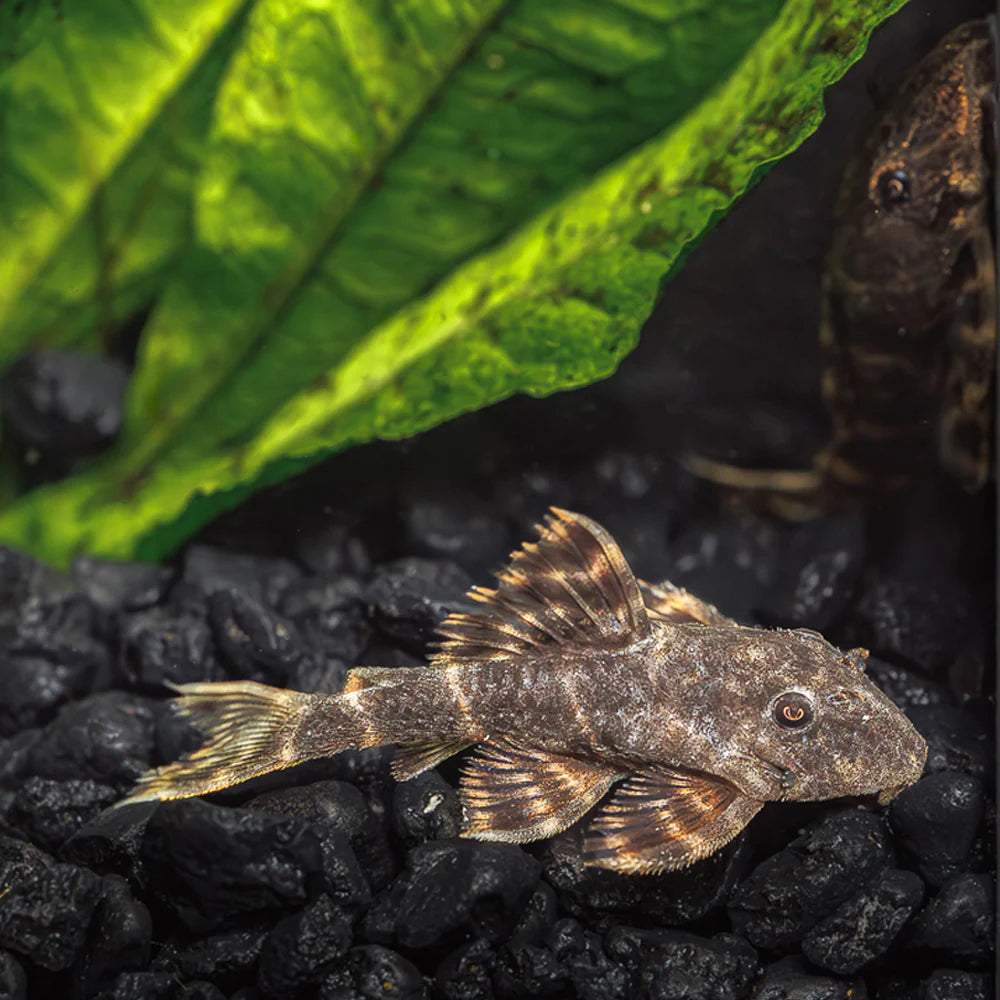
Clown Pleco (Panaqolus maccus)
