

- Sku: 110053
- Vendor: Squeaky's Aquatics
Juvenile Imperator Angelfish (Pomacanthus imperator)
The Juvenile Imperator Angelfish (Pomacanthus imperator), also called the Emperor Angelfish, is one of the true showpiece fish of the saltwater hobby. As a juvenile it wears a deep navy body covered in bright white and electric blue rings that swirl toward the tail. As it grows, it slowly changes into the adult pattern of yellow and blue horizontal stripes with a dark mask across the eyes, so you get to watch the transformation happen in your own tank. It is a semi-aggressive, intermediate-level fish that is not reef safe and grows large, so it suits a big fish-only or fish-with-live-rock system. Browse the rest of our saltwater livestock and supplies and our full fish selection while you plan.
Care Guide
- Tank size: 180 gallons minimum for an adult, and 220 gallons or larger is better. Imperators reach around 15 inches. A juvenile can grow out in a smaller established tank for a while only if the big upgrade is already planned.
- Mature system: add it to a stable, well-filtered tank with plenty of live rock to graze and caves to retreat into. Large angels produce a lot of waste, so strong filtration and regular water changes matter.
- Water parameters: 72 to 78°F, pH 8.1 to 8.4, salinity 1.020 to 1.025, alkalinity 8 to 12 dKH.
- Feeding: omnivore. In the wild a big part of its diet is sponge, so feed a frozen angel formula that contains sponge, like SFBB Angel & Butterfly or Hikari Mega-Marine Angel, plus seaweed and meaty foods like PE Mysis. Feed two to three times daily.
- Settling in: juveniles can be shy for the first few days. Keep the lights low after you bring it home, offer a few different foods, and give it time to start exploring.
- Quarantine at home: we recommend quarantining any new fish in a separate tank at home before it joins your display.
Specifications
| Scientific name | Pomacanthus imperator |
| Common names | Imperator Angelfish, Emperor Angelfish |
| Origin | Indo-Pacific and Red Sea |
| Size offered | Juvenile, in juvenile coloration |
| Care level | Intermediate |
| Temperament | Semi-aggressive |
| Reef safe | No, nips corals and clams |
| Max size | About 15 inches |
| Minimum tank | 180 gallons, 220 gallons preferred |
| Temperature | 72 to 78°F |
| pH | 8.1 to 8.4 |
| Salinity | 1.020 to 1.025 |
| Diet | Omnivore, sponge-based angel foods plus greens and meaty foods |
| Lifespan | 15 years or more with good care |
| Pickup | In-store pickup at Squeaky's Aquatics |
Compatibility
Not reef safe. Imperators pick at large-polyp stony corals, soft corals, zoanthids, and clam mantles. Some reefers try one with tough corals, but it is a gamble. It is a much better fit for a fish-only or fish-with-live-rock tank.
With other fish it does best alongside robust, similarly sized tank mates. Good choices include tangs like the Powder Brown Tang and Sailfin Tang, the Yellow Foxface, the Blue Throat Trigger, and the Arc Eye Hawkfish. Keep only one large angelfish per tank unless the system is very large and both go in at the same time. Avoid very small, timid fish that an adult Imperator could bully.
Recommended Foods & Supplies
- SFBB Angel & Butterfly Cubes, a sponge-based frozen staple
- Hikari Bio-Pure Mega-Marine Angel for variety in the frozen diet
- Brightwell AngeLixir to soak foods and tempt a new arrival to eat
- Two Little Fishies SeaVeggies Purple Seaweed for daily greens
- Piscine Energetics PE Mysis for the meaty part of the diet
- Innovative Marine AccuDrip Acclimator for a gentle drip acclimation at home
FAQ
When will it change into adult colors?
The change usually starts somewhere around 3 to 5 inches and happens gradually over several months. You will see yellow stripes appear and the rings fade until it looks like an adult. Good food and a stable tank help it grow into a healthy adult.
Is it reef safe?
No. It nips corals and clams, so we recommend a fish-only or fish-with-live-rock tank.
Can I start it in a smaller tank?
A juvenile can grow out in an established tank of 100 gallons or more for a short time, but it will need 180 gallons or more as an adult. Only start small if the upgrade is already planned.
Can I keep it with other angelfish?
Usually not with other large angels, since they tend to fight. Small dwarf angels may work in a very large tank, added at the same time, but one large angel per tank is the safest plan.
Have a question?
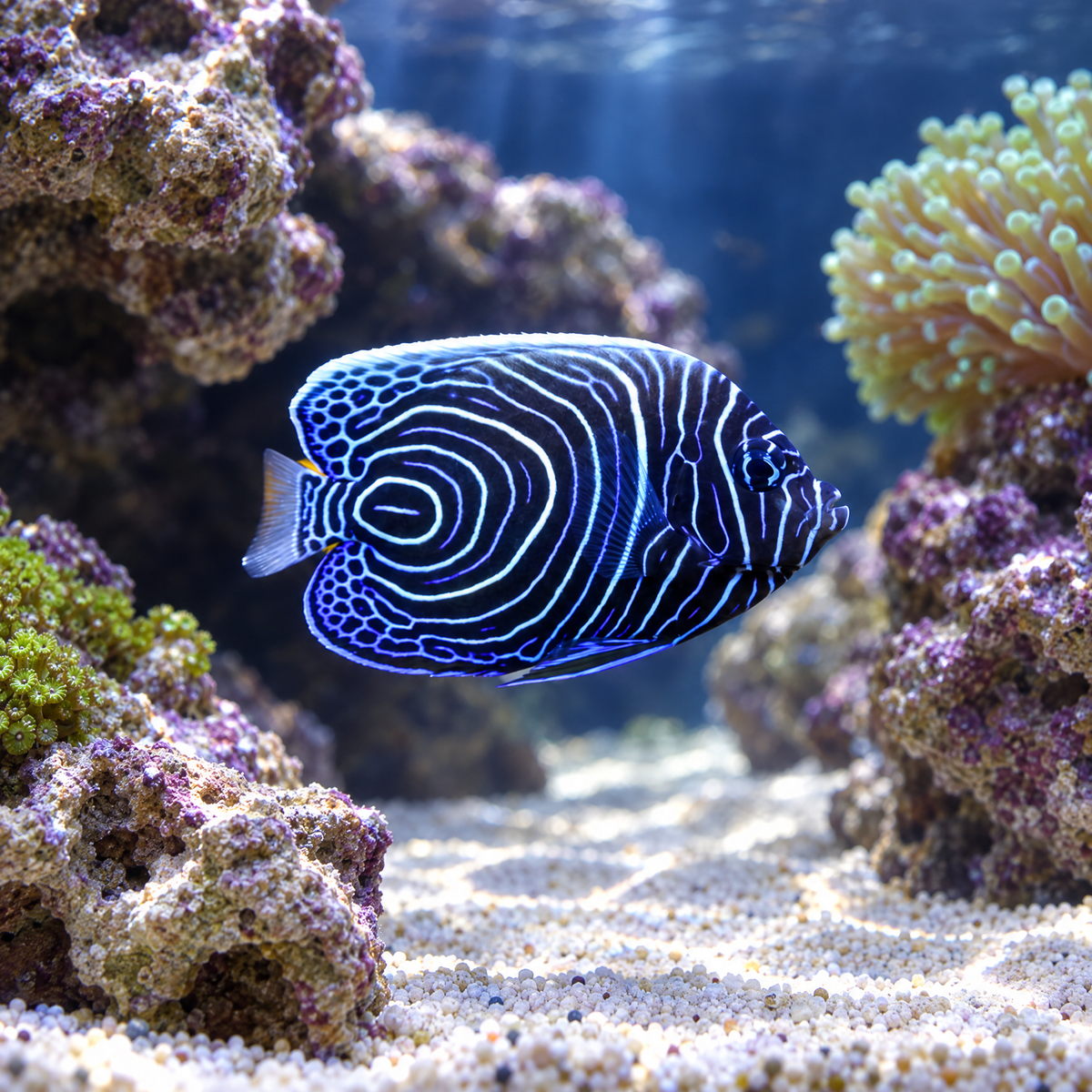
Juvenile Imperator Angelfish (Pomacanthus imperator)
